Stock Analysis · Oracle Corporation (ORCL)
Overview
Oracle Corporation is a large software and cloud-services company. It is best known for enterprise database technology (used to store and manage large volumes of business data), but it also sells cloud infrastructure and cloud applications that help organizations run core business functions (finance, human resources, supply chain, and customer operations). Oracle’s products are typically used by large companies and public-sector organizations that need reliability, security, and long-term support.
Oracle’s business model mixes subscription-like revenue (cloud services and support) with more variable revenue from licenses and hardware. Over time, Oracle has emphasized cloud services and recurring support, which can make revenue more predictable than one-time software purchases.
Based on Oracle’s segment reporting in its annual filings, the main sources of revenue are generally grouped into:
- Cloud services and license support (recurring support contracts and cloud subscriptions)
- Cloud license and on-premise license (new licenses for software)
- Hardware (engineered systems and servers)
- Services (consulting and implementation)
Percentages can vary by fiscal year and reporting category definitions; Oracle’s Form 10-K provides the latest segment breakdown and definitions.
Over the period shown, total revenue rises meaningfully (from about $40.5B to about $57.4B), while operating income also increases (about $15.5B to about $17.7B). Research and development spending grows as well (about $6.5B to about $9.9B), which is consistent with ongoing investment in cloud products and infrastructure.
Key Figures
| Metric | Value | Industry ⓘ |
|---|---|---|
| Date | Feb 06, 2026 | |
| Context | ||
| Sector | Technology | |
| Industry | Software - Infrastructure | |
| Market Cap ⓘ | $392.26B | |
| Beta ⓘ | 1.63 | |
| Fundamental | ||
| P/E Ratio ⓘ | 25.65 | 25.91 |
| Profit Margin ⓘ | 25.28% | 6.86% |
| Revenue Growth ⓘ | 14.20% | 14.65% |
| Debt to Equity ⓘ | 415.30% | 22.23% |
| PEG ⓘ | 1.15 | |
| Free Cash Flow ⓘ | -$13.18B | |
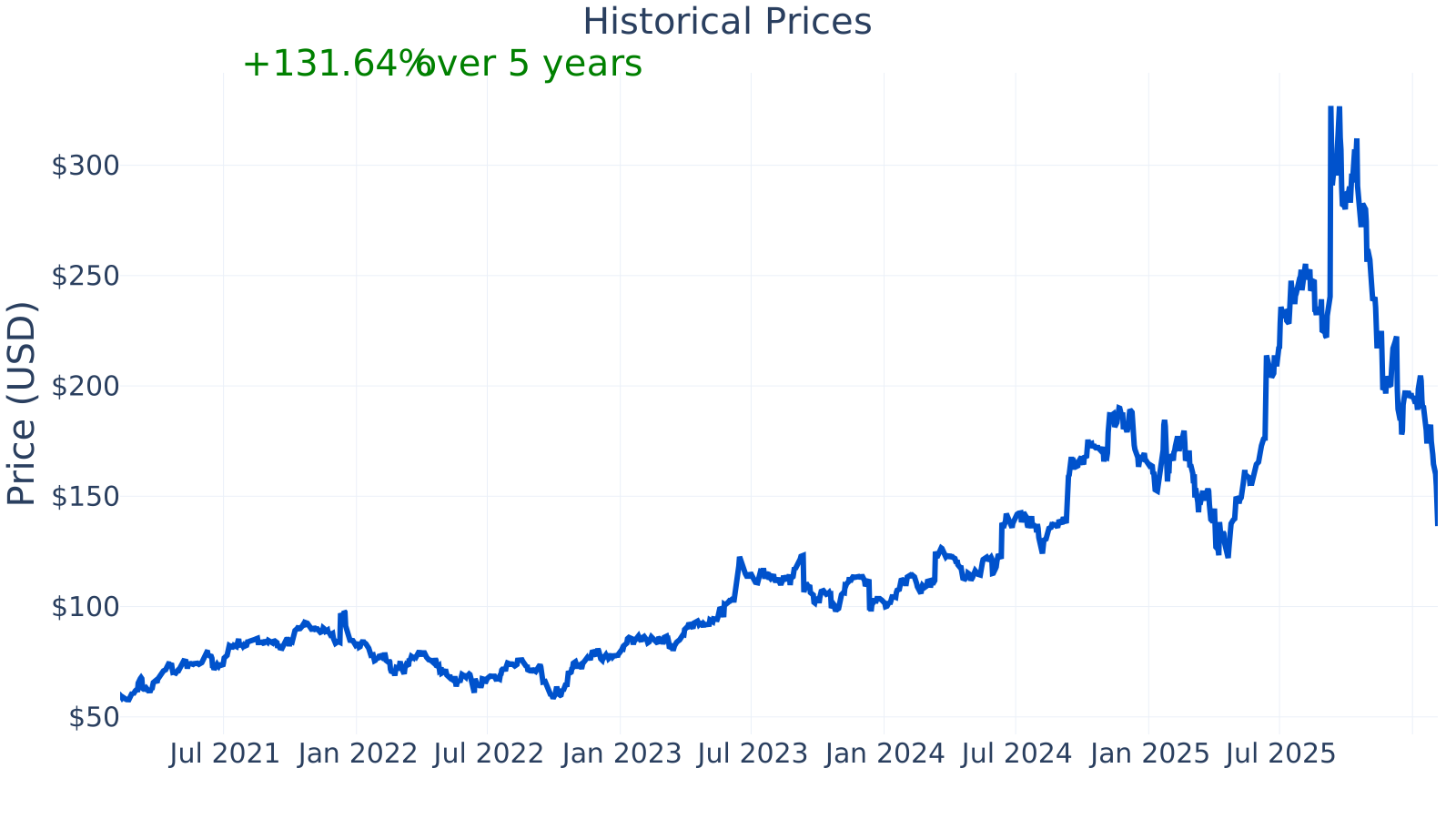
Oracle’s market capitalization is about $392B, placing it among the largest public software companies. The stock’s beta of ~1.63 indicates that, historically, its price has tended to move more than the broader market (both up and down).
Profitability is strong relative to the industry group shown: Oracle’s profit margin is ~25.3% versus an industry median of ~6.9%. Revenue growth over the last year is ~14.2%, close to the industry median (~14.7%).
Two items stand out for context. First, Oracle’s debt-to-equity is ~415% versus an industry median near ~22%, which indicates a much more leveraged capital structure than many peers. Second, the displayed free cash flow (TTM) is negative (~-$13.2B) at this point in time, which may reflect timing effects and/or elevated investment and financing-related cash movements; this is important to reconcile with the company’s cash flow statement details in its most recent filings.
Growth (Medium)
Oracle operates in large, long-running technology markets: enterprise software, cloud computing, and database management. Cloud adoption remains a major industry shift as organizations move workloads away from their own data centers to subscription-based services. In that environment, Oracle’s strategy centers on expanding its cloud offerings (both cloud applications and cloud infrastructure) while leveraging its existing base of database customers.
For future growth, one commonly discussed strategic lever in Oracle’s filings is the opportunity to move existing customers to cloud-based versions of Oracle products and to attach additional services (such as security, data tools, and AI-related capabilities) to those deployments. Another potential catalyst is increased demand for computing capacity to support data-intensive workloads, which can support cloud infrastructure consumption when Oracle is selected as a provider.
The year-over-year revenue growth rate shown varies over time, with recent readings moving back into the low-to-mid teens (latest ~14.2%). That suggests a pace that is solid for a company of Oracle’s size, though not consistently accelerating in every period.
Free cash flow in the periods shown is positive in several years (for example, ~$12.3B around early 2024) but also shows a much lower level more recently (about $5.8B around early 2025) and is listed as negative on a trailing-twelve-month basis in the latest snapshot. For long-term analysis, it can be helpful to confirm whether this is driven by capital spending for cloud build-out, working-capital timing, acquisitions, or other items described in the cash flow statement.
Risks (High)
This article is for informational purposes only and does not constitute financial advice. Some content is AI-generated. See Disclaimer