Stock Analysis · Opera Ltd (OPRA)
Overview
Opera Ltd is a consumer internet company best known for the Opera web browser. Its products focus on helping people access the web efficiently on mobile and desktop, and the company also develops related services that can be distributed through its browser user base (for example, content discovery features and other consumer-facing offerings). Opera reports results in the Communication Services sector, within the Internet Content & Information industry.
From a business model perspective, Opera’s revenue is primarily tied to monetizing user activity and distribution—most commonly through advertising and search-related arrangements—plus additional contributions from other consumer services the company operates. In practice, this means revenue is influenced by the size and engagement of its user base, the effectiveness of its monetization features, and demand in the digital advertising market.
Revenue mix by source (largest to smallest) and exact percentages can vary by period and are best taken directly from the company’s annual report disclosures.
Looking at the multi-year income statement flow, total revenue increased meaningfully from 2021 to 2025 (about $251.0M to about $616.7M). Over the same period, costs and operating expenses shifted materially, and profitability improved versus earlier periods, with net income turning positive after 2021 and remaining positive in later years shown.
Key Figures
| Metric | Value | Industry ⓘ |
|---|---|---|
| Date | Apr 27, 2026 | |
| Context | ||
| Sector | Communication Services | |
| Industry | Internet Content & Information | |
| Market Cap ⓘ | $1.55B | |
| Beta ⓘ | 1.14 | |
| Fundamental | ||
| P/E Ratio ⓘ | 14.48 | 15.38 |
| Profit Margin ⓘ | 17.61% | 9.94% |
| Revenue Growth ⓘ | 21.50% | 6.40% |
| Debt to Equity ⓘ | 1.28% | 10.97% |
| PEG ⓘ | N/A | |
| Free Cash Flow ⓘ | $107.72M | |
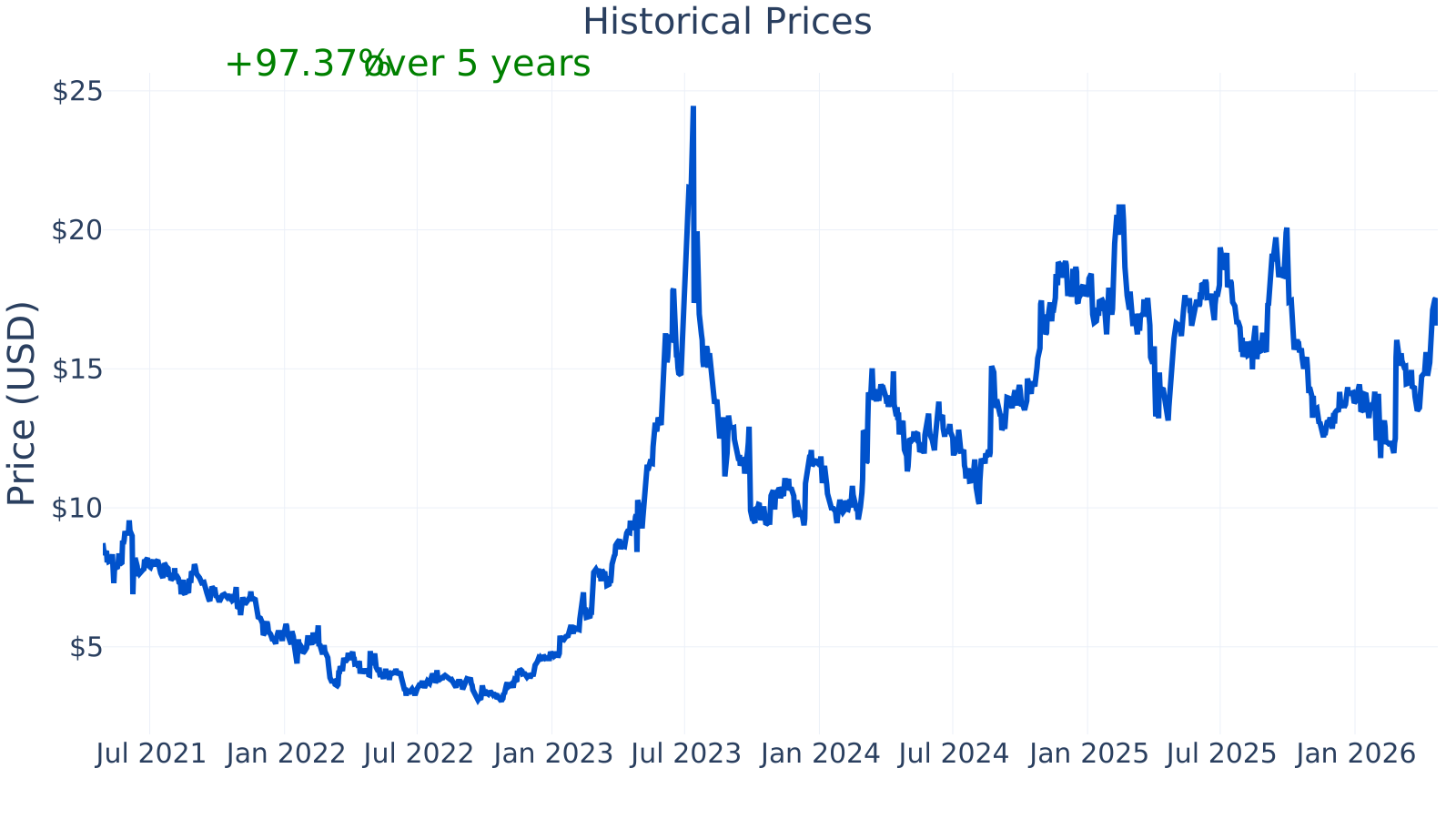
Opera’s market capitalization is about $1.55B, placing it in the small-to-mid cap range. The stock’s beta is about 1.14, which indicates it has tended to be somewhat more volatile than the broader market.
On valuation, the latest P/E ratio is about 14.48 versus an industry median around 15.38. On profitability, the latest profit margin is about 17.61% versus an industry median around 9.94%, suggesting stronger recent net profitability than the typical company in its peer set.
On growth, the latest year-over-year revenue growth is about 21.50% versus an industry median around 6.40%, indicating faster recent top-line expansion than the broader peer group. Opera also shows low leverage with a debt-to-equity ratio of about 1.28% versus an industry median around 10.97%. Trailing twelve-month free cash flow is about $107.7M, which can matter for funding product development, acquisitions, or shareholder returns without relying heavily on new borrowing.
Growth (medium)
Opera operates in areas of the internet economy that can benefit from long-run trends such as increased time spent online, mobile internet usage, and ongoing growth in digital advertising and performance marketing. Because Opera’s core products are consumer-facing, results can also be influenced by competitive shifts in browsers and platforms, user acquisition costs, and the ability to keep users engaged over time.
A key part of the growth logic is distribution: a browser can serve as a “front door” to the internet, allowing the company to place search partnerships, advertising placements, and additional services in front of a large user base. If Opera can maintain or expand its user base while improving monetization per user, revenue can grow even without dramatic changes in the overall market.
The pattern shown indicates revenue growth has remained positive over time, with periods of acceleration (notably around late 2024 into 2025 in the series shown) and then moderation. Even with that moderation, the most recent growth rate displayed remains solidly positive.
Free cash flow over the trailing twelve months increased over the period shown (from roughly $30.2M in 2022 to roughly $82.2M by 2025 in the series). That upward direction can be an important support for flexibility, because it indicates the business has been generating cash after operating costs and necessary investments.
Potential catalysts for future growth typically include improvements in monetization (better ad performance and yield), expansion of user reach in targeted geographies, and successful scaling of adjacent consumer services distributed through Opera’s platforms. The durability of these drivers depends on execution and market conditions in online advertising.
Risks (high)
Opera faces substantial competitive pressure because browsers and consumer internet services are dominated by very large technology companies that control key platforms, default settings, and distribution channels. Competitors include major browser ecosystems such as Google Chrome (Alphabet), Apple Safari (Apple), Microsoft Edge (Microsoft), and Mozilla Firefox. These rivals can bundle browsers with operating systems or devices, invest heavily in features and performance, and influence default search relationships—factors that can make sustained share gains difficult for smaller players.
Another important risk is revenue concentration in advertising and search-related monetization. Digital advertising demand can fluctuate with the economy, and changes in privacy rules, tracking restrictions, or platform policies can reduce targeting effectiveness and pressure ad pricing. In addition, browser-level changes (industry-wide or platform-driven) can affect how user traffic is monetized.
Regulatory and privacy compliance is also a meaningful risk area. As data protection rules evolve across regions, consumer internet products may face higher compliance costs, product changes, or constraints on monetization practices.
Opera’s debt-to-equity ratio is very low (about 1.28% most recently), and it has generally stayed well below the industry median across the timeline shown. Low leverage can reduce financial strain during weaker advertising cycles, though it does not remove operating and competitive risks.
Profitability has been more volatile earlier in the timeline, including periods with negative margins, and then improved into consistently positive territory more recently. The latest profit margin shown is about 17.61%, above the industry median (about 9.91%). Even so, margins for advertising-linked businesses can move with ad pricing, traffic acquisition costs, and product investment levels.
In terms of competitive advantages, Opera’s differentiation tends to come from product features, brand recognition in certain markets, and its ability to convert an installed user base into monetized activity. However, the company is not the category leader globally in browsers, and its advantages may be less structural (hard to replicate) than those of platform owners.
Valuation
A common way to contextualize Opera’s valuation is its price-to-earnings (P/E) ratio compared with peers and its own history, alongside growth and risk factors. The latest P/E shown in the table is about 14.48, slightly below the displayed industry median of about 15.38, which suggests the market is not assigning a large premium versus the median peer at this point in time.
The historical P/E trend shown indicates Opera’s multiple has varied significantly across periods (including times when the displayed P/E is lower and times when it is higher). More recently in the chart, the company’s P/E appears below the industry median at the latest point shown (about 11.06 versus an industry median around 24.17 on that date), which can reflect differences in market expectations, perceived risk, earnings variability, or business mix.
Whether the current valuation is “justified” is ultimately a question of how sustainable the company’s current profitability and cash generation are, and how durable its revenue growth is in the face of intense competition and potential advertising-cycle swings. The combination of solid recent revenue growth, positive margins, and low balance-sheet leverage tends to support a valuation framework based on ongoing earnings power, while competitive and platform risks can weigh on market multiples.
Conclusion
Opera is a consumer internet company whose financial performance is closely tied to the scale and engagement of its user base and the strength of digital advertising and search monetization. The recent picture shows meaningful revenue expansion over multiple years, improving and currently healthy profit margins versus the industry median, and low leverage on the balance sheet alongside positive free cash flow.
At the same time, the risk profile is elevated due to powerful competitors that control key platforms and defaults, plus sensitivity to advertising conditions and evolving privacy and regulatory constraints. In valuation terms, the P/E ratio shown is around the industry median (and below it at the latest point in the historical series), which indicates the market is not pricing the company as a high-multiple outlier despite its stronger recent growth and margins.
For a long-term view, the main points to monitor over time are: (1) whether Opera can sustain user growth and engagement, (2) whether monetization per user remains resilient as privacy rules and ad technologies change, and (3) whether margins and free cash flow stay durable through advertising cycles.
Sources:
- SEC EDGAR — Opera Ltd filings (Form 20-F / annual report and periodic reports)
- Opera Investor Relations — Annual reports, shareholder materials, and press releases
- Wikipedia — “Opera (company)” (basic background only)
This article is for informational purposes only and does not constitute financial advice. Some content is AI-generated. See Disclaimer


