Stock Analysis · Opera Ltd (OPRA)
Overview
Opera Ltd (NYSE: OPRA) is a consumer internet company best known for the Opera web browser. Its products focus on helping people access the internet on mobile and desktop, with features aimed at speed, data efficiency, privacy, and built-in services. Like many internet platforms, Opera’s business model centers on turning user activity into monetization opportunities, primarily through advertising and search-related partnerships.
Opera’s revenue is largely tied to how many people use its apps and how effectively it can monetize that usage through partners and advertisers. Based on company disclosures in its annual filings, the main revenue streams are typically grouped as:
- Search and advertising revenues (the largest contributor in Opera’s reporting, generally driven by search partnerships and advertising shown to users)
- Other revenue streams (smaller, can include various product- and partnership-related revenues depending on the period)
In recent years, the company’s total revenue has increased meaningfully, and profitability has fluctuated, reflecting both the upside and volatility common in advertising-driven businesses.
From 2021 to 2024, revenue grew from about $251M to about $481M, while operating income moved from a loss in 2021 to a positive level afterward. Net income also varied significantly by year, highlighting that profitability can change notably even when revenue trends upward.
Key Figures
| Metric | Value | Industry ⓘ |
|---|---|---|
| Date | Feb 08, 2026 | |
| Context | ||
| Sector | Communication Services | |
| Industry | Internet Content & Information | |
| Market Cap ⓘ | $1.14B | |
| Beta ⓘ | 1.10 | |
| Fundamental | ||
| P/E Ratio ⓘ | 14.12 | 14.12 |
| Profit Margin ⓘ | 13.93% | 10.23% |
| Revenue Growth ⓘ | 23.30% | 7.10% |
| Debt to Equity ⓘ | 0.93% | 10.16% |
| PEG ⓘ | N/A | |
| Free Cash Flow ⓘ | $89.69M | |
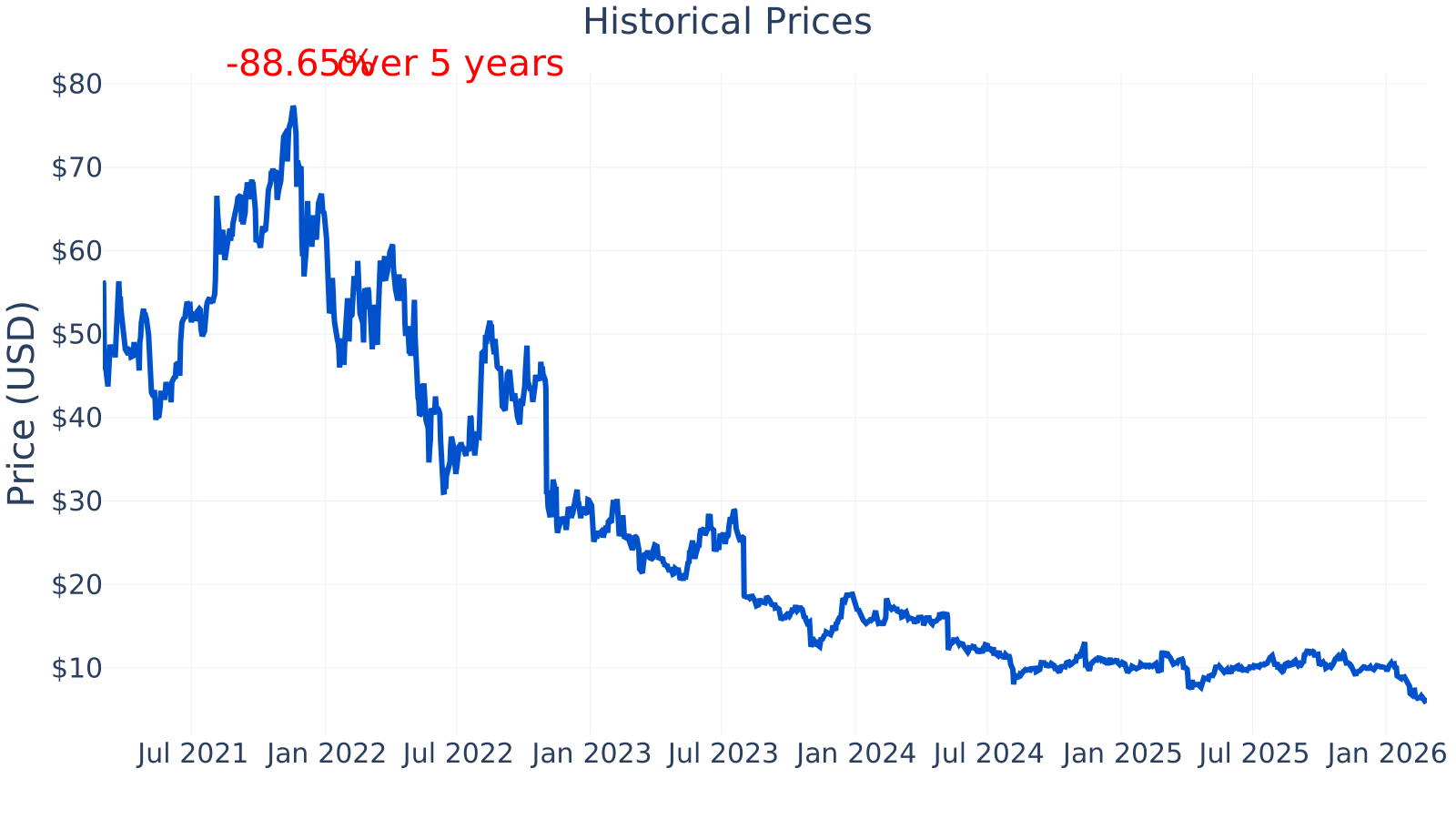
Opera’s market capitalization is about $1.14B, placing it in the smaller end of publicly traded internet platform companies. The stock’s beta (~1.10) suggests it has historically moved somewhat more than the broader market. The latest P/E ratio (~14.1) is roughly in line with the industry median (~14.1) within its peer group. Profitability metrics show a profit margin of ~13.9%, above the industry median of ~10.2%. Recent growth stands out: revenue growth year-over-year of ~23.3%, higher than the industry median of ~7.1%. The balance sheet looks conservatively levered with debt-to-equity of ~0.9% versus an industry median near 10.2%. Trailing twelve-month free cash flow is about $89.7M, indicating the business has recently generated cash after operating costs and capital needs.
Growth (Medium)
Opera operates in the broader internet software and digital advertising ecosystem, where growth is often linked to user engagement, time spent in-app, and advertiser demand. While web browsing is a mature category globally, monetization methods and product positioning can still evolve—especially in mobile-first regions and through differentiation in features, distribution partnerships, and product expansion around the browser.
A key question for long-term growth is whether Opera can keep expanding its user base and, just as importantly, improve revenue per user through better ad technology, stronger partnerships, and new features that increase engagement. The company’s continued investment in research and development (visible in annual expense lines) suggests an ongoing effort to maintain and improve its products in a competitive space.
Year-over-year revenue growth has remained positive across the periods shown, and it re-accelerated in more recent quarters (reaching about 23% in the latest point shown). Relative to the industry median (about 7% in the latest comparison), Opera’s recent growth has been faster than many peers in the same broad classification.
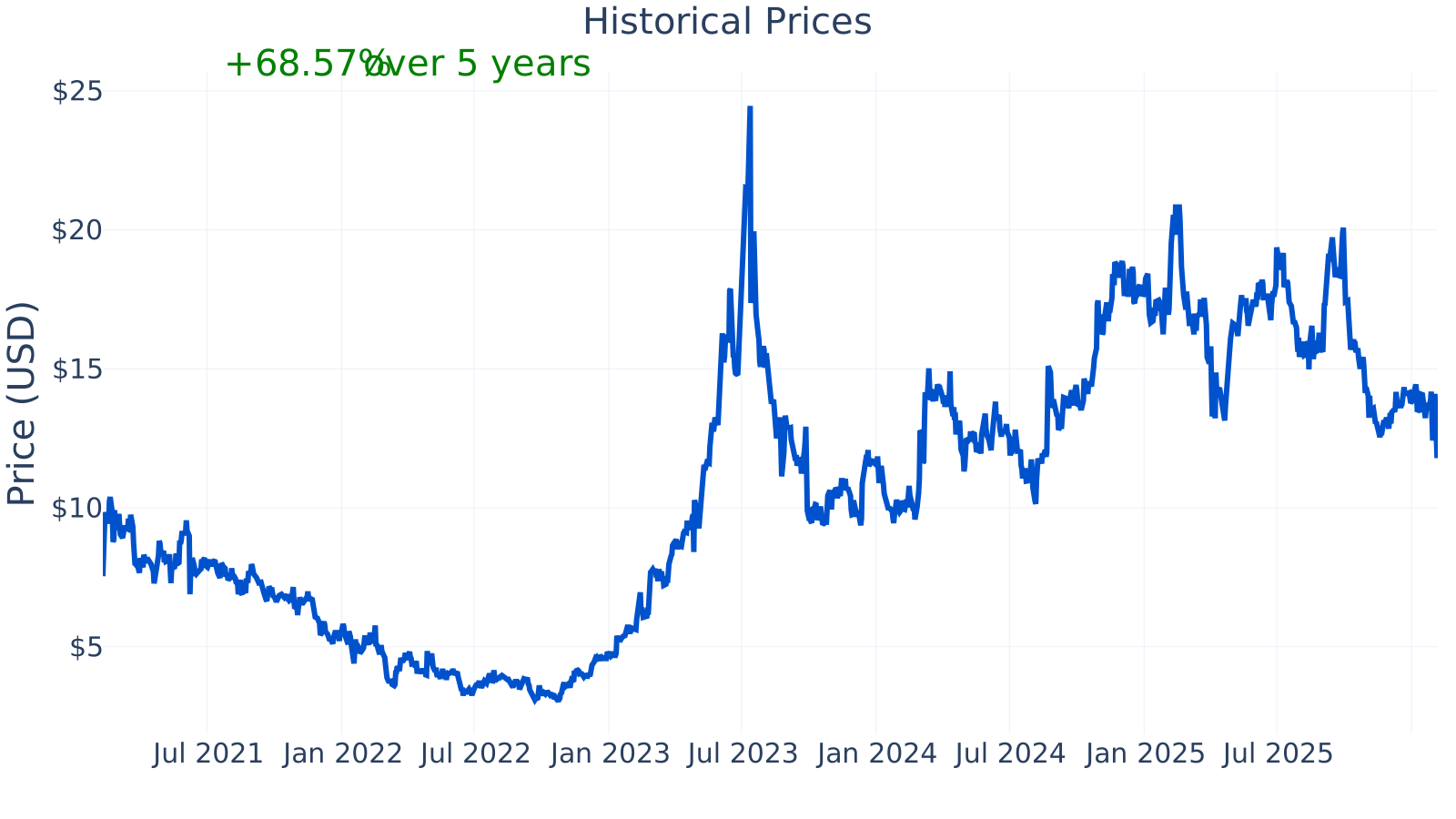
Free cash flow has generally trended upward over the timeframe shown, rising from about $40.2M (TTM in early 2021) to about $82.2M (TTM in early 2025), with the latest TTM value shown in the table at about $89.7M. For a business reliant on advertising and partnerships, sustained cash generation can matter because it provides flexibility for product investment and potential strategic options without requiring heavy borrowing.
Risks (High)
This article is for informational purposes only and does not constitute financial advice. Some content is AI-generated. See Disclaimer