Stock Analysis · Open Text Corp (OTEX)
Overview
Open Text Corporation (OTEX) is a software company focused on helping organizations manage information across its full life cycle: creating it, storing it securely, searching it, sharing it, keeping it for compliance purposes, and automating business processes around it. In practical terms, its products are commonly used for document and content management, workflow automation, digital customer communications, cybersecurity and identity-related protections, and technology that supports large-scale enterprise data and cloud environments.
The business is largely built around enterprise and public-sector customers that tend to sign multi-year agreements and embed these tools in day-to-day operations. That typically makes demand less dependent on one-time purchases and more tied to renewals, ongoing usage, and the company’s ability to deliver product updates, security improvements, and integration with large IT systems.
From a revenue perspective, OpenText generally reports a mix of subscription-based cloud services and recurring software/support revenue, plus smaller amounts from professional services and other items. Exact percentages can change year to year based on acquisitions and customer migration from older licensing models to subscriptions, so the most reliable breakdown is in the company’s annual report (Form 10-K) and related filings.
The multi-year income flow view shows revenue rising meaningfully into fiscal 2024 and then easing in fiscal 2025, while interest expense increased sharply around fiscal 2024 and then declined in fiscal 2025. That pattern is consistent with a period of heavier financing costs followed by some improvement, which can matter for how much operating profit ultimately converts into net income.
Key Figures
| Metric | Value | Industry ⓘ |
|---|---|---|
| Date | Feb 08, 2026 | |
| Context | ||
| Sector | Technology | |
| Industry | Software - Application | |
| Market Cap ⓘ | $6.38B | |
| Beta ⓘ | 1.09 | |
| Fundamental | ||
| P/E Ratio ⓘ | 14.66 | 27.79 |
| Profit Margin ⓘ | 8.42% | 6.02% |
| Revenue Growth ⓘ | -0.60% | 15.80% |
| Debt to Equity ⓘ | 6.37% | 25.15% |
| PEG ⓘ | 0.87 | |
| Free Cash Flow ⓘ | $870.72M | |
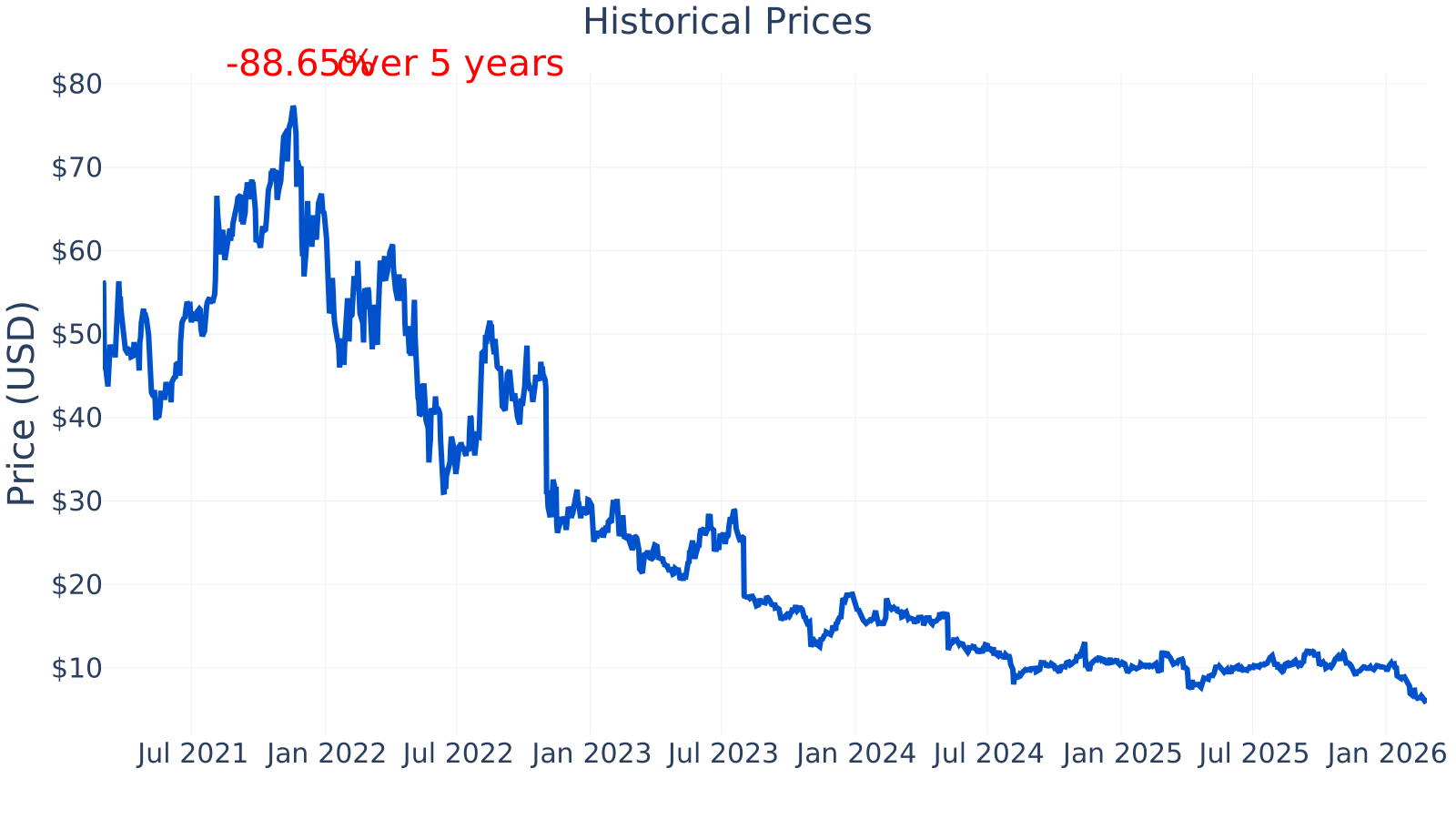
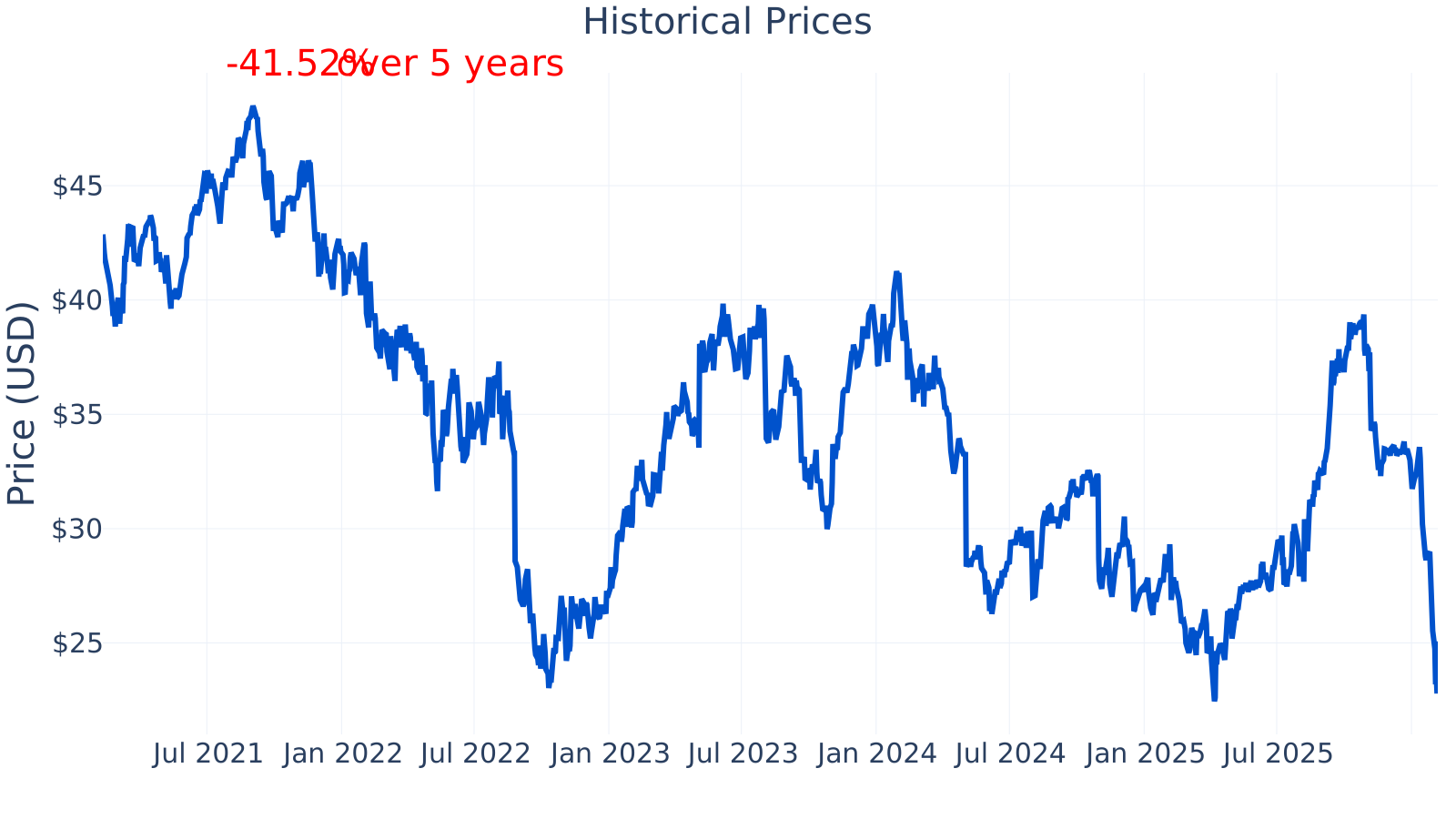
OpenText’s market capitalization is about $6.38B, and its beta of about 1.09 suggests the shares have tended to move roughly in line with the broader equity market (slightly more volatile than average).
On profitability, the latest profit margin is about 8.42%, higher than the industry median of about 6.03%, indicating relatively better bottom-line conversion than many peers in the same broad software category.
On growth, the latest year-over-year revenue growth is about -0.60%, while the industry median is about 15.8%, highlighting that OpenText’s recent top-line growth has been weaker than many application software peers.
On balance sheet leverage, the latest debt-to-equity is about 6.37%, below the industry median of about 25.15%. (Debt-to-equity can swing based on acquisition financing, repayments, and equity levels, so the trend over time is also important.)
Free cash flow (TTM) is about $870.7M, which is a key figure for a mature enterprise software company because it reflects the cash available after operating needs and capital spending.
Growth (Medium)
OpenText operates in long-running, structurally important areas of enterprise software: information management, workflow automation, and cybersecurity-related capabilities. These categories are supported by durable needs—regulatory compliance, retention and audit requirements, security threats, and the ongoing push to digitize back-office processes. In that sense, the company participates in markets that are relevant over long time horizons.
The growth question is more about execution and mix than market existence. OpenText has historically used acquisitions alongside product development, and the company’s growth profile can reflect integration cycles and customers transitioning between product generations (for example, from legacy on-premises deployments toward cloud subscriptions). When that transition works well, it can increase recurring revenue quality and retention; when it is slower, reported growth can look muted even if customer relationships remain sticky.
The year-over-year revenue growth line shows a sharp surge around fiscal 2023 (consistent with a large step-change year) followed by multiple quarters of contraction through much of fiscal 2024 and fiscal 2025, with a small return to positive growth at the latest point shown. For long-term context, this pattern suggests that reported revenue has been influenced by major business changes (often acquisitions and subsequent normalization), rather than a steady organic growth trend.
Free cash flow has remained substantial but has drifted down over the period shown (from roughly $816M in 2021 to roughly $697M by 2025, with about $871M shown as the latest TTM in the key metrics table). For a long-term owner, this matters because consistent cash generation can support debt repayment, reinvestment, and potential capital returns, even when revenue growth is not strong.
Potential catalysts, in a strictly factual sense, typically include continued progress in integrating major acquisitions, improving customer migration to subscription offerings, and reducing financing costs over time if debt is paid down or refinanced at more favorable terms. The company’s filings and quarterly results are the primary place to confirm whether these items are occurring.
Risks (Medium)
This article is for informational purposes only and does not constitute financial advice. Some content is AI-generated. See Disclaimer