Stock Analysis · Onto Innovation Inc (ONTO)
Overview
Onto Innovation Inc. (ONTO) is a semiconductor equipment and software company. In simple terms, it sells tools that help chipmakers and their suppliers measure, inspect, and control how chips are manufactured. These steps matter because modern chips are built with extremely small features, and tiny process issues can reduce performance and yield (how many usable chips come out of a wafer).
The company’s products are used across multiple parts of the semiconductor supply chain, including high-volume chip production and advanced packaging (where chips are assembled and connected). Its revenue generally comes from selling equipment systems and from ongoing customer support, which typically includes spare parts and services.
Based on how the business is described in company filings, the main revenue streams are commonly organized as:
- Systems (equipment): sales of inspection and metrology tools used in semiconductor manufacturing (typically the largest component).
- Customer support: recurring revenue such as service, spares, and support tied to the installed base of tools.
Because semiconductor manufacturing investment tends to move in cycles, the mix between equipment sales and support can shift from year to year, but support revenue is often viewed as more recurring because it is linked to tools already deployed at customer sites.
Over the period shown, total revenue moved from about $789M (2021) to around $1.005B (2025), but profitability fluctuated. Operating expenses increased over time (including R&D), while net income peaked in 2022 and then declined by 2025, showing that revenue growth does not always translate directly into higher earnings in this industry.
Key Figures
| Metric | Value | Industry ⓘ |
|---|---|---|
| Date | Feb 23, 2026 | |
| Context | ||
| Sector | Technology | |
| Industry | Semiconductor Equipment & Materials | |
| Market Cap ⓘ | $10.75B | |
| Beta ⓘ | 1.48 | |
| Fundamental | ||
| P/E Ratio ⓘ | 60.96 | 49.76 |
| Profit Margin ⓘ | 13.60% | 7.37% |
| Revenue Growth ⓘ | 1.10% | 7.20% |
| Debt to Equity ⓘ | 0.70% | 20.49% |
| PEG ⓘ | 0.76 | |
| Free Cash Flow ⓘ | $261.31M | |
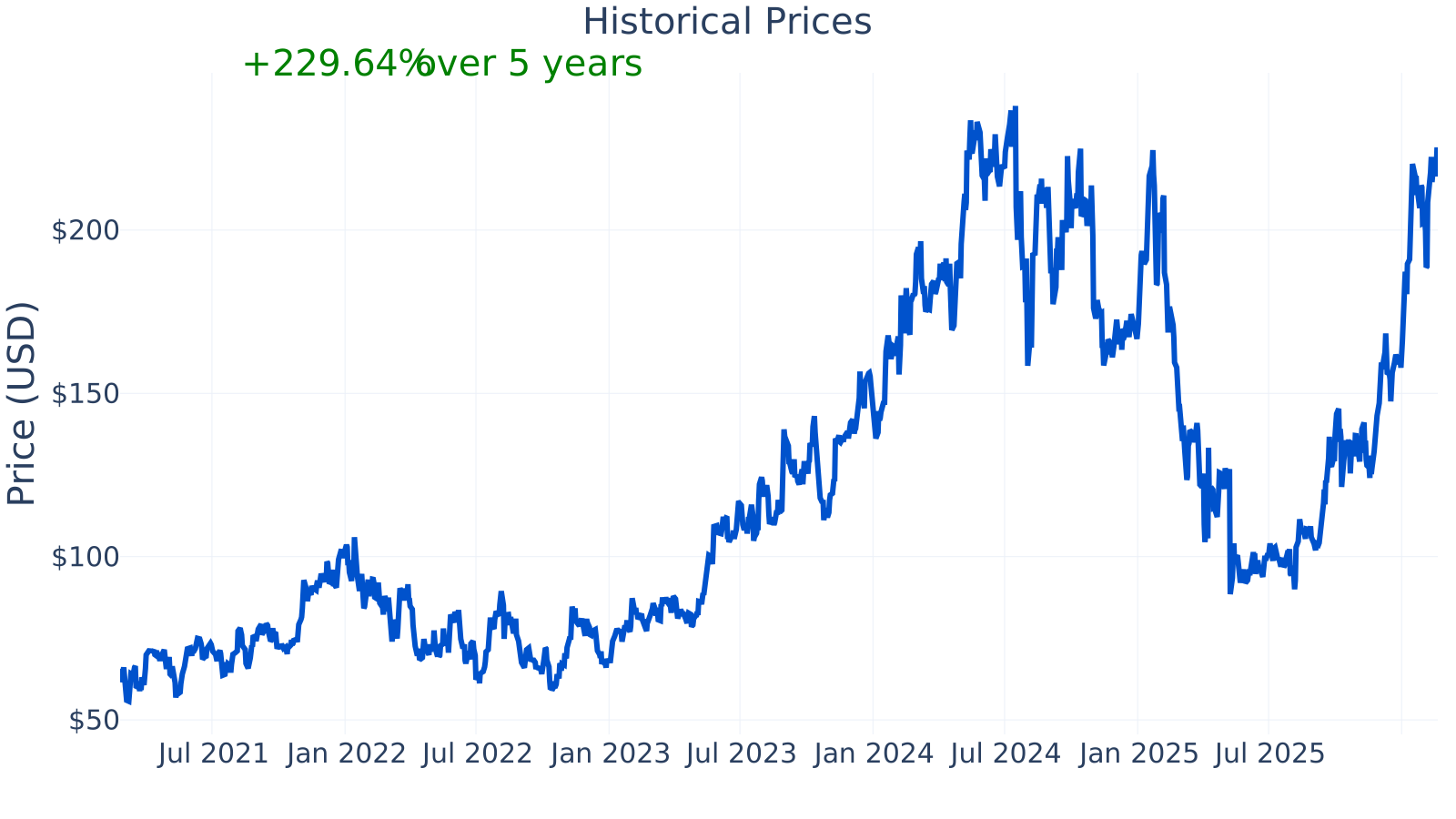
Onto Innovation’s market capitalization is about $10.7B. The stock’s beta of 1.48 indicates it has tended to move more than the overall market, which can be typical for semiconductor-related companies.
Profitability (net profit margin) is about 13.6%, which is higher than the industry median shown (7.37%). Recent year-over-year revenue growth is about 1.1%, below the industry median in the table (7.2%), which suggests the company’s latest growth rate is muted compared with many peers at that point in time.
Financial leverage appears low: debt-to-equity is ~0.7% versus an industry median around 20.5%. Free cash flow over the last twelve months is about $261M, indicating the business has been generating cash after operating and capital spending.
Growth (Medium)
Onto Innovation operates in the semiconductor equipment and process-control segment. Long-term demand for chips is supported by broad drivers such as data centers, AI-related computing workloads, automotive electronics, industrial automation, and the continued shift of many products toward more electronics content. In that context, inspection and measurement tools are part of the “must-have” infrastructure because manufacturers need to detect defects, maintain yields, and improve process stability—especially as designs become more complex.
Strategy-wise, a common growth logic for process-control suppliers is to expand along two dimensions: (1) tool adoption in more steps of the manufacturing flow and (2) a larger installed base that can produce recurring support revenue. The company’s continued R&D spending (visible in the income-flow view) is consistent with competing in a market where customers demand ongoing improvements in accuracy, throughput, and cost of ownership.
The year-over-year revenue growth pattern shown is cyclical: strong growth in 2021–2022, contraction in 2023, recovery through much of 2024, and then a slowdown by late 2025 (ending near ~1%). This “surge–cooldown–rebound” profile is consistent with semiconductor capital spending cycles and changing customer spending priorities.
Free cash flow over the trailing twelve months increased from roughly $141M (2021) to about $247M (2025), with a dip in 2023. For long-term business resilience, sustained cash generation can matter because it helps fund R&D and supports flexibility during downcycles.
Risks (Medium-High)
This article is for informational purposes only and does not constitute financial advice. Some content is AI-generated. See Disclaimer