Stock Analysis · Ondas Holdings Inc (ONDS)
Overview
Ondas Holdings Inc (ONDS) is a technology company focused on wireless connectivity solutions designed for specialized, “mission-critical” use cases. Its products are generally aimed at organizations that need reliable communications in environments where downtime, interference, or coverage gaps can be costly—such as industrial sites and other operational settings. The company has operated as a smaller, product-focused business that continues to invest in development and commercialization.
From a long-term perspective, the core business question is whether Ondas can convert its technology and product positioning into repeatable, scalable sales while keeping costs under control. The company’s filings are the best place to confirm exactly how it describes its segments, its go-to-market approach, and the customer categories it prioritizes.
Main sources of revenue (largest to lowest, where available) are typically described in the company’s annual report (Form 10‑K). In the most recent publicly filed annual information, Ondas’ revenue is primarily tied to selling equipment and related solutions rather than a large base of recurring subscription revenue. If the company reports revenue by product line or segment, it will be listed there.
Revenue breakdown (percentages not provided here):
- Primary: Sales of wireless communication equipment/solutions (hardware and related components)
- Secondary: Services and other revenue (if applicable, as disclosed in filings)
Across the annual periods shown, revenue remains relatively small compared with operating expenses. Research and development plus selling, general, and administrative costs have been materially larger than gross profit, which helps explain the company’s ongoing net losses. Revenue increased meaningfully from 2022 to 2023, then declined in 2024, highlighting that results can vary significantly year to year at this stage.
Key Figures
| Metric | Value | Industry ⓘ |
|---|---|---|
| Date | Mar 23, 2026 | |
| Context | ||
| Sector | Technology | |
| Industry | Communication Equipment | |
| Market Cap ⓘ | $4.67B | |
| Beta ⓘ | 2.58 | |
| Fundamental | ||
| P/E Ratio ⓘ | N/A | 47.54 |
| Profit Margin ⓘ | -172.49% | 3.87% |
| Revenue Growth ⓘ | 582.00% | 15.20% |
| Debt to Equity ⓘ | 3.70% | 70.76% |
| PEG ⓘ | N/A | |
| Free Cash Flow ⓘ | -$34.70M | |
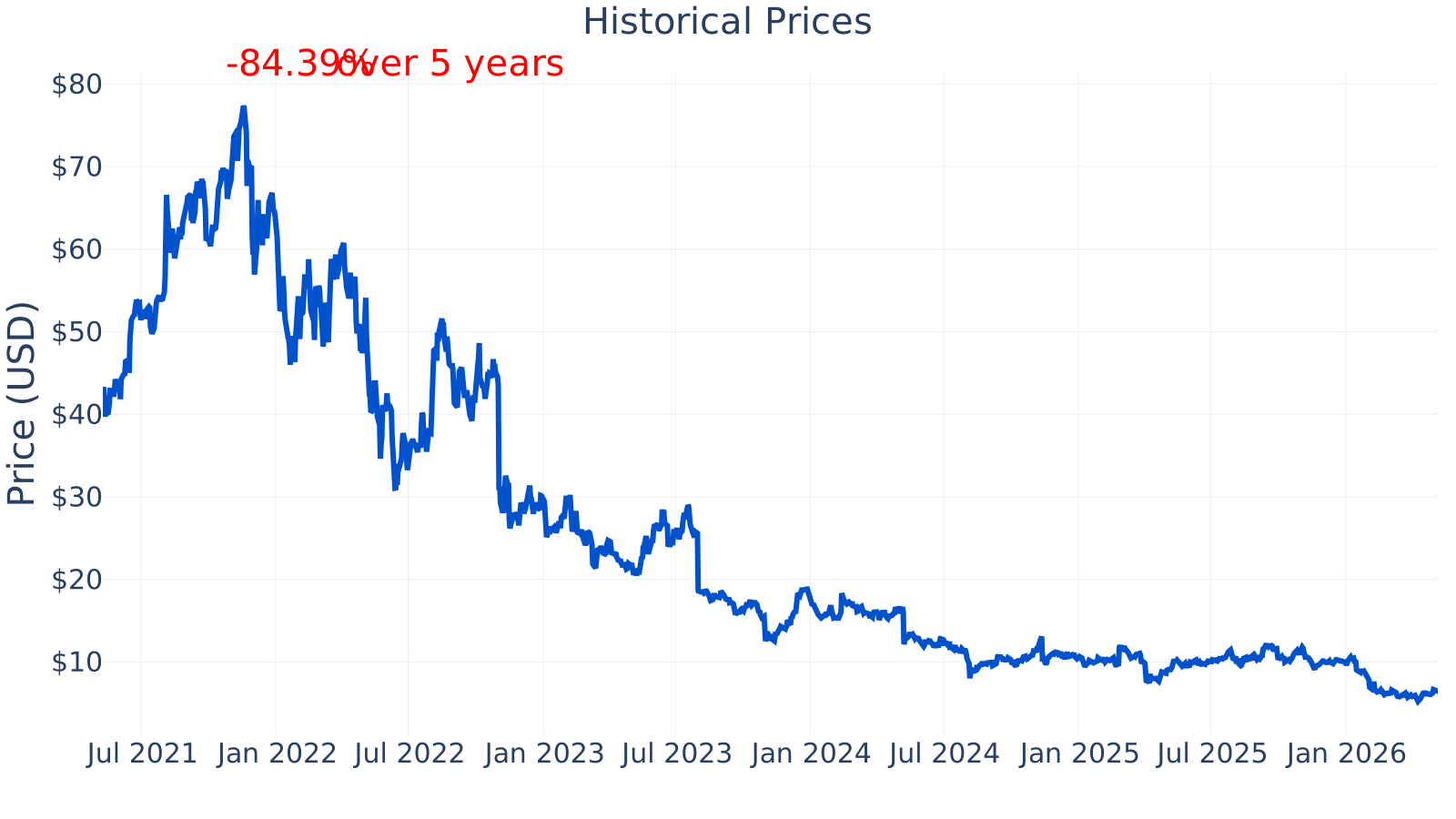
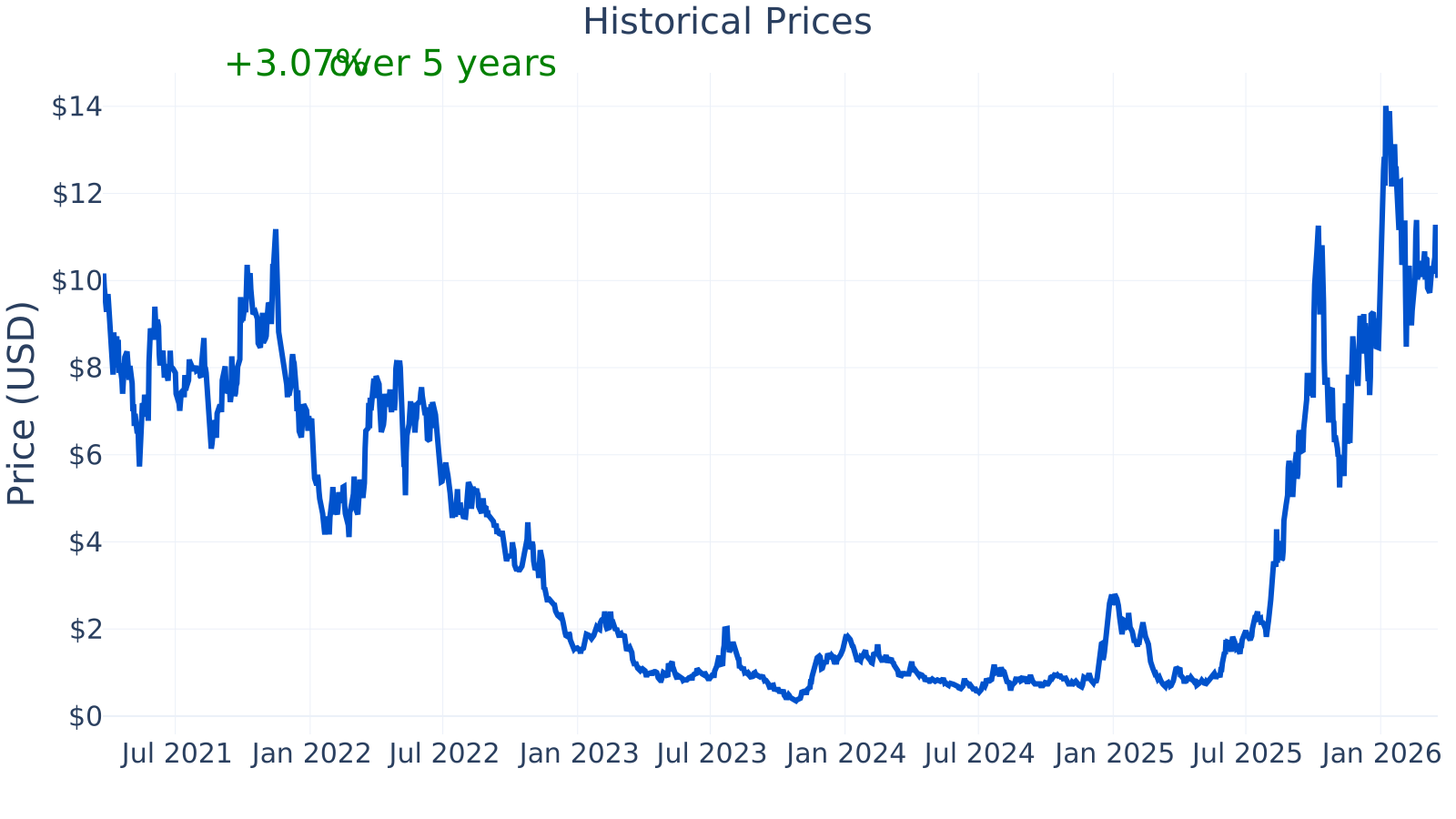
The latest snapshot shows a market capitalization of about $4.67B and a relatively high beta (~2.58), which is consistent with large price swings versus the broader market. Profitability is currently weak, with a profit margin around -172% (vs an industry median near +3.9%), indicating the company is losing money relative to its revenue base. Reported year-over-year revenue growth is very high (~582%), far above the industry median (~15%), but for smaller companies this can happen when revenue starts from a low level and then changes sharply. Leverage appears low in the latest period with debt-to-equity around 3.7% (vs an industry median near 71%). Free cash flow over the trailing twelve months is negative at roughly -$34.7M, meaning the business consumed cash rather than generating it.
Growth (High)
Ondas operates in communications equipment, a broad area supported by long-term demand for connectivity, automation, and industrial digitalization. In general terms, industries that depend on always-on operations often increase spending on communications reliability and coverage over time, which can support durable demand for specialized wireless solutions.
The company’s growth strategy matters because the financial profile suggests it is still in a scale-up phase. The pathway to durable growth typically depends on (1) converting pilots into full deployments, (2) expanding within existing customers, and (3) building a repeatable sales cycle without costs rising as fast as revenue. Ondas’ filings can provide color on backlog, customer concentration, and whether sales are project-based or recurring.
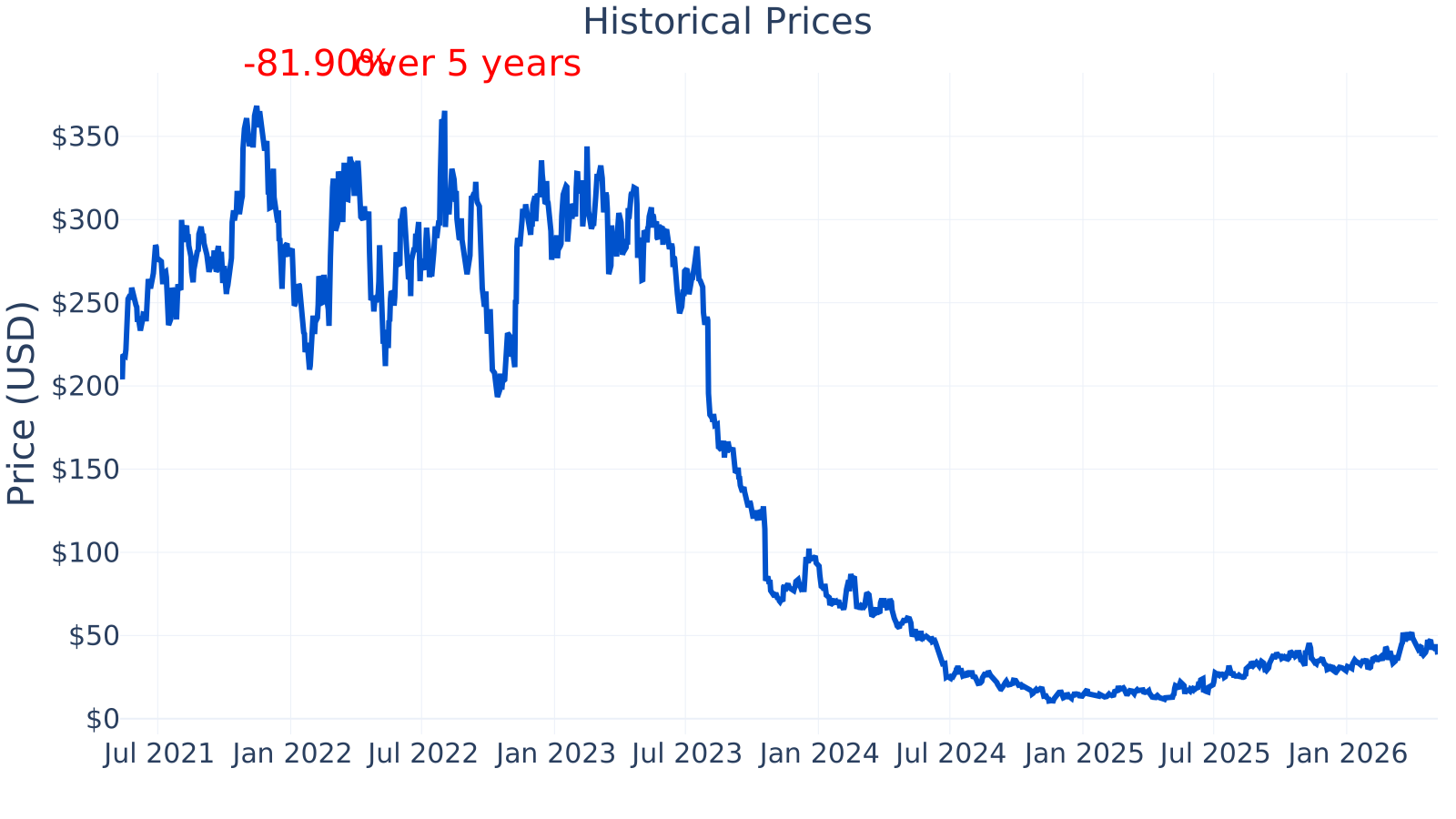
Revenue growth has been highly volatile, with several quarters showing sharp declines and others showing very large increases. The most recent point displayed is extremely high growth (over 500% year over year), but the history indicates this is not yet a steady trend. For long-term analysis, consistency of growth can matter as much as the growth rate itself.
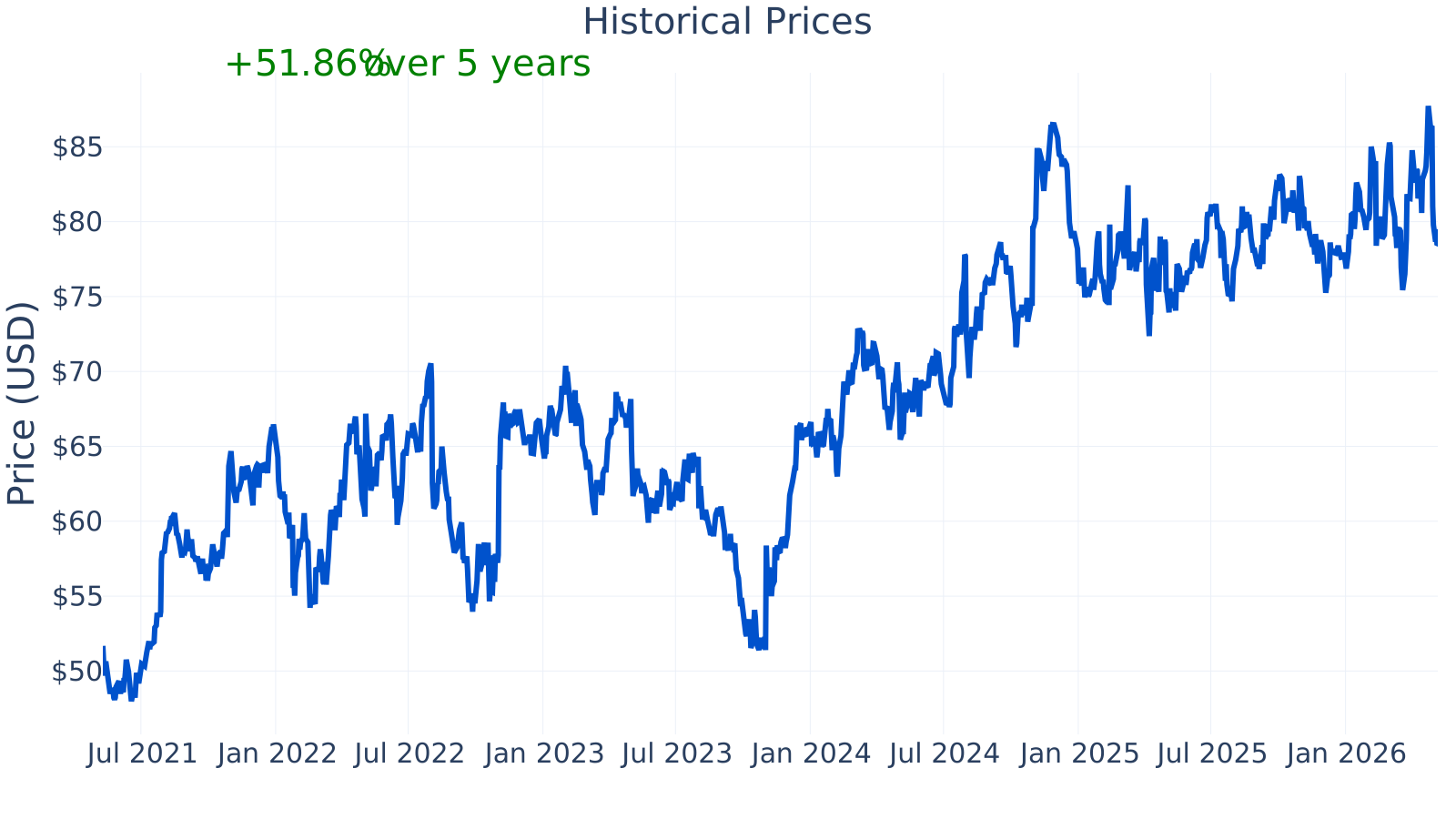
Free cash flow has been negative across the full period shown, ranging from roughly -$8.7M (2021) to about -$45.2M (2023), and around -$33.4M most recently. Persistent negative free cash flow often means a company may need to rely on cash reserves, debt, or issuing shares to fund operations, unless profitability improves.
Potential “catalysts” for a company like this are usually operational rather than macro-driven: signing larger customers, expanding distribution partnerships, increasing repeat orders, and improving gross margin. These items are generally discussed in quarterly and annual filings and, if applicable, in company-hosted earnings materials.
Risks (Very High)
The largest risk is execution: the business has posted sizable losses and negative cash generation, which increases dependence on external financing or a rapid improvement in unit economics. In practical terms, this risk often shows up as dilution (more shares issued) or higher balance-sheet obligations if cash burn continues.
Debt-to-equity moved sharply over time—rising to very high levels in parts of 2024 (well above the industry median at multiple points), then falling dramatically to a low level most recently (around 3.7%). Such large swings can reflect financing events, balance-sheet changes, or other corporate actions. For long-term readers, it’s important to verify in filings what drove these changes and whether the current low leverage level is expected to persist.
Profit margins have been deeply negative for years, although the magnitude of losses appears to have improved versus the extreme lows seen in 2022. The latest margin (about -172%) is still far below the industry median (about +6.0% in the latest point shown for peers). This gap highlights that the company is not yet operating like a mature communications equipment business in terms of profitability.
Competition is another key risk. Communications equipment is a crowded field with many well-capitalized participants. Even if Ondas’ products are differentiated for certain environments, competitors can include large networking and industrial connectivity providers, specialized wireless vendors, and companies offering adjacent technologies. Without clear evidence of durable differentiation (for example, unique spectrum access, defensible intellectual property, regulatory advantages, or a strong installed base), smaller players can face pricing pressure and long sales cycles.
Other common risks for this type of company include customer concentration (a small number of customers driving a large share of sales), lumpy demand (project-based purchasing), supply chain and component availability, and the risk that product development spending does not translate into commercial adoption.
Valuation
A traditional price-to-earnings (P/E) comparison is not very informative here because the company’s P/E is not meaningfully displayed (commonly the case when earnings are negative). The industry median P/E shown ranges broadly over time and is around the mid‑30s in the latest point, but that benchmark mainly applies to profitable peers.
In situations like this, valuation discussions often shift toward revenue scale, gross margin trajectory, cash burn, and balance-sheet durability. With a market capitalization around $4.67B alongside a history of losses and negative free cash flow, the market’s pricing is likely influenced by expectations of future growth and eventual profitability. If revenue and margins do not expand enough to narrow losses, the valuation can remain difficult to justify using standard profitability-based measures.
Conclusion
Ondas Holdings is positioned in a broad area—specialized wireless communications—where long-term demand can be supported by industrial connectivity needs. However, the company’s financial profile shown here is characteristic of an early-stage scaling story: revenue has been volatile, profit margins remain deeply negative, and free cash flow has stayed below zero.
The key long-term question is whether the company can turn uneven revenue into sustained, repeatable growth while improving gross profit and reducing operating losses. The balance-sheet picture also deserves close attention because leverage has shifted dramatically over time. Overall, the facts discussed point to a company with meaningful operational upside potential if execution improves, but with elevated uncertainty due to ongoing losses, cash usage, and competitive pressures.
Sources:
- SEC EDGAR — “Ondas Holdings Inc filings (10-K, 10-Q, 8-K)”
- Ondas Holdings Inc Investor Relations — “Press Releases and Investor Materials”
- Wikipedia — “Ondas Holdings”
This article is for informational purposes only and does not constitute financial advice. Some content is AI-generated. See Disclaimer