Stock Analysis · ON Semiconductor Corporation (ON)
Overview
ON Semiconductor Corporation (often called onsemi) designs and sells semiconductor components used to control and convert electrical power and to sense the physical world (for example, current, position, light, and images). In simple terms, its chips help systems use electricity more efficiently and measure what’s happening so machines can react safely and precisely.
The company focuses heavily on end markets where efficiency and electrification matter: automotive (especially electric vehicles and advanced driver assistance), industrial equipment (factories, energy infrastructure), and other applications that need reliable power management and sensing. Revenue is largely driven by selling chips and related solutions to equipment makers and their supply chains.
Based on company reporting, onsemi’s revenue is commonly described through its main product groups (exact percentages can shift by year and quarter):
- Power Solutions Group (power discretes and power modules used in EV traction inverters, charging, power supplies, and industrial power systems)
- Analog & Mixed-Signal Group (power management and interface chips used across automotive and industrial systems)
- Intelligent Sensing Group (image sensors and other sensing products used in automotive and industrial applications)
Across recent years, company-level results show how sensitive revenue and profits can be to the semiconductor cycle and to customer inventory adjustments.
Over 2021–2025, total revenue rose into 2022–2023 and then declined in 2024–2025. Profitability also compressed sharply in 2025: net income fell to about $0.12B in 2025 versus roughly $1.57B in 2024 and $2.18B in 2023, while research and development spending stayed in the same general range (roughly $0.58B–$0.66B per year), highlighting continued investment even during a weaker earnings period.
Key Figures
| Metric | Value | Industry ⓘ |
|---|---|---|
| Date | Feb 13, 2026 | |
| Context | ||
| Sector | Technology | |
| Industry | Semiconductors | |
| Market Cap ⓘ | $28.64B | |
| Beta ⓘ | 1.54 | |
| Fundamental | ||
| P/E Ratio ⓘ | 245.45 | 45.89 |
| Profit Margin ⓘ | 2.02% | 9.42% |
| Revenue Growth ⓘ | -11.20% | 12.95% |
| Debt to Equity ⓘ | 45.19% | 25.62% |
| PEG ⓘ | 0.27 | |
| Free Cash Flow ⓘ | $1.69B | |
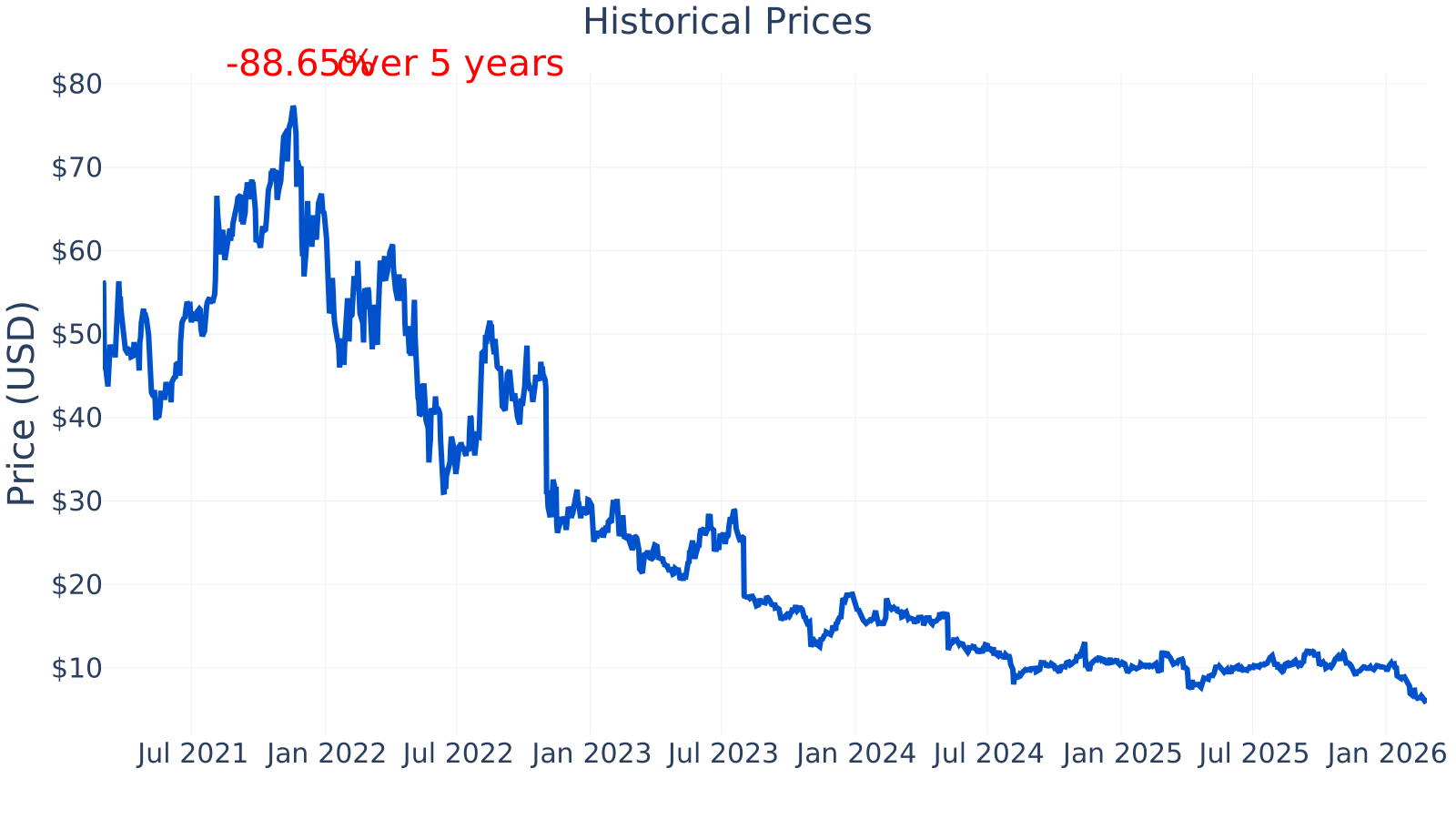
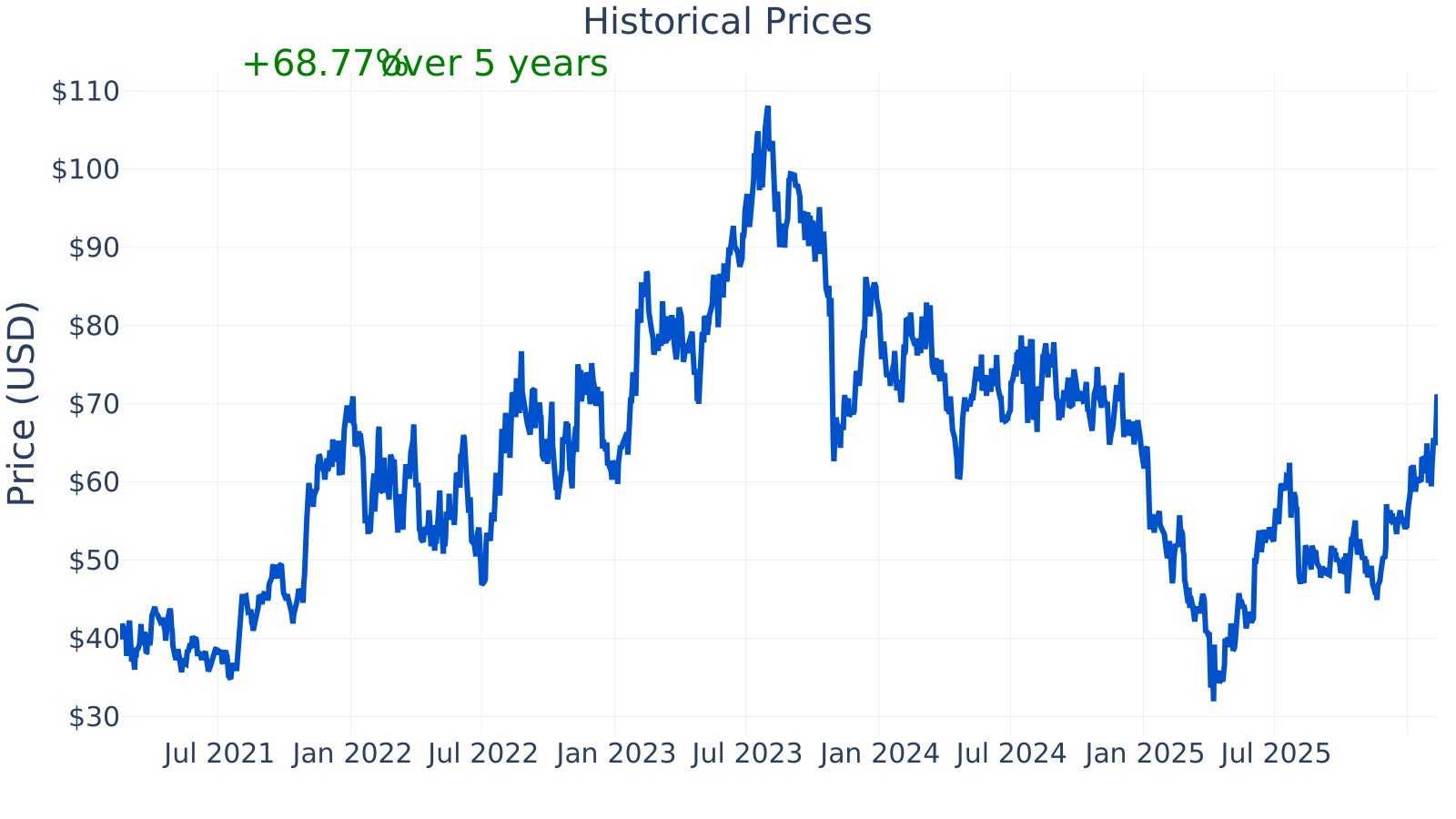
onsemi’s market capitalization is about $28.6B. The stock’s beta of 1.54 signals that its share price has historically moved more than the overall market (higher volatility). The latest P/E ratio is ~245, far above the semiconductor industry median shown here (~46), which can happen when recent earnings fall sharply (the denominator becomes small). Profit margin is about 2.0% versus an industry median near 9.4%, and year-over-year revenue growth is about -11.2% versus an industry median near +12.95%. Debt-to-equity is about 45% (industry median ~26%). Trailing twelve-month free cash flow is roughly $1.69B.
Growth (Medium)
onsemi operates in semiconductors, an industry that benefits over time from long-term trends like electrification, automation, and increasing electronic content in vehicles and industrial systems. Within semiconductors, power electronics and sensing can be supported by structural demand drivers such as electric vehicles, fast charging, renewable energy infrastructure, and factory automation—areas where efficiency and reliability are key requirements.
Strategically, onsemi has emphasized automotive and industrial markets, which can involve longer product cycles and qualification requirements than consumer electronics. This positioning can support longer-lived revenue streams when designs are adopted by customers, but it can also mean that ramps (and slowdowns) may play out over multiple quarters.
The chart shows a shift from strong growth in 2021–2022 (often above +20% year-over-year in multiple quarters) toward flat growth in early 2023 and then a sustained downturn through 2024–2025 (reaching around -11% year-over-year by late 2025). This pattern is consistent with a cyclical industry where demand can cool after strong periods, and where customers may reduce orders while they work through inventories.
Despite the slowdown, free cash flow has remained positive in the periods shown, moving from about $0.51B (2021) to about $1.45B (2022), then around $1.36B (2023), dipping to about $0.82B (2024) and rising again to about $1.40B (2025). Positive free cash flow can help fund investment and provide flexibility during weaker parts of the cycle, although it does not remove earnings volatility.
Potential catalysts for future growth (in a purely business sense) typically include a recovery in semiconductor demand, improving automotive/industrial order patterns, and increased content per vehicle or per industrial system for power modules and sensing. The timing and magnitude of these drivers can vary widely.
Risks (High)
This article is for informational purposes only and does not constitute financial advice. Some content is AI-generated. See Disclaimer