Stock Analysis · Olaplex Holdings Inc (OLPX)
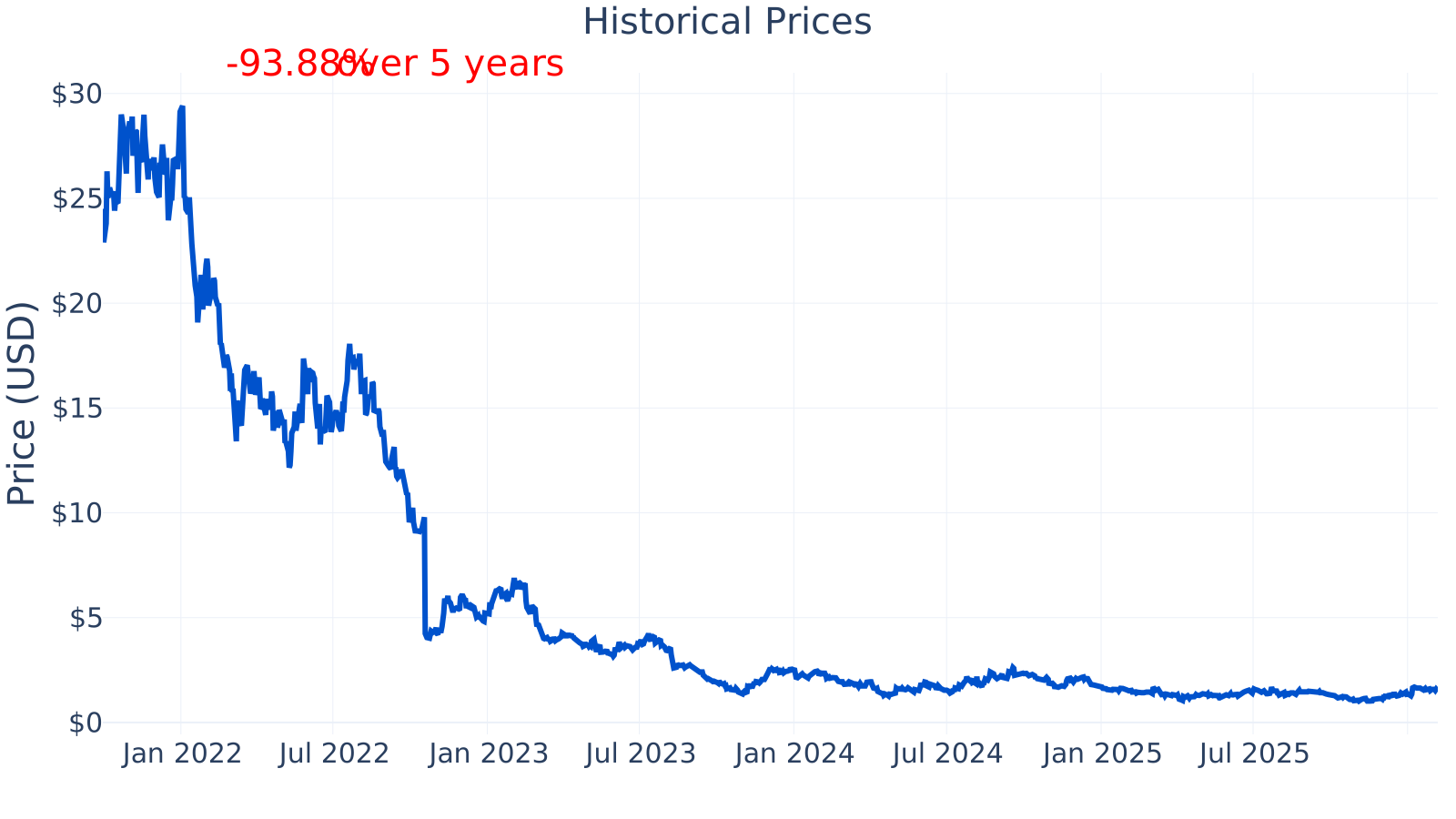
Overview
Olaplex Holdings Inc is a hair care company known for products designed to repair and protect hair from damage, particularly related to chemical services such as coloring and bleaching. The company sells a portfolio of branded items (for example, bond-building treatments, shampoos, conditioners, and styling products) that are used by professional stylists and also sold directly to consumers.
In its SEC filings, Olaplex describes its business as operating across three primary sales channels. These channels matter because each behaves differently over time (salons can drive product credibility, specialty retail can scale quickly, and direct-to-consumer can provide higher control over the customer relationship).
Main sources of revenue (by channel, from largest to smallest) are typically presented as:
- Specialty retail (beauty-focused retailers)
- Professional (salons, stylists, distributors tied to the professional market)
- Direct-to-consumer (company-operated e-commerce)
Exact percentages can shift by year and are detailed in the company’s annual report segment/channel disclosures.
From 2022 to 2024, total revenue declined meaningfully (about $704.3M in 2022 to about $422.7M in 2024), while selling, general, and administrative expenses stayed relatively high in dollar terms. This combination helps explain why net income fell sharply over the same period (about $244.1M in 2022 to about $19.5M in 2024).
Key Figures
| Metric | Value | Industry ⓘ |
|---|---|---|
| Date | Feb 08, 2026 | |
| Context | ||
| Sector | Consumer Cyclical | |
| Industry | Specialty Retail | |
| Market Cap ⓘ | $1.00B | |
| Beta ⓘ | 2.26 | |
| Fundamental | ||
| P/E Ratio ⓘ | N/A | 23.78 |
| Profit Margin ⓘ | -1.18% | 6.27% |
| Revenue Growth ⓘ | -3.80% | 5.20% |
| Debt to Equity ⓘ | 39.62% | 103.28% |
| PEG ⓘ | N/A | |
| Free Cash Flow ⓘ | $72.42M | |
At the latest snapshot, Olaplex is around a $1.0B market capitalization company. The stock’s beta of ~2.26 indicates it has historically moved much more than the broader market (higher volatility). Profit margin is slightly negative (about -1.2%) versus an industry median near 6.3%, and revenue growth year-over-year is about -3.8% versus an industry median near 5.2%. Debt-to-equity is about 39.6%, below the industry median (about 103%), suggesting lower balance-sheet leverage than many peers. Free cash flow over the trailing twelve months is about $72.4M. The latest P/E ratio is not meaningful in this snapshot (shown as 0), which can happen when earnings are very low or negative.
Growth (Medium)
Hair care is a large, established consumer category where growth tends to come from brand strength, product innovation, distribution expansion, and share gains rather than from a rapidly expanding end-market. For Olaplex, the long-term growth question is less about whether people will keep buying hair care, and more about whether the brand can re-accelerate demand while defending its positioning in “repair” and premium treatment products.
The year-over-year revenue trend shows a shift from very rapid growth in 2021–2022 to a sustained contraction through 2023–2024, with only brief signs of stabilization in 2025 (including one quarter with slightly positive growth). This pattern is consistent with a business moving from an early hyper-growth phase into a tougher maturity/reset period, where rebuilding consistent demand becomes the key challenge.
Free cash flow has remained positive but has declined over time (roughly ~$228.6M in early 2023 down to ~$91.6M by early 2025, and about ~$72.4M in the latest metrics list). For long-term fundamentals, the direction of free cash flow matters because it reflects how much cash remains after operating needs and capital spending—cash that can be used for debt reduction, reinvestment, or other corporate purposes.
Potential catalysts discussed in company materials generally relate to product launches/innovation, improving performance in key channels (specialty retail and professional), and executing international expansion. Whether these translate into sustained growth depends on competitive intensity, consumer perception of product efficacy, and the effectiveness of marketing and distribution execution.
Risks (High)
This article is for informational purposes only and does not constitute financial advice. Some content is AI-generated. See Disclaimer


