Stock Analysis · Okta Inc (OKTA)
Overview
Okta, Inc. is a software company focused on identity and access management. In simple terms, it helps organizations make sure the right people (employees, partners, and customers) can sign in to the right applications securely, often with tools like single sign-on and multi-factor authentication. Okta’s products are typically delivered through the cloud, and customers generally pay on a subscription basis.
From a business model perspective, Okta’s revenue is primarily tied to ongoing subscriptions to its identity platform. In its filings, Okta describes revenue largely as subscription-based, with professional services (such as implementation and support services) being a smaller component.
Main sources of revenue (largest to smallest, based on typical company disclosure categories):
- Subscription revenue (recurring contracts for access to Okta’s platform)
- Professional services and other revenue (implementation, consulting, and related services)
Over time, Okta’s reported results show a shift toward improved operating performance, with revenue expanding and profitability moving closer to sustained positive levels.
Across the periods shown, total revenue increased from about $1.3B (FY2022) to about $2.61B (FY2025), while operating income moved from a large loss to a small profit (about +$51M in FY2025). This suggests operating expenses grew more slowly than revenue in the most recent year, supporting improved overall profitability.
Key Figures
| Metric | Value | Industry ⓘ |
|---|---|---|
| Date | Feb 07, 2026 | |
| Context | ||
| Sector | Technology | |
| Industry | Software - Infrastructure | |
| Market Cap ⓘ | $15.37B | |
| Beta ⓘ | 0.77 | |
| Fundamental | ||
| P/E Ratio ⓘ | 78.85 | 25.66 |
| Profit Margin ⓘ | 6.87% | 6.68% |
| Revenue Growth ⓘ | 11.60% | 15.20% |
| Debt to Equity ⓘ | 6.14% | 19.82% |
| PEG ⓘ | 0.42 | |
| Free Cash Flow ⓘ | $898.00M | |
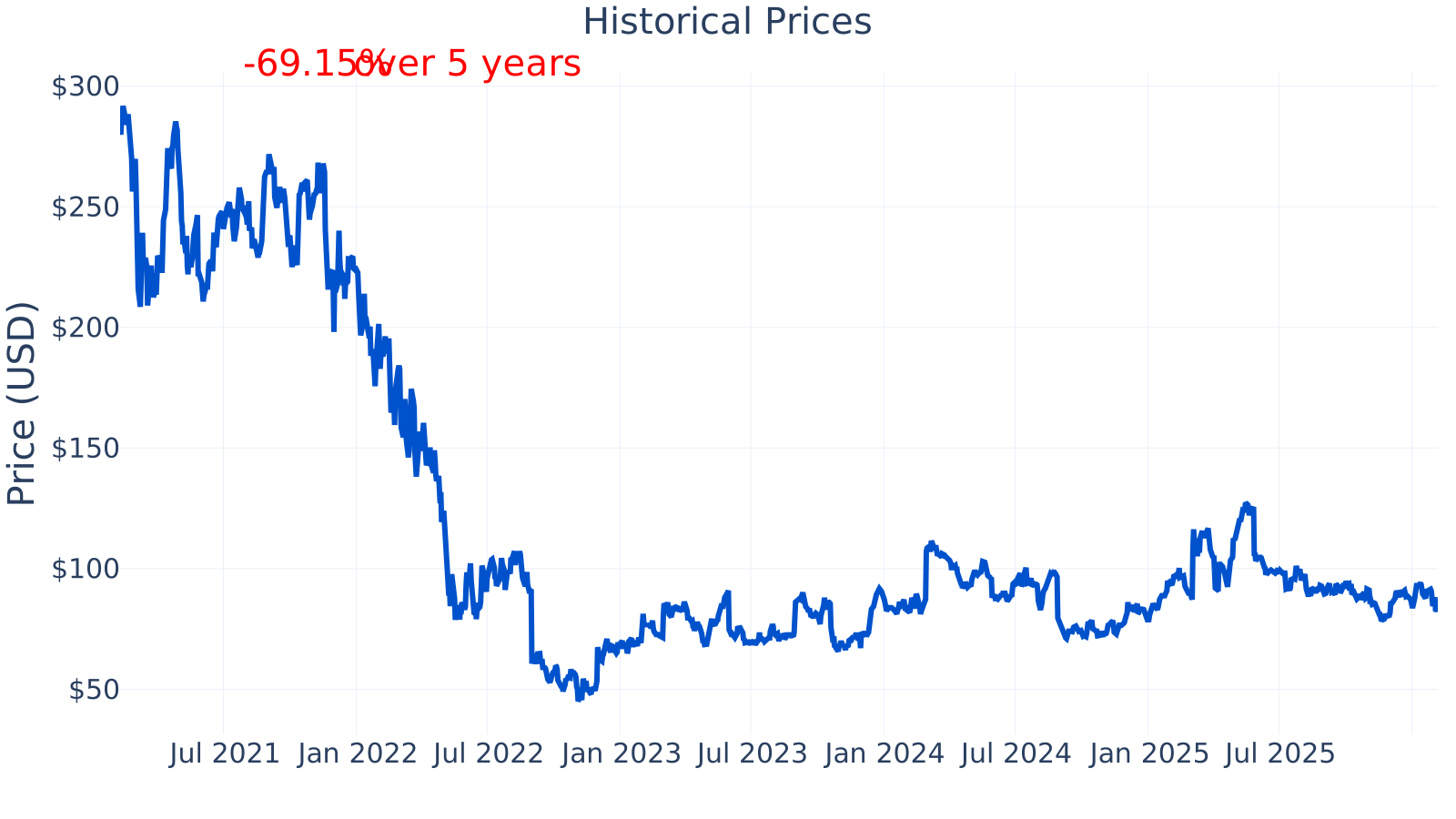
Okta’s market capitalization is about $15.4B and its beta is about 0.77, which indicates the stock has historically moved somewhat less than the broader market on average (though individual periods can differ significantly). The company shows a profit margin of ~6.9%, close to the industry median (~6.7%), reflecting a notable improvement versus earlier years when margins were negative. Year-over-year revenue growth is about 11.6%, below the industry median (~15.2%). Financial leverage appears modest: debt-to-equity is about 6.1% versus an industry median near 19.8%. Free cash flow over the trailing twelve months is about $898M, which is a key indicator of cash generation after operating costs and capital spending.
Growth (Medium)
Okta operates in the identity and access management area, which is closely tied to long-term trends such as cloud software adoption, remote/hybrid work, and increased security requirements. Identity is often treated as a “front door” control for modern IT systems, which can support ongoing demand as organizations add more applications and seek to reduce security risk.
From a strategy standpoint, Okta’s positioning is centered on being a neutral identity layer that connects many applications and environments. In practice, this strategy is meant to benefit from complexity: as companies use more cloud services and need consistent security policies, centralized identity tools can become more important.
The revenue growth trend shows a clear deceleration from very high rates earlier (above 60% year-over-year at peak) to the low teens more recently (around 11%–13%). This pattern can indicate a business moving from an earlier, faster expansion phase toward a more mature growth profile, or it can reflect tougher macro conditions and increased competition. Either way, the trajectory suggests future results may depend more on execution, product expansion, and customer retention than on rapid market expansion alone.
Free cash flow has increased substantially, from roughly $64M (FY2023) to about $730M (FY2025), with the latest trailing figure around $898M. This improvement can matter for long-term business durability because it indicates more cash being generated that could be used for reinvestment, acquisitions, or balance sheet flexibility.
Risks (High)
This article is for informational purposes only and does not constitute financial advice. Some content is AI-generated. See Disclaimer