Stock Analysis · OSI Systems Inc (OSIS)
Overview
OSI Systems, Inc. is a technology company that designs and manufactures specialized equipment used in three main areas: security screening, healthcare monitoring/diagnostics, and optoelectronics (light-based and electronic components). The business is organized into three operating segments that generally map to those areas: Security (screening and inspection systems), Healthcare (patient monitoring and related products), and Optoelectronics & Manufacturing (components and contract manufacturing capabilities).
Across these segments, revenue is typically generated through a mix of product sales (systems and devices), long-term or multi-year customer programs (often involving government or regulated buyers), and follow-on service/support (maintenance, upgrades, spare parts, and related services). This mix can make results less dependent on any single product cycle, but it can also introduce timing effects, because larger systems are often delivered and recognized in specific project milestones.
The company’s filings describe revenue by segment (largest to smallest can vary by year). Based on how OSI Systems reports its operations, the main revenue sources are generally:
- Security segment (screening/inspection systems and related services)
- Healthcare segment (patient monitoring and other healthcare products)
- Optoelectronics & Manufacturing segment (components and manufacturing services)
Note: Exact segment percentages can shift year to year and are best taken from the latest annual report segment note.
Over the last several fiscal years shown, total revenue increased from about $1.15B (FY2021) to about $1.71B (FY2025). Operating income and net income also rose over that span, while interest expense increased, which can be consistent with higher borrowing costs and/or higher debt levels.
Key Figures
| Metric | Value | Industry ⓘ |
|---|---|---|
| Date | Feb 08, 2026 | |
| Context | ||
| Sector | Technology | |
| Industry | Electronic Components | |
| Market Cap ⓘ | $4.61B | |
| Beta ⓘ | 1.34 | |
| Fundamental | ||
| P/E Ratio ⓘ | 30.72 | 41.23 |
| Profit Margin ⓘ | 8.52% | 6.11% |
| Revenue Growth ⓘ | 10.50% | 12.20% |
| Debt to Equity ⓘ | 123.86% | 39.00% |
| PEG ⓘ | 2.17 | |
| Free Cash Flow ⓘ | $142.33M | |
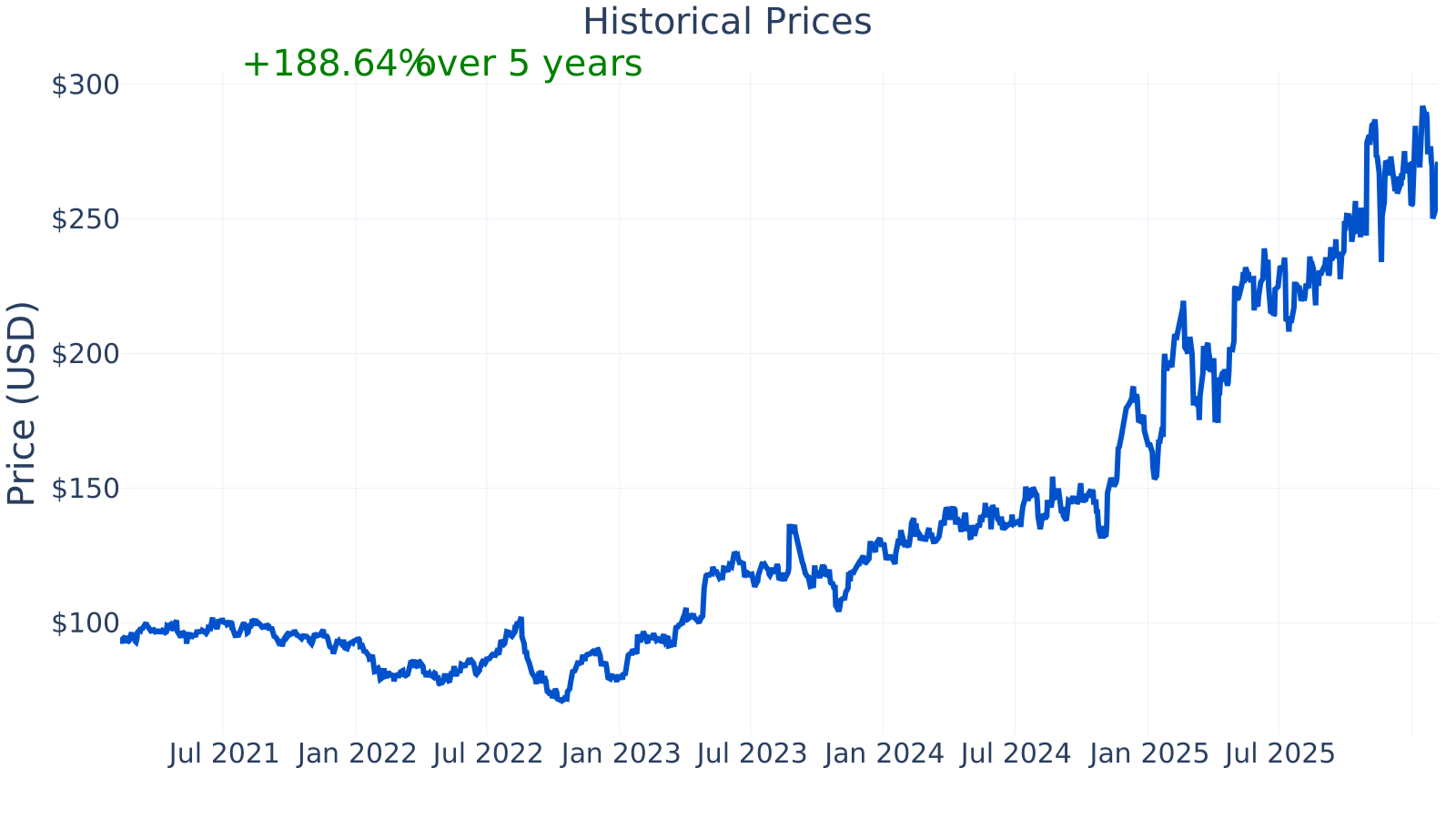
OSI Systems’ market capitalization is about $4.6B, placing it in the mid-cap range. The stock’s beta (~1.35) suggests it has tended to move more than the broader market over time (higher up-and-down swings). The company’s profit margin (~8.5%) is above the listed industry median (~6.1%), while year-over-year revenue growth (~10.5%) is slightly below the industry median (~12.2%). A notable point is leverage: debt-to-equity (~124%) is meaningfully higher than the industry median (~39%). Free cash flow over the last twelve months shown is about $142M, but cash generation has varied significantly over the past few years.
Growth (Medium)
OSI Systems operates in markets that are supported by long-running demand drivers: aviation and cargo security needs, infrastructure protection, and ongoing healthcare spending on monitoring and hospital equipment. These end markets are not purely “high-growth tech,” but they can be durable because they are tied to regulation, safety requirements, and installed-base servicing. The company’s three-segment structure can also reduce reliance on any single customer group, although each segment has its own cycle.
The revenue growth pattern has been uneven quarter to quarter, with periods of strong expansion and occasional declines. The most recent point shown is around 10.5% year-over-year growth, which indicates continued expansion, though not at the fastest pace versus the industry median. For a business that can be influenced by project timing (especially in security systems), variability is not unusual, and results can depend on the pace of customer orders, deliveries, and program milestones.
Free cash flow has been volatile over the period shown, including a notably negative period (around -$184M) followed by a return to positive territory. For long-term business quality, this matters because consistent free cash flow can support reinvestment, balance-sheet flexibility, and resilience during downturns. When free cash flow swings, it can reflect working capital needs (inventory and receivables), timing of large customer programs, and investment cycles.
Risks (High)
This article is for informational purposes only and does not constitute financial advice. Some content is AI-generated. See Disclaimer