Stock Analysis · OReilly Automotive Inc (ORLY)
Overview
O’Reilly Automotive, Inc. (ORLY) is a specialty retailer and distributor of automotive aftermarket parts, tools, supplies, equipment, and accessories. In plain terms, it sells the replacement parts and related products used to maintain and repair vehicles after they have been sold (for example: batteries, brakes, filters, fluids, lighting, and many other items).
The company serves two main customer groups: “do-it-yourself” customers (individuals working on their own cars) and “professional” customers (repair shops and other service providers). Its business model relies on a large network of stores and distribution facilities designed to deliver parts quickly and reliably, which matters because many repairs are time-sensitive.
Revenue is primarily generated from selling auto parts and related products through its stores and professional delivery programs. Based on how the company describes its operations in its filings, the main revenue streams can be understood as:
- Retail (“DIY”) sales through stores (individual customers)
- Professional (“DIFM” / installer) sales to service providers (often with same-day delivery)
- Other revenue (generally not a major driver compared with parts sales)
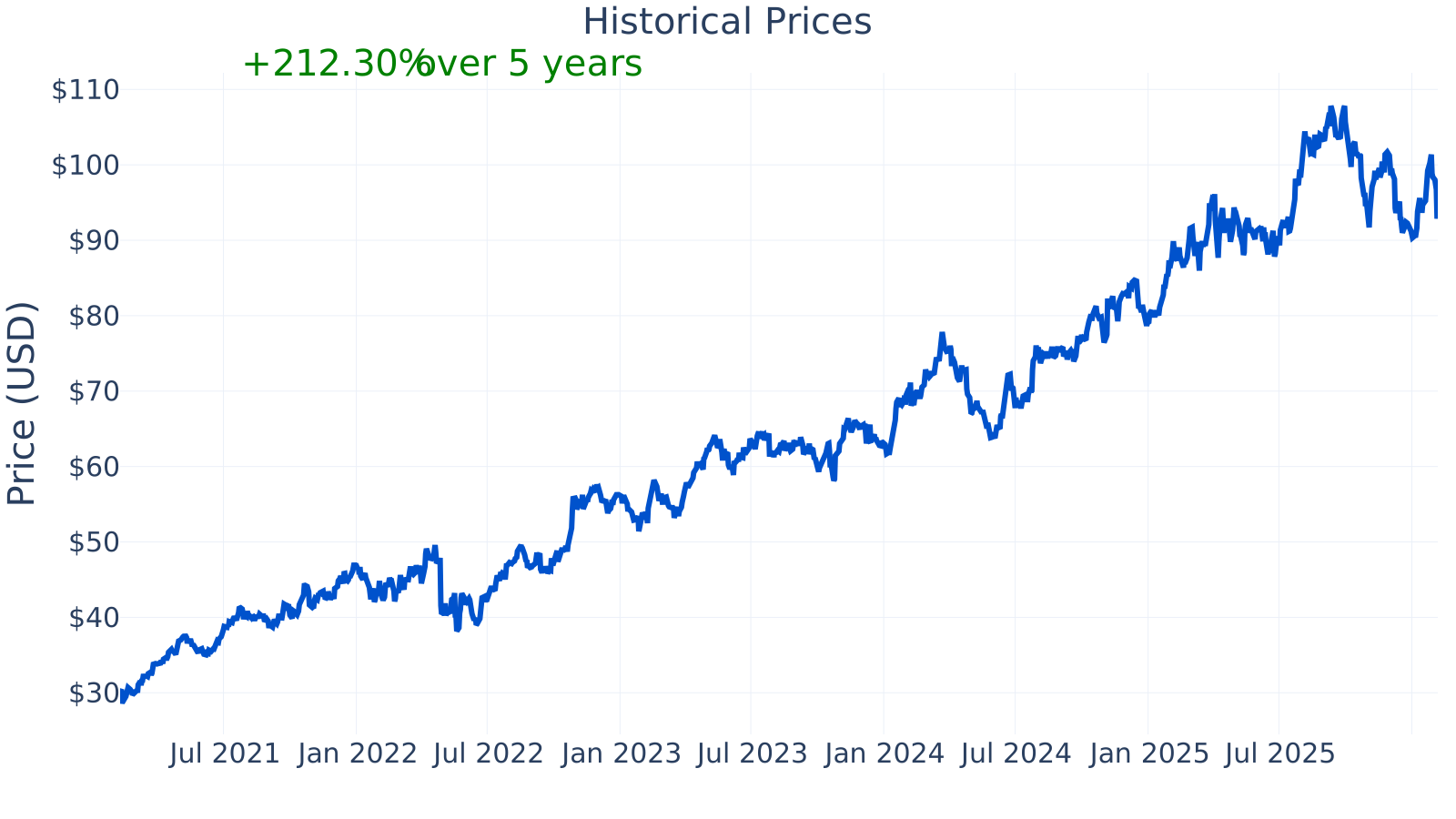
In recent years, the company’s total revenue has increased steadily, reaching about $17.8B for 2025 (as reflected by the revenue totals shown in the financial flow graphic).
From 2021 to 2025, the revenue line rises from about $13.3B to $17.8B. Over the same period, gross profit also increases (about $7.0B to $9.2B) and net income trends upward (about $2.16B to $2.54B), showing that profit dollars have grown alongside sales.
Key Figures
| Metric | Value | Industry ⓘ |
|---|---|---|
| Date | Feb 07, 2026 | |
| Context | ||
| Sector | Consumer Cyclical | |
| Industry | Auto Parts | |
| Market Cap ⓘ | $79.53B | |
| Beta ⓘ | 0.62 | |
| Fundamental | ||
| P/E Ratio ⓘ | 31.72 | 25.56 |
| Profit Margin ⓘ | 14.27% | 3.38% |
| Revenue Growth ⓘ | 7.80% | 4.95% |
| Debt to Equity ⓘ | -1112.40% | 66.87% |
| PEG ⓘ | 2.19 | |
| Free Cash Flow ⓘ | $1.59B | |
O’Reilly’s equity value is about $79.5B, and its beta of ~0.62 suggests the stock has historically fluctuated less than the broader market on average. Profitability stands out: the company’s latest profit margin is ~14.27%, which is far above the industry median shown here (about 3.38%). Recent top-line growth is also higher than the industry median: about 7.8% year-over-year versus 4.95% for the median peer in this comparison.
Growth (medium)
The auto parts aftermarket is generally supported by long-lived demand drivers: vehicles need ongoing maintenance regardless of economic cycles, and an aging vehicle fleet tends to require more replacement parts over time. This makes the industry less dependent on new car sales than many people assume.
O’Reilly’s strategy is built around being highly available locally (many stores) while also maintaining the logistics to supply professional installers quickly. For long-term business resilience, this “right part, right time” approach can matter because repair shops often choose suppliers based on speed and fill rates, not just price.
Year-over-year revenue growth has remained positive in the periods shown, though it varies from quarter to quarter. The most recent value shown is about 7.78%, which is above the industry median shown in the table. The broader pattern suggests growth has moderated from the unusually high rates seen earlier in the timeline, but it has not turned negative in this view.
Free cash flow (a rough proxy for cash generated after operating needs and capital spending) is consistently positive across the timeline shown. It declines from about $2.84B (2021) to about $2.04B (2025). Even with that decline, the business continues to generate substantial cash, which can support investments in distribution capability, store footprint, and other corporate uses described in filings.
Potential catalysts (in a factual, non-predictive sense) often discussed for this type of business include continued expansion of professional programs, improved distribution density, and a vehicle fleet that remains on the road longer—all of which tend to increase demand for replacement parts and quick delivery.
Risks (medium)
This article is for informational purposes only and does not constitute financial advice. Some content is AI-generated. See Disclaimer