Stock Analysis · O-I Glass Inc (OI)
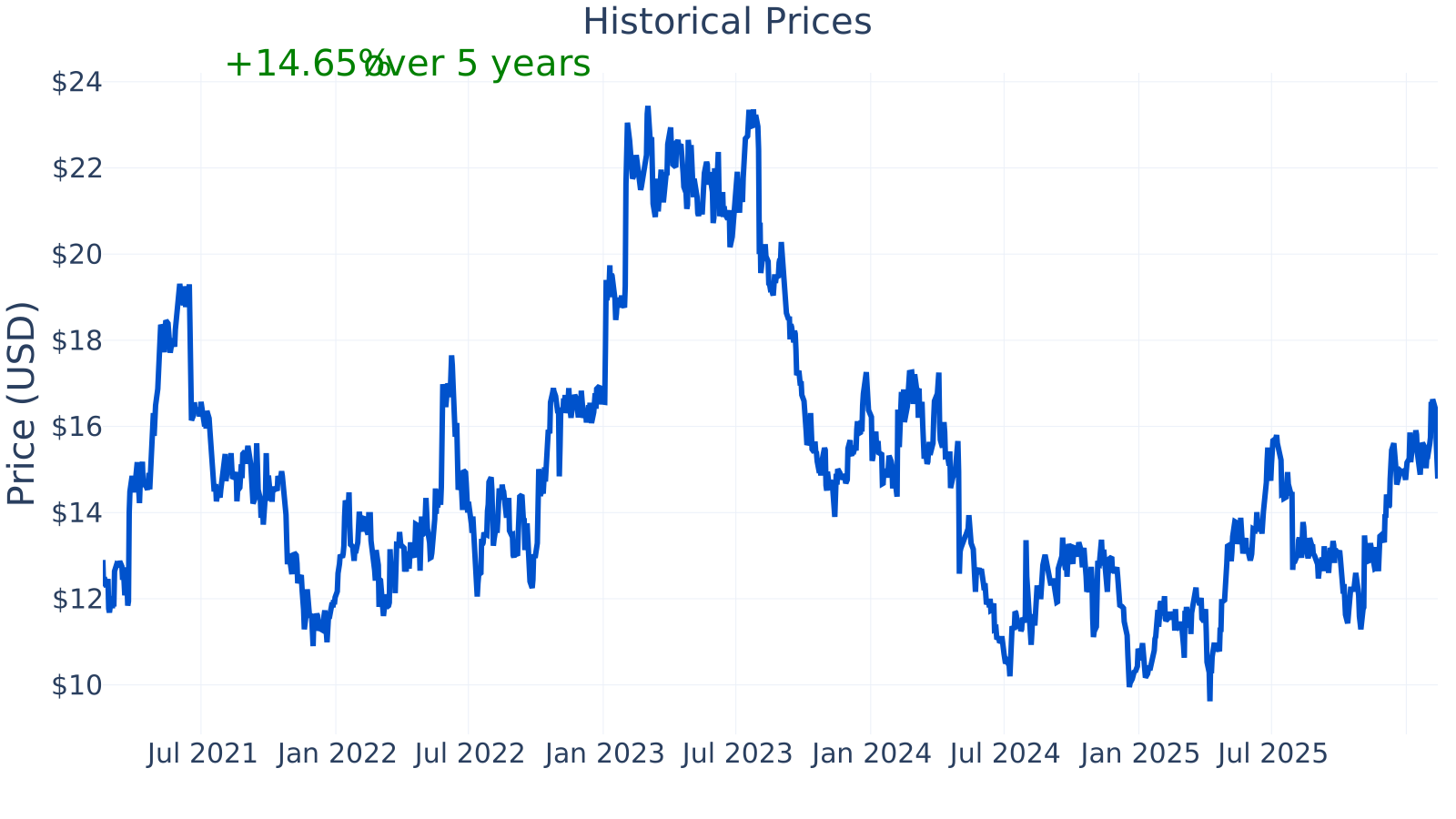
Overview
O-I Glass Inc. (O-I) manufactures glass containers used primarily for food and beverages. In simple terms, it makes bottles and jars at industrial scale and sells them to brand owners and filling companies. Glass packaging tends to be a “volume” business: results are influenced by how many containers customers need, the mix of products (for example, premium spirits bottles versus standard containers), and the company’s ability to manage energy and raw-material costs.
Revenue is mainly generated by selling glass containers, generally supported by long-term customer relationships and ongoing demand from everyday consumer products (beer, wine, spirits, non-alcoholic beverages, and packaged foods). Public filings typically describe the business by geographic/operating segments (rather than a detailed end-market percentage split), and the exact revenue share by product category is not consistently disclosed as fixed percentages year to year.
Main revenue drivers (from largest to smaller, based on how the business is commonly described in filings):
- Glass containers for beverages (such as beer, wine, spirits, and non-alcoholic beverages)
- Glass containers for food (such as jars for sauces, spreads, and other packaged foods)
- Other / services and miscellaneous (items that may be reported as “other,” depending on the period and reporting format)
From a business-model perspective, O-I is exposed to consumer demand (especially beverage volumes), input-cost volatility (notably energy), and the competitive landscape in rigid packaging (glass versus aluminum cans and plastic containers).
Across the years shown, revenue and gross profit move meaningfully with the operating environment, while interest expense remains a sizable, recurring outflow. That combination can matter for long-term shareholders because it can limit how much of the operating profit ultimately reaches net income when borrowing costs are elevated.
Key Figures
| Metric | Value | Industry ⓘ |
|---|---|---|
| Date | Feb 16, 2026 | |
| Context | ||
| Sector | Consumer Cyclical | |
| Industry | Packaging & Containers | |
| Market Cap ⓘ | $2.27B | |
| Beta ⓘ | 0.80 | |
| Fundamental | ||
| P/E Ratio ⓘ | N/A | 22.22 |
| Profit Margin ⓘ | -2.01% | 5.56% |
| Revenue Growth ⓘ | -1.90% | 5.90% |
| Debt to Equity ⓘ | 215.75% | 137.29% |
| PEG ⓘ | 0.35 | |
| Free Cash Flow ⓘ | $250.00M | |
O-I’s market capitalization is about $2.27B, placing it in the mid-cap range. The stock’s beta of about 0.80 indicates it has historically moved somewhat less than the broader market on average (though company-specific swings can still be significant).
Profitability is currently weaker than the packaging & containers peer group: the latest profit margin is about -2.01% versus an industry median near 5.56%. Revenue growth year-over-year is also negative at roughly -1.90%, compared with an industry median around 5.90%.
Leverage is notable: debt-to-equity is about 215.75% versus an industry median near 137.29%. Free cash flow over the trailing twelve months is about $250M, which is a meaningful cash generation figure, but it should be viewed alongside the company’s leverage and earnings volatility.
Growth (Low)
Glass container manufacturing is generally considered a mature, cyclical industrial activity tied to consumer packaged goods demand. Over long horizons, the industry’s growth tends to be steadier than fast-growing technology or biotech sectors, with demand influenced by beverage and food consumption, brand packaging choices, and substitution trends (glass versus cans or plastic).
Strategically, glass can benefit from brand positioning (premium look and feel) and from refill/reuse or recycled-content initiatives where glass competes well in certain use cases. However, the practical growth outlook often depends on (1) maintaining and winning supply contracts, (2) improving plant efficiency and utilization, and (3) successfully passing through or offsetting energy and material cost changes in pricing.
The year-over-year revenue trend shown has been mixed, with a clear shift into negative territory in the more recent periods. That pattern typically points to softer shipment volumes, pricing/mix normalization after inflationary periods, or both.
Free cash flow has swung widely over time, including periods of negative free cash flow followed by recovery. For a capital-intensive manufacturer, this can reflect a combination of earnings variability, working-capital movements, and the timing of major furnace rebuilds and other plant investments.
Risks (High)
This article is for informational purposes only and does not constitute financial advice. Some content is AI-generated. See Disclaimer


