Stock Analysis · Novanta Inc (NOVT)
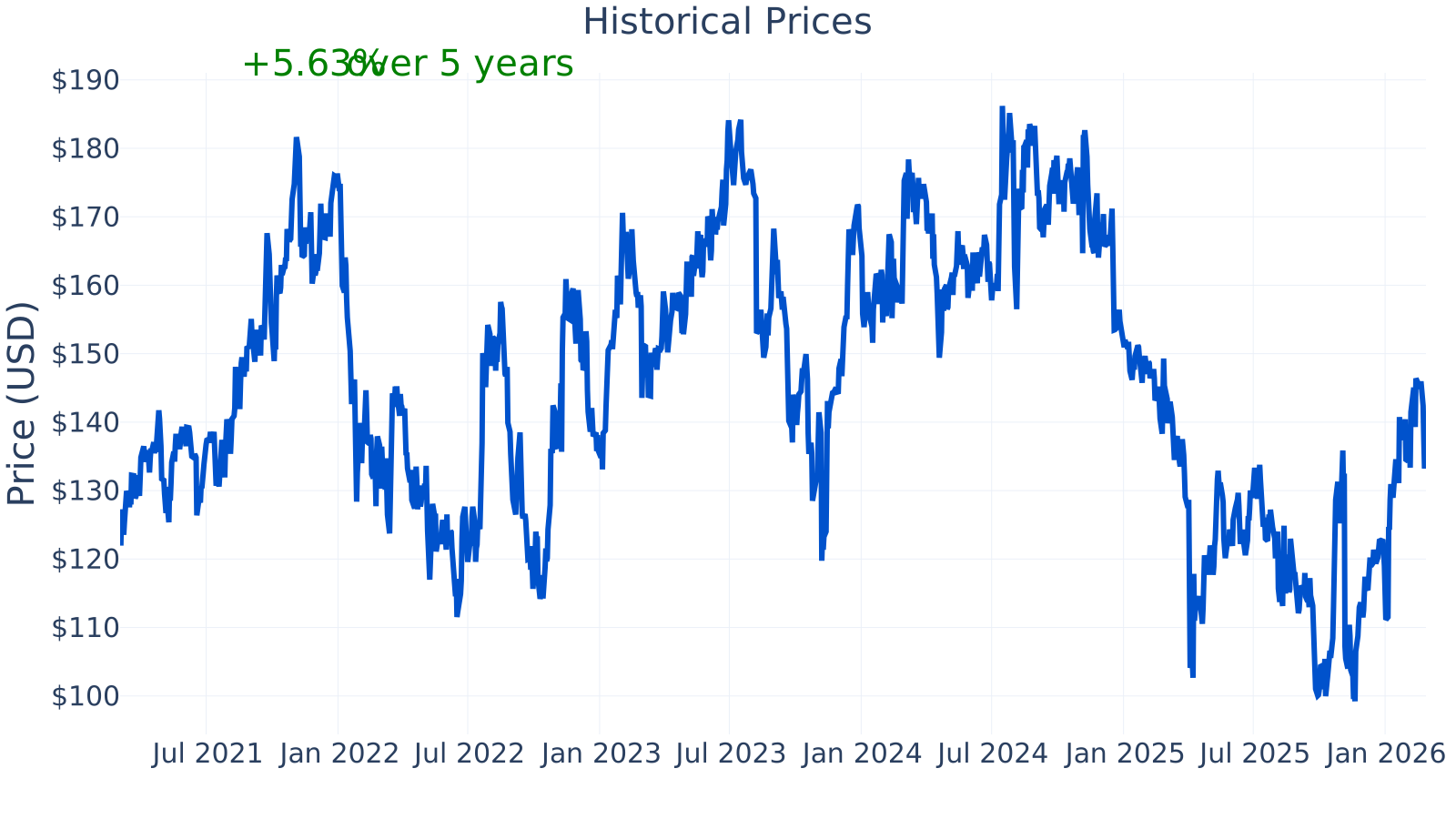
Overview
Novanta Inc (NOVT) is a technology-focused company that designs and manufactures specialized components used inside larger, mission-critical systems. In plain terms, it sells “building blocks” that help other companies make precise machines and equipment work reliably. These products are typically used in areas where accuracy and uptime matter—such as medical equipment, industrial automation, and advanced manufacturing.
Novanta reports its business through operating segments that generally align with its core capabilities, such as precision motion/automation, photonics (light-based technologies), and certain medical-related components. Revenue is primarily generated from selling engineered components and subsystems, with additional contribution from service, spare parts, and ongoing support tied to installed equipment.
Public filings typically describe revenue by segment and end market, but exact percentage splits can change from year to year and depend on how the company groups products at the time of reporting. When reviewing the company for long-term context, it helps to focus on the recurring nature of demand drivers (installed base, consumables/spares, long product lifecycles) versus more cyclical portions (capital equipment spending by industrial customers).
Over the last several years, total revenue increased (from about $707M in 2021 to about $981M in 2025). Gross profit also rose over that span, but net income did not rise in the same straight line (about $50M in 2021, peaking around $74M in 2022, and about $54M in 2025). This pattern suggests that operating costs and/or financing and tax items meaningfully influenced bottom-line results even as sales grew.
Key Figures
| Metric | Value | Industry ⓘ |
|---|---|---|
| Date | Mar 02, 2026 | |
| Context | ||
| Sector | Technology | |
| Industry | Scientific & Technical Instruments | |
| Market Cap ⓘ | $4.84B | |
| Beta ⓘ | 1.62 | |
| Fundamental | ||
| P/E Ratio ⓘ | 91.45 | 37.61 |
| Profit Margin ⓘ | 5.49% | 12.72% |
| Revenue Growth ⓘ | 8.50% | 7.60% |
| Debt to Equity ⓘ | 25.99% | 23.85% |
| PEG ⓘ | 2.11 | |
| Free Cash Flow ⓘ | $48.43M | |
Novanta’s market capitalization is about $4.84B. The beta of ~1.62 indicates the stock has historically moved more than the broader market (higher volatility). The P/E ratio is ~91.4, which is notably above the industry median (~37.6), implying the market is pricing in higher expected growth and/or improvement than peers. Profit margin is about 5.5% versus an industry median near 12.7%, showing current profitability is lower than typical competitors in the same broad industry group. On the growth side, year-over-year revenue growth is about 8.5%, slightly above the industry median (~7.6%). Debt-to-equity is about 26.0%, close to the industry median (~23.9%). Free cash flow over the trailing twelve months is about $48.4M.
Growth (Medium)
Novanta operates in areas tied to long-term themes such as automation, precision measurement, and advanced healthcare equipment. These end markets tend to benefit from multi-year drivers: factories modernizing processes, demand for higher precision and throughput in manufacturing, and ongoing investment in medical technology. However, portions of demand can still be cyclical because customers may delay capital spending during weaker economic periods.
The company’s strategy—selling specialized, high-performance components designed into customer systems—can support durable growth when products become embedded in platforms that ship for many years. In these situations, suppliers may benefit from repeat orders, follow-on programs, and service/spare parts as the installed base expands.
Revenue growth has varied over time. It was very strong in 2021–2022 (often well into double digits), slowed and briefly turned slightly negative in late 2023, and then returned to modestly positive levels through 2024–2025, ending around 8.5% year-over-year. This shape is consistent with a business that can grow over time but is still influenced by customer ordering cycles and broader industrial conditions.
Free cash flow has also moved around, declining from roughly $134M (2021) to about $60M (2022), then improving to about $142M (2025, as of the March datapoint shown). Positive free cash flow matters because it represents cash that can be used for debt reduction, acquisitions, or internal investment, although the most recent trailing figure shown (~$48M) indicates that cash generation can fluctuate meaningfully depending on working capital needs and profitability.
Risks (Medium)
A key risk for Novanta is that parts of its business are linked to customer capital spending cycles. Even with strong underlying themes (automation and advanced medical), customers can pause equipment purchases, which can pressure near-term growth and factory utilization.
Another central risk is profitability. Compared with its industry median, Novanta’s profit margin is lower, which can limit flexibility if costs rise or demand softens. Because the company sells specialized components, maintaining pricing power and efficient manufacturing is important to sustaining margins over time.
The profit margin trend shows a gradual decline over the period displayed—moving from roughly 7–9% earlier in the timeline toward about 5.5% most recently—while the industry median remained higher (often around 10–13%). This gap highlights execution risk: even if sales grow, the business needs either better gross margins, lower operating expense growth, or improved mix to close the profitability difference.
Balance sheet leverage is another consideration. Debt can support acquisitions or investment, but it adds interest expense and reduces flexibility during downturns.
Debt-to-equity has come down substantially from higher levels earlier in the period shown (including readings near or above 90–100% in 2021) to about 26% most recently, roughly in line with the industry median (~24%). The direction here is constructive from a risk-management standpoint, although the company’s overall results can still be sensitive to interest costs and refinancing conditions.
Competitive positioning is also a risk factor. Novanta participates in specialized niches rather than a single mass-market product category. Its advantages often come from deep engineering expertise, regulatory and quality requirements in medical applications, and the “design-in” nature of components that are qualified into customer platforms. That said, competition can be intense in precision components and photonics, with rivals ranging from diversified industrial technology suppliers to specialized private firms. In many cases, competitors aim to win business by offering comparable performance, better pricing, or broader system-level integration.
Valuation
Novanta’s P/E ratio has generally stayed well above the industry median across the period shown, often ranging roughly from the 70s to above 100 at different points, versus industry medians more commonly in the mid-20s to around 40. The latest P/E (about 91) is still far above the industry median (~38). In simple terms, this indicates the stock’s valuation has consistently embedded expectations of stronger long-term outcomes than the typical peer—such as faster growth, improving margins, or higher-quality earnings.
That valuation context is important alongside the operating picture: revenue growth is positive and slightly above the industry median recently, but profit margin is below the industry median and has trended down. When a company trades at a sizable premium while margins are under pressure, the valuation becomes more sensitive to execution (for example, whether profitability improves) and to any slowdown in end-market demand.
Conclusion
Novanta is positioned around long-running themes such as precision automation and advanced medical/industrial technologies, and its multi-year revenue expansion suggests it participates in markets with structural demand. At the same time, recent years show that higher revenue does not automatically translate into higher net income, and profitability metrics are currently below the industry median.
From a long-term perspective, the main elements to watch are whether margins stabilize and improve, whether cash generation remains consistently positive through cycles, and whether the company maintains disciplined balance sheet management. The valuation profile—persistently above industry-average P/E levels—makes operational follow-through particularly important because expectations appear elevated compared with peers.
Sources:
- SEC EDGAR — Novanta, Inc. Form 10-K (Annual Report)
- SEC EDGAR — Novanta, Inc. Form 10-Q (Quarterly Reports)
- Novanta Investor Relations — Annual Reports / SEC Filings repository
- Wikipedia — “Novanta Inc.” (basic company background)
This article is for informational purposes only and does not constitute financial advice. Some content is AI-generated. See Disclaimer


