Stock Analysis · Gen Digital Inc (GEN)
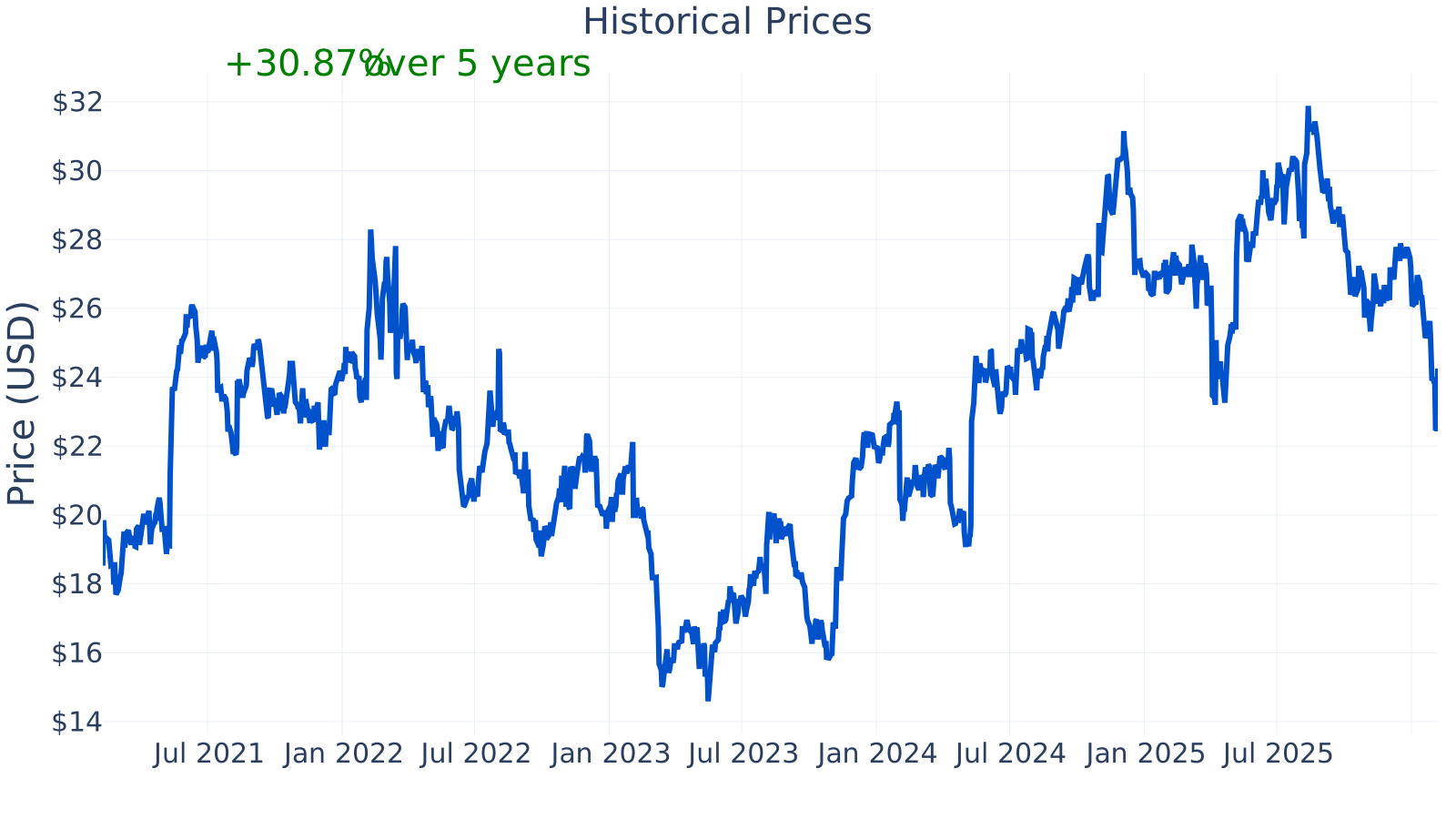
Overview
Gen Digital Inc. (GEN) is a consumer-focused cybersecurity company best known for widely used digital safety brands such as Norton, Avast, LifeLock, Avira, and CCleaner. Its products aim to protect individuals and families from malware, identity theft, scams, and other online threats across PCs and mobile devices. The business model is largely subscription-based, meaning many customers pay monthly or annually for ongoing protection rather than making one-time purchases.
In its SEC filings, Gen Digital describes its operations primarily around delivering consumer cybersecurity and identity protection services. Revenue is generally driven by paid subscriptions (often sold directly online and also through partners), with a smaller contribution from other customer programs and offerings. Public filings typically emphasize the following revenue “building blocks,” though exact percentage splits can vary by period and product mix:
- Consumer cybersecurity subscriptions (security software and related services under brands such as Norton and Avast)
- Identity protection subscriptions (including LifeLock-branded services in applicable markets)
- Partner and other revenue (distribution partners, bundles, and other ancillary programs)
From a high-level profitability lens, the company has historically generated a large gross profit (software/subscription economics), while operating results can be meaningfully influenced by selling/marketing spend, interest expense (given its leverage), and one-time items (for example, tax-related impacts or integration/restructuring charges in certain years).
Over the last several fiscal years shown, revenue increased from about $2.55B (FY2021) to about $3.94B (FY2025). Gross profit remained the majority of revenue in each period, consistent with subscription software economics. Interest expense is also a notable recurring cost line, which aligns with the company’s higher use of debt financing.
Key Figures
| Metric | Value | Industry ⓘ |
|---|---|---|
| Date | Feb 07, 2026 | |
| Context | ||
| Sector | Technology | |
| Industry | Software - Infrastructure | |
| Market Cap ⓘ | $14.96B | |
| Beta ⓘ | 1.10 | |
| Fundamental | ||
| P/E Ratio ⓘ | 25.00 | 25.66 |
| Profit Margin ⓘ | 12.74% | 6.68% |
| Revenue Growth ⓘ | 25.30% | 15.20% |
| Debt to Equity ⓘ | 360.51% | 19.82% |
| PEG ⓘ | 0.90 | |
| Free Cash Flow ⓘ | $1.52B | |
Gen Digital’s market capitalization is about $15.0B, and its beta of ~1.1 suggests the stock has tended to move roughly in line with the broader market (slightly more volatile than average). The company’s P/E ratio is ~25, close to the industry median (~25.7). Profitability (net profit margin) is about 12.7%, which is higher than the industry median (~6.7%). Recent year-over-year revenue growth is ~25.3% versus an industry median of ~15.2%. Free cash flow over the trailing twelve months is about $1.52B. A major point to note is leverage: debt-to-equity is ~361%, far above the industry median (~19.8%).
Growth (Medium)
Consumer cybersecurity and identity protection are supported by long-term demand drivers: more everyday life happening online, rising fraud and scam activity, and growing reliance on mobile devices and cloud services. These trends generally create ongoing need for protection, especially for non-technical users who prefer “set-it-and-forget-it” subscriptions.
Gen Digital’s strategy focuses on a multi-brand consumer platform and bundling (security, privacy, and identity features in one subscription), which can support customer retention and higher revenue per user over time. The company also emphasizes direct-to-consumer distribution and partner channels, which can widen reach but can also require sustained marketing investment.
The revenue growth pattern shows a mix of slower periods and sharp jumps. Growth was modest in parts of 2024 and then re-accelerated more recently (around the mid-20% range in the latest points shown). For long-term context, it can be helpful to separate “underlying” subscription momentum from step-changes that may come from portfolio and business structure changes (for example, large integration events in prior years).
Free cash flow has been substantial, with a peak around $2.04B (TTM around FY2024) and then about $1.21B (TTM around FY2025), with the latest metric table showing about $1.52B. In subscription businesses, strong free cash flow can be an important indicator because it reflects cash left after operating needs and capital spending, which can be used for debt service, share repurchases, or reinvestment.
Potential catalysts (in a neutral, non-predictive sense) typically include: continued adoption of bundled consumer “all-in-one” plans, improved retention/churn outcomes, product-led differentiation in scam protection and identity monitoring, and progress in managing debt costs through repayment or refinancing when market conditions allow.
Risks (High)
A key risk for Gen Digital is its high leverage. A higher debt load can reduce flexibility during weaker demand periods and makes results more sensitive to interest rates and refinancing conditions. It can also pressure net income via interest expense even when operating performance is steady.
The debt-to-equity line remains far above the industry median across the period shown and ends around 361%. Earlier negative readings can occur when accounting equity is negative (which can happen after large buybacks, dividends, or acquisition accounting effects), and later periods show consistently high leverage versus peers. This is a structural factor to track because it affects risk in down cycles.
Another important risk is competition. Consumer cybersecurity is crowded, and switching costs for basic antivirus can be limited. Competitive pressure can show up through pricing, bundled offers from large platforms, and higher marketing costs to acquire or keep subscribers. Gen Digital benefits from well-known brands and large installed user bases, but it competes in a market where brand alone may not be sufficient if product value is not clear to consumers.
Main competitor groups include:
- Large consumer security vendors offering similar antivirus/privacy suites
- Identity monitoring and identity protection providers (specialists and diversified firms)
- Platform ecosystem security (built-in protections from major operating system and device ecosystems)
Profitability is also a moving piece. While Gen Digital’s margins have been solid versus many software infrastructure peers, margins can fluctuate due to marketing intensity, integration/restructuring actions, amortization and acquisition-related accounting, and interest expense effects on the bottom line.
Net profit margin declined from very high levels earlier in the period (often above 30%) to around 12.7% most recently. Even after the decline, the latest margin remains above the industry median (about 7.2%). This pattern suggests profitability has normalized from unusually high levels, making it important to understand what portion of earlier margins reflected one-time factors versus repeatable operating performance.
Valuation
Gen Digital’s valuation (as shown by its P/E ratio) has varied widely over time, including periods where it traded at much lower multiples and more recent periods around the high-20s to low-30s. The latest P/E is about 25, which is close to the industry median (about 25.7 in the latest snapshot). In descriptive terms, that places GEN roughly in line with peers on this single metric, while its profitability and revenue growth snapshots appear stronger than the median.
At the same time, the company’s higher leverage is a counterweight when comparing valuation across companies. Two businesses can share a similar P/E ratio but have different risk profiles depending on debt levels, interest costs, and refinancing needs. For that reason, many long-term readers also look at leverage and cash flow alongside the P/E when forming a complete picture.
Conclusion
Gen Digital is a consumer cybersecurity and identity protection company built around recognizable brands and a subscription model. The business has produced meaningful revenue scale (nearly $4B in the most recent fiscal year shown) and substantial free cash flow, and its latest profit margin remains above the industry median even after a multi-year normalization.
The long-term backdrop—ongoing digital fraud, scams, and security needs—supports continued demand, and the company’s bundling strategy provides a logical path to improving retention and customer value. The most notable trade-off in the overall profile is risk from leverage: debt levels are far above typical industry medians, making interest costs and capital market conditions more important for outcomes than they might be for less-levered peers.
On valuation, the stock’s current earnings multiple is broadly in line with the industry median, which suggests the market may be balancing GEN’s cash generation and brand scale against the higher leverage and competitive environment.
Sources:
- U.S. SEC EDGAR — Gen Digital Inc. filings (Form 10-K, Form 10-Q)
- Gen Digital — Investor Relations materials and SEC filing documents (company-hosted)
- Wikipedia — “Gen Digital” (basic company background and brand history)
This article is for informational purposes only and does not constitute financial advice. Some content is AI-generated. See Disclaimer


