Stock Analysis · nLIGHT Inc (LASR)
Overview
nLIGHT, Inc. (LASR) designs and manufactures laser products used by other companies in their own equipment and systems. In simple terms, it makes high-performance lasers and laser-based components that are used in areas such as industrial manufacturing and defense-related applications. The company’s products are typically sold to original equipment manufacturers (OEMs) and system integrators rather than directly to consumers.
In its SEC filings, nLIGHT describes revenue as coming primarily from selling laser products and related components (with some revenue also coming from service/support depending on the period and customer programs). The exact mix by end-market and product category can shift year to year based on customer demand, program timing, and broader industrial spending cycles.
Based on company disclosures, the revenue sources can be understood at a high level as:
- Sales of laser products and components (the core of revenue; specific product/category percentages vary by year)
- Other / services (typically smaller and more program-dependent)
The company’s results over the last few years show that profitability and scale are still being developed, with meaningful ongoing investment in research and development to improve performance, broaden product offerings, and compete in demanding applications.
From 2021 to 2024, total revenue declined (about $270.1M to $198.5M), while research and development spending stayed substantial (roughly $45–55M per year). Gross profit also narrowed materially over this period, which helps explain why operating losses remained significant even as some operating expenses were managed.
Key Figures
| Metric | Value | Industry ⓘ |
|---|---|---|
| Date | Feb 23, 2026 | |
| Context | ||
| Sector | Technology | |
| Industry | Semiconductors | |
| Market Cap ⓘ | $3.10B | |
| Beta ⓘ | 2.31 | |
| Fundamental | ||
| P/E Ratio ⓘ | N/A | 47.43 |
| Profit Margin ⓘ | -19.13% | 10.84% |
| Revenue Growth ⓘ | 18.90% | 15.50% |
| Debt to Equity ⓘ | 14.33% | 25.70% |
| PEG ⓘ | N/A | |
| Free Cash Flow ⓘ | -$10.14M | |
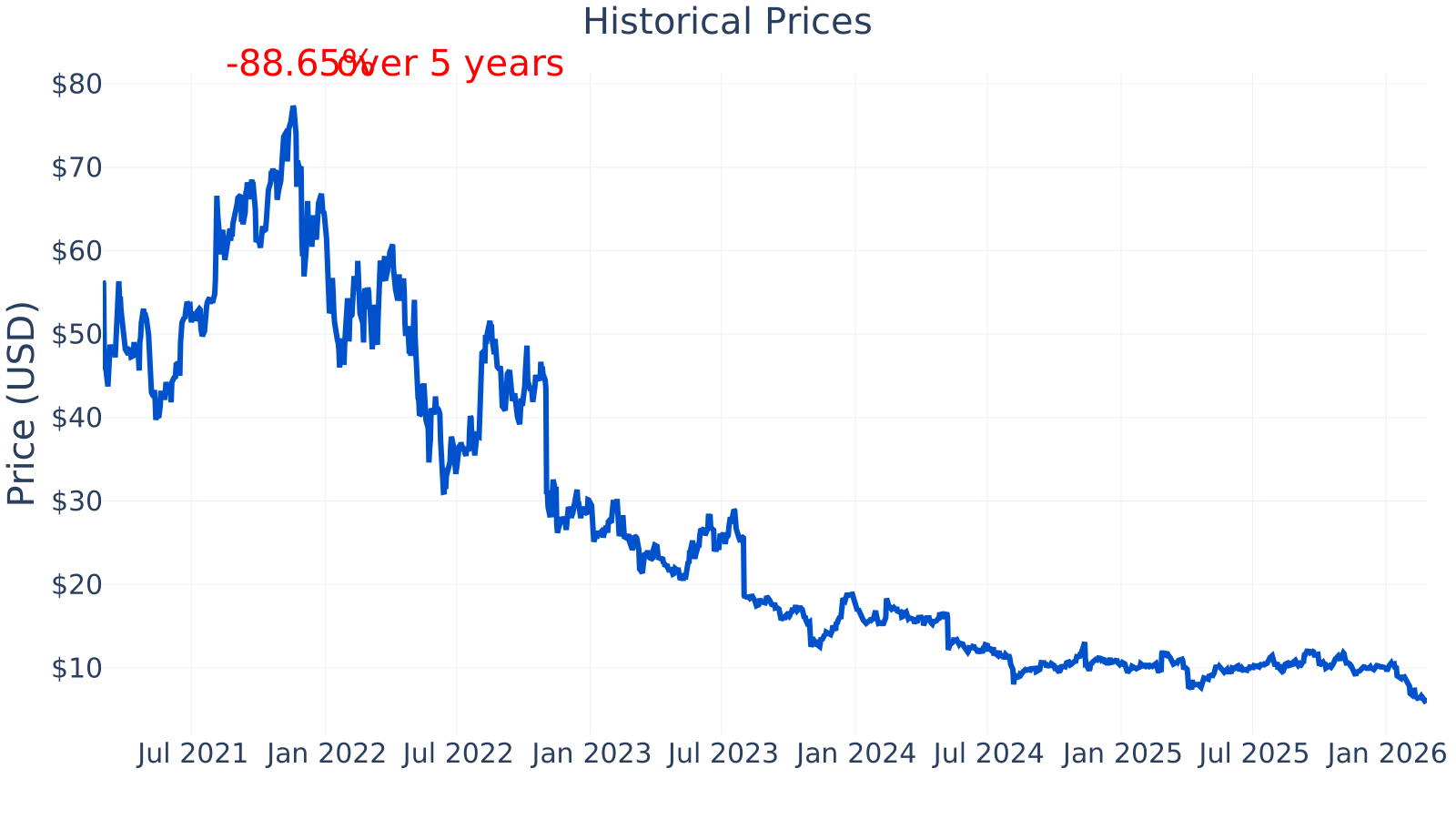
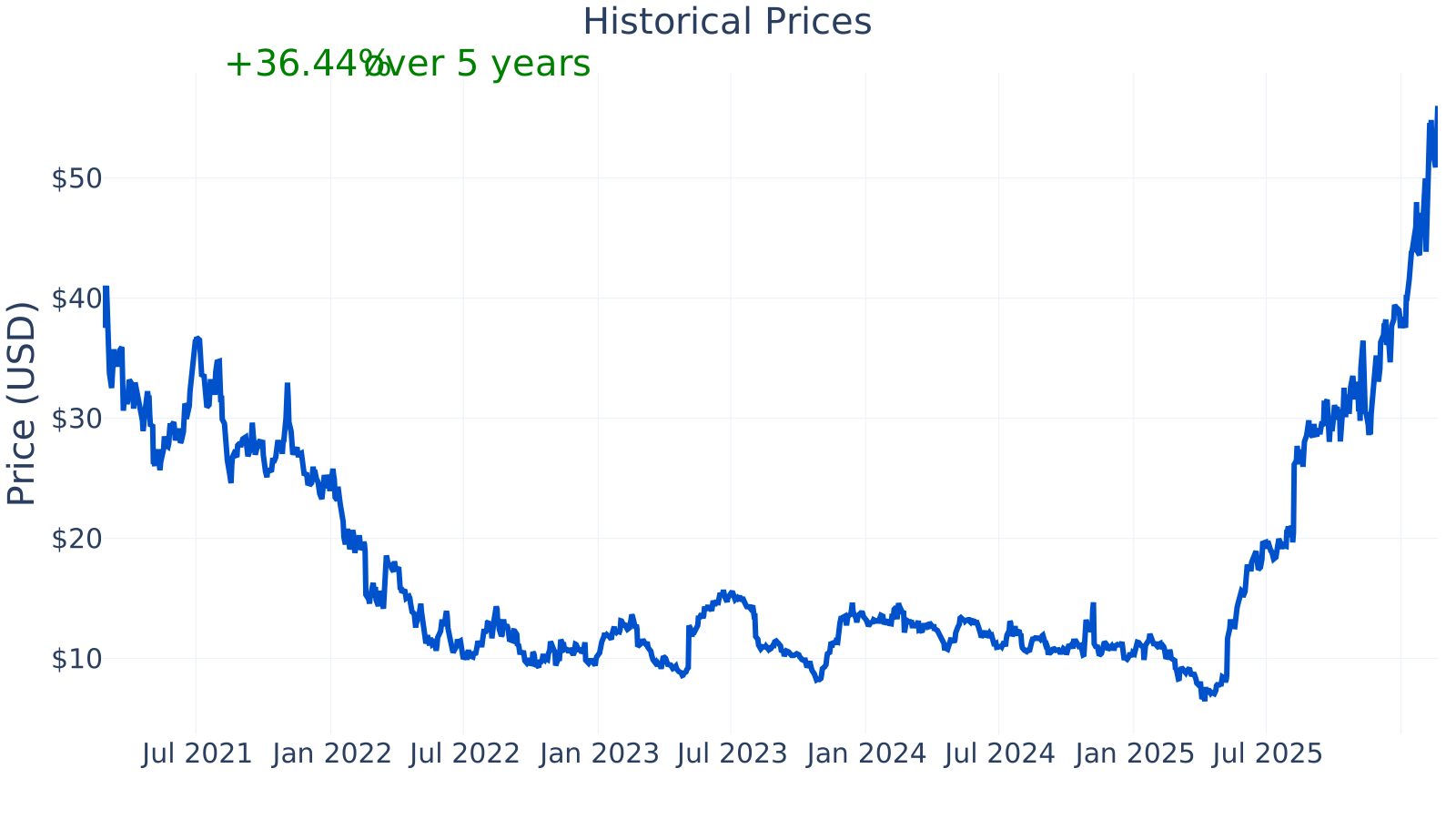
nLIGHT’s market capitalization is about $3.1B, and its stock has shown high volatility (beta about 2.31), meaning the share price has tended to move more than the broader market. Profitability is currently negative (profit margin about -19% versus an industry median around +11%), while recent year-over-year revenue growth is positive (about +19%, slightly above the industry median near +16%). Leverage appears comparatively modest (debt-to-equity about 14% versus an industry median around 26%), but free cash flow over the last twelve months is negative (about -$10.1M), indicating the business has recently used more cash than it generated from operations after capital spending.
Growth (Medium)
nLIGHT operates in markets that can benefit from long-term trends: automation in manufacturing, higher-precision fabrication, and continued demand for advanced optical and laser technologies in defense and aerospace. These are areas where performance, reliability, and supply chain consistency matter, which can support specialized suppliers over time.
That said, the company’s growth profile has not been a straight line. Revenue has contracted over multiple years in the income statement snapshot (2021–2024), which suggests the company has been working through weaker demand in parts of its end markets, program timing effects, or competitive pressures. More recently, quarterly year-over-year revenue growth turned positive again, which can be an early sign of improving demand or successful product/customer penetration.
The most recent year-over-year growth readings show a rebound into positive territory (roughly mid-to-high teens to low 20% in recent quarters). For long-term outcomes, a key question is whether this improvement can persist long enough to rebuild scale and improve margins.
A practical catalyst to watch in businesses like this is operating leverage: if revenue rises while operating expenses grow more slowly, losses can narrow and cash generation can improve. Another potential catalyst is new product ramps and customer program wins (especially where technical requirements are demanding), though the timing can be uneven and is often customer-dependent.
Free cash flow has swung between positive and negative over the last several years, including a return to negative territory more recently. For a long-term investor, sustained improvement in cash generation often matters as much as revenue growth, because it can reduce reliance on external financing and support continued investment in product development.
Risks (High)
This article is for informational purposes only and does not constitute financial advice. Some content is AI-generated. See Disclaimer