Stock Analysis · Nike Inc (NKE)
Overview
Nike, Inc. designs, develops, markets, and sells athletic footwear, apparel, equipment, and related services. The company sells products under the NIKE Brand and also owns the Jordan Brand and Converse. Nike reaches customers through a mix of wholesale partners (such as retailers) and its own “Nike Direct” channels, which include Nike-owned stores and digital platforms.
From a business-model perspective, Nike’s long-term goal has been to strengthen its brand and increase the share of sales that go through its own direct-to-consumer channels, while still using wholesale partners for reach and scale. In its filings, Nike emphasizes brand demand creation (marketing and athlete partnerships), product innovation, and distribution choices as key levers that influence revenue and profitability.
Main sources of revenue (typical breakdown used in company reporting):
- Footwear (largest category)
- Apparel
- Equipment (smaller category)
- Brand/segments that are tracked separately in reporting, including Jordan and Converse
- Channels: a mix of wholesale and Nike Direct (owned stores + digital)
Nike’s scale and global footprint mean results are also influenced by regional demand (North America, EMEA, Greater China, APLA) and by foreign exchange movements, both of which are discussed extensively in its annual report.
Over the last several years, revenue rose from about $44.5B (FY2021) to about $51.4B (FY2024), then fell to about $46.3B (FY2025). Over the same span, operating income declined notably (about $6.3B in FY2024 to about $3.7B in FY2025), showing that profitability can move meaningfully when demand, pricing, promotions, and costs shift.
Key Figures
| Metric | Value | Industry ⓘ |
|---|---|---|
| Date | Feb 07, 2026 | |
| Context | ||
| Sector | Consumer Cyclical | |
| Industry | Footwear & Accessories | |
| Market Cap ⓘ | $94.63B | |
| Beta ⓘ | 1.28 | |
| Fundamental | ||
| P/E Ratio ⓘ | 37.38 | 29.80 |
| Profit Margin ⓘ | 5.43% | 5.43% |
| Revenue Growth ⓘ | 0.60% | 6.90% |
| Debt to Equity ⓘ | 80.10% | 63.50% |
| PEG ⓘ | 1.43 | |
| Free Cash Flow ⓘ | $2.48B | |
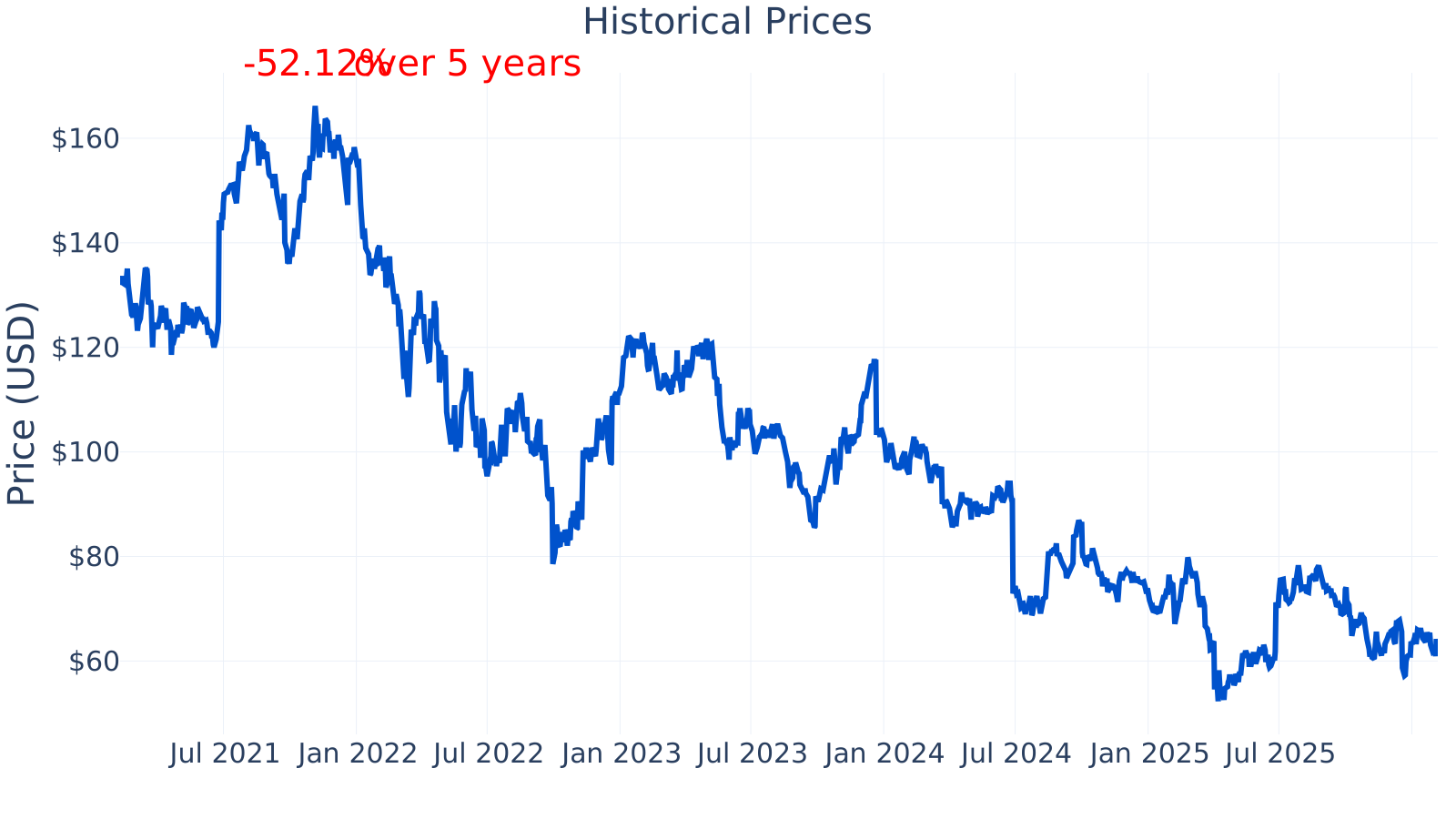
Nike’s market capitalization is about $94.6B, and the stock’s beta of ~1.28 indicates it has historically moved more than the overall market. The P/E ratio is ~37.4 versus an industry median near 29.8, suggesting the market is valuing Nike at a higher earnings multiple than many peers. Profit margin is about 5.43%, in line with the industry median shown. Recent year-over-year revenue growth is ~0.6%, well below the industry median listed (~6.9%). Debt-to-equity is about 80% versus an industry median near 63%, indicating higher leverage than the median peer in this comparison set. Trailing twelve-month free cash flow is about $2.48B.
Growth (Medium)
Nike operates in the global athletic and casual wear market, which is supported by broad, long-running trends such as sports participation, “athleisure” lifestyle demand, and consumer interest in health and wellness. However, it is not a purely “high-growth” industry in the way some technology markets are; results can be cyclical and sensitive to consumer spending, fashion cycles, and retail inventory corrections.
A central part of Nike’s long-term strategy has been to use its brand strength to support premium pricing and to expand direct-to-consumer sales (owned stores and digital), which can provide better customer data and, in many cases, higher gross margin than wholesale. Product innovation and brand storytelling remain key catalysts Nike highlights in its filings, but the pace of growth can be uneven when the company (and its wholesale partners) work through inventory, adjust product assortments, or increase promotional activity.
The year-over-year revenue pattern has been volatile: strong growth in parts of 2021–2023, followed by contractions across multiple periods in 2024–2025 (including a decline around -12% in one recent period), before returning to roughly flat/low-positive growth (around ~0.6% to ~1.1% in the latest periods shown). This shape is consistent with a business that can face demand swings and channel rebalancing, rather than steady compounding every quarter.
Free cash flow has also fluctuated: roughly $3.8B (FY2021), rising to about $5.36B (FY2022), dipping near $3.80B (FY2023), peaking around $6.20B (FY2024), and then easing to about $5.31B (FY2025), with the latest trailing figure shown at about $2.48B. For a consumer brand, sustained cash generation matters because it supports reinvestment in products and marketing and provides flexibility across weaker demand periods.
Risks (High)
This article is for informational purposes only and does not constitute financial advice. Some content is AI-generated. See Disclaimer


