Stock Analysis · Nextnav Acquisition Corp (NN)
Overview
NextNav (ticker: NN) operates a positioning, navigation, and timing (PNT) business focused on “vertical location,” which aims to determine not only where something is on a map, but also its elevation (for example, which floor of a building). This type of capability is often discussed for emergency response (locating 911 callers inside multi-story buildings), public safety, and other location-aware services.
Based on the company’s financial statements, NextNav is still in an early commercialization phase: reported revenue remains small, while operating costs (research and development plus general corporate expenses) are significantly larger. In practical terms, the business today looks more like a company building and expanding a network and product offering than one harvesting mature, recurring profits.
Revenue disclosure in filings is limited in the information available here, and a detailed split by product line is not provided in the figures shown. The company’s reported revenue level is low (single-digit millions annually in recent years), which typically implies that revenue concentration risk can be high (for example, dependence on a small number of customers, programs, or contracts), even if exact customer/program percentages are not shown.
Over the 2021–2024 period shown, revenue rises from under $1 million to about $5.7 million, but “cost of revenue” remains larger than revenue in each year, resulting in negative gross profit. Operating expenses (R&D and SG&A) stay sizable, and interest expense increases notably by 2024, which helps explain why net losses remain large despite higher revenue.
Key Figures
| Metric | Value | Industry ⓘ |
|---|---|---|
| Date | Feb 08, 2026 | |
| Context | ||
| Sector | Technology | |
| Industry | Software - Infrastructure | |
| Market Cap ⓘ | $2.02B | |
| Beta ⓘ | 0.99 | |
| Fundamental | ||
| P/E Ratio ⓘ | N/A | 25.67 |
| Profit Margin ⓘ | N/A | 6.91% |
| Revenue Growth ⓘ | -44.80% | 15.20% |
| Debt to Equity ⓘ | -1111.35% | 19.82% |
| PEG ⓘ | N/A | |
| Free Cash Flow ⓘ | -$47.15M | |
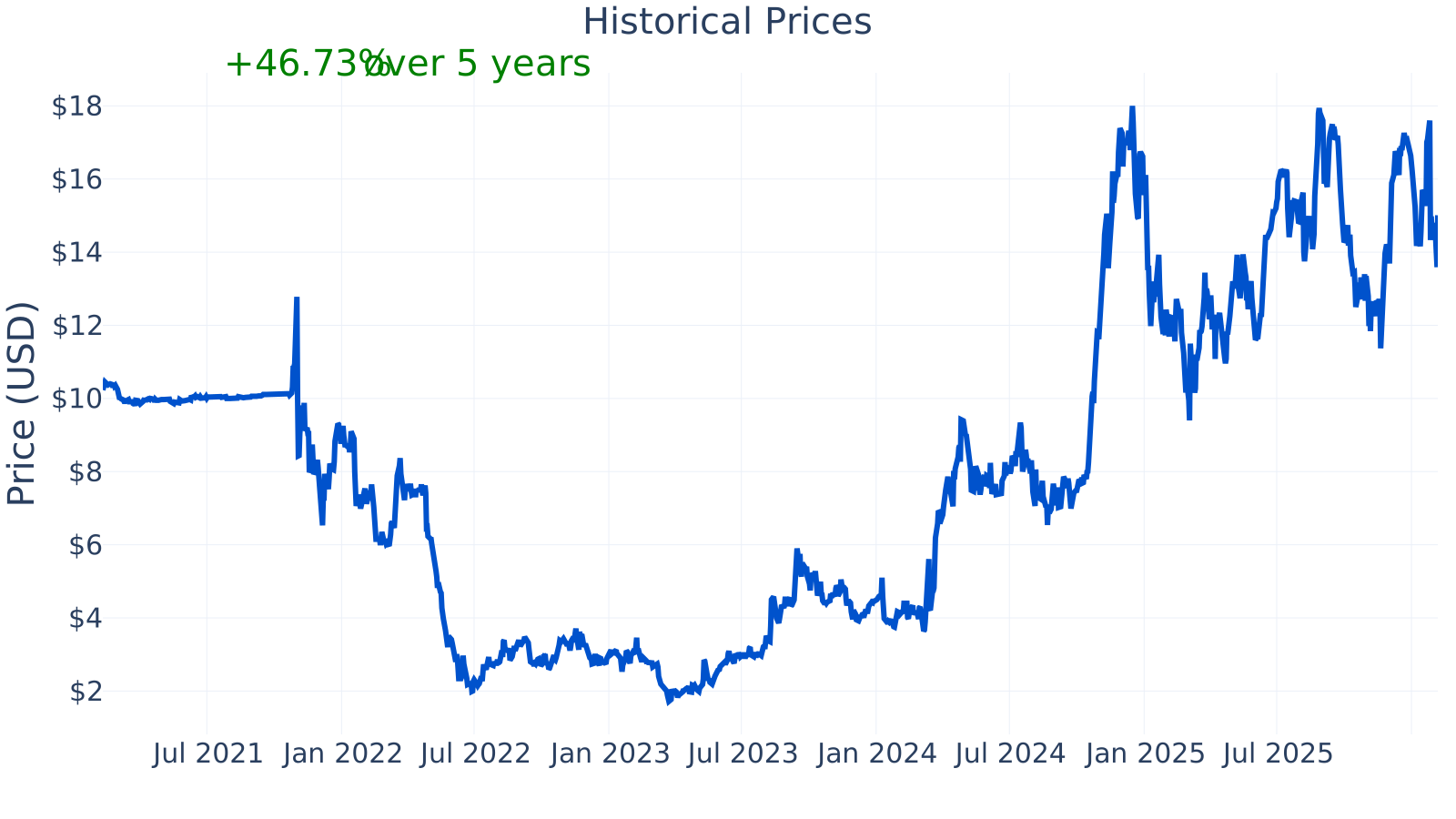
NextNav’s market capitalization is about $2.02 billion, and the stock’s beta (~0.99) suggests price moves that have been roughly in line with the overall market historically.
Profitability metrics highlight that the company is not currently operating at typical “Software - Infrastructure” industry profitability levels: the latest profit margin is shown as 0% in the table, while the industry median is about 6.9%. (For many early-stage companies, margins can be volatile or difficult to interpret from a single metric snapshot, but the broader picture here is continued losses.)
Recent growth has also been uneven: the table shows revenue growth year-over-year of -44.8% versus an industry median of about 15.2%. Free cash flow over the trailing twelve months is -$47.1 million, indicating cash outflows from operations and investment that would typically need to be funded through cash on hand, debt, or new equity.
Growth (Medium)
NextNav is positioned around location and safety-oriented infrastructure, and the broader demand drivers can be long-term in nature: more mobile devices, more indoor usage, and higher expectations for emergency location accuracy. If “vertical location” becomes more widely required or adopted across devices, carriers, or public safety systems, it could expand the addressable market for specialized positioning services.
The company’s strategy appears oriented toward building capabilities first and scaling later. That approach can make sense in infrastructure-like models (where network buildout, data assets, and integration work happen before large-scale monetization), but it also means results may depend heavily on execution milestones, customer adoption, and funding availability.
The year-over-year revenue growth pattern has been highly volatile—ranging from very large increases in some periods to declines more recently (including about -44.8% in the latest point shown). For long-term forecasting, that variability is important: it suggests revenue is not yet on a smooth, predictable trajectory.
Free cash flow has been consistently negative in the periods shown (roughly -$37 million to -$46 million, and about -$47 million most recently). Sustained negative cash flow is common in buildout phases, but it raises the practical question of how long the company can fund operations before needing additional capital.
Risks (High)
This article is for informational purposes only and does not constitute financial advice. Some content is AI-generated. See Disclaimer


