Stock Analysis · Nextracker Inc (NXT)
Overview
Nextracker Inc. designs and sells equipment that helps large, utility-scale solar power plants generate more electricity. Its core products are “solar trackers,” which are mechanical systems that move solar panels during the day so panels stay oriented toward the sun. By improving the amount of sunlight captured, trackers can raise the output of a solar project compared with fixed-tilt panel installations.
The company primarily serves developers and owners of large solar projects (often called utility-scale solar). In addition to the tracker hardware, Nextracker also provides related software, controls, and services that help customers monitor performance and operate projects over time. Because the business is tied to the building of large solar farms, results can be influenced by the pace of new project construction, supply chain conditions, and customer ordering patterns.
Public filings generally describe revenue as coming mainly from solar tracker products and related offerings (such as software and services). In many industrial businesses like this one, trackers represent the vast majority of sales, while services and software are smaller contributors, but exact percentages can vary by period and are best confirmed in the most recent annual report segment disclosures.
Main sources of revenue (typical breakdown based on company descriptions in filings):
- Solar tracker products (hardware, components, and related controls) — typically the largest contributor
- Software and services (monitoring, controls, and support offerings) — generally smaller than hardware
Over recent fiscal years, total revenue increased meaningfully (about $1.20B in FY2021 to about $2.96B in FY2025). Over the same span, profitability improved: gross profit rose substantially (about $232M to about $1.01B), and net income increased (about $124M to about $509M). This suggests the company has not only grown sales, but also expanded the dollars left after direct costs and operating expenses, although costs and margins can still move around from year to year.
Key Figures
| Metric | Value | Industry ⓘ |
|---|---|---|
| Date | Feb 07, 2026 | |
| Context | ||
| Sector | Technology | |
| Industry | Solar | |
| Market Cap ⓘ | $18.25B | |
| Beta ⓘ | 2.36 | |
| Fundamental | ||
| P/E Ratio ⓘ | 30.96 | |
| Profit Margin ⓘ | 16.43% | 0.27% |
| Revenue Growth ⓘ | 33.90% | 33.90% |
| Debt to Equity ⓘ | N/A | 139.55% |
| PEG ⓘ | 3.16 | |
| Free Cash Flow ⓘ | $589.26M | |
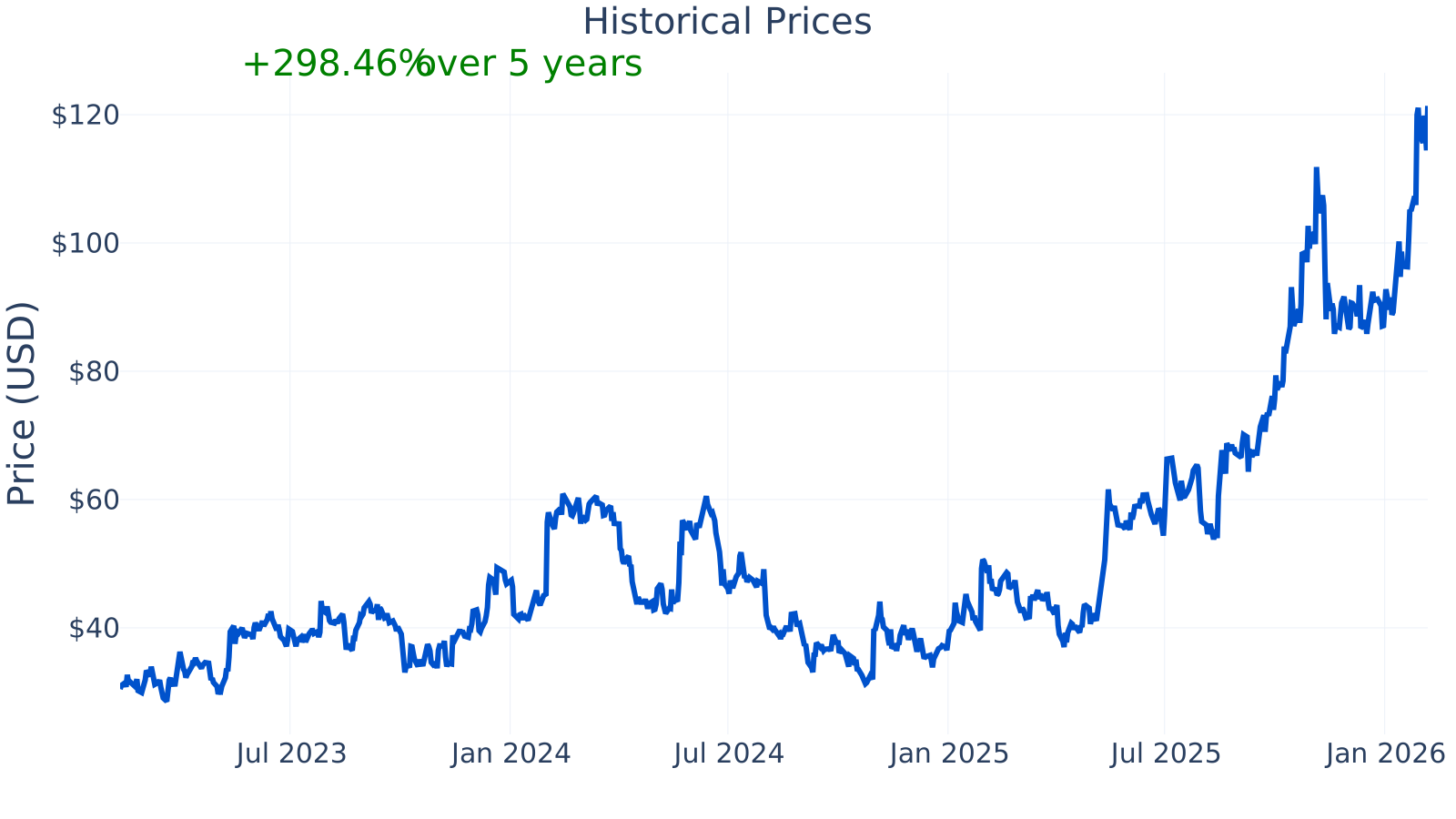
Nextracker’s market capitalization is about $18.3B. The stock’s beta of ~2.36 indicates it has historically moved more than the broader market (higher volatility). The latest P/E ratio is ~31.0. Profitability stands out versus the industry median in the table: profit margin is ~16.4% compared with an industry median ~0.27%. Revenue growth year-over-year is ~33.9%, matching the listed industry median. Trailing twelve-month free cash flow is about $589M, showing the business has recently generated meaningful cash after operating costs and capital needs.
Growth (medium)
Nextracker operates in utility-scale solar, an area supported by long-term electrification trends and ongoing solar adoption. Trackers are commonly used in large projects because improving energy output can meaningfully affect project economics over decades. In that context, the company’s focus—hardware that boosts production plus software and services to help operate assets—fits how large solar projects are built and managed.
Revenue growth has been strong but not perfectly smooth. The year-over-year growth rate ranged from very high levels in mid-2024 (roughly 42% to 50% in several periods) to a brief decline around late 2024 (about -4%), then returned to positive growth through 2025 (including readings around 20% to 42% and ~34% most recently). This pattern is consistent with a project-driven business where orders and shipments can shift between quarters.
Cash generation has improved significantly over time. Trailing twelve-month free cash flow increased from roughly $55M (FY2023 timeframe) to about $422M (FY2024) and about $622M (FY2025), with the latest value around $589M. For long-term business durability, the combination of growth and sustained positive free cash flow is often an important signal, since it can support reinvestment, balance-sheet strength, and operational flexibility.
Potential catalysts in this type of business typically include: continued buildout of utility-scale solar, broader adoption of trackers versus fixed-tilt systems, and the ability to win large multi-project supply agreements. The company’s filings also commonly emphasize product innovation (tracker designs, controls, and software) as a way to stay competitive and support future demand.
Risks (medium)
This article is for informational purposes only and does not constitute financial advice. Some content is AI-generated. See Disclaimer