Stock Analysis · New York Times Company (NYT)
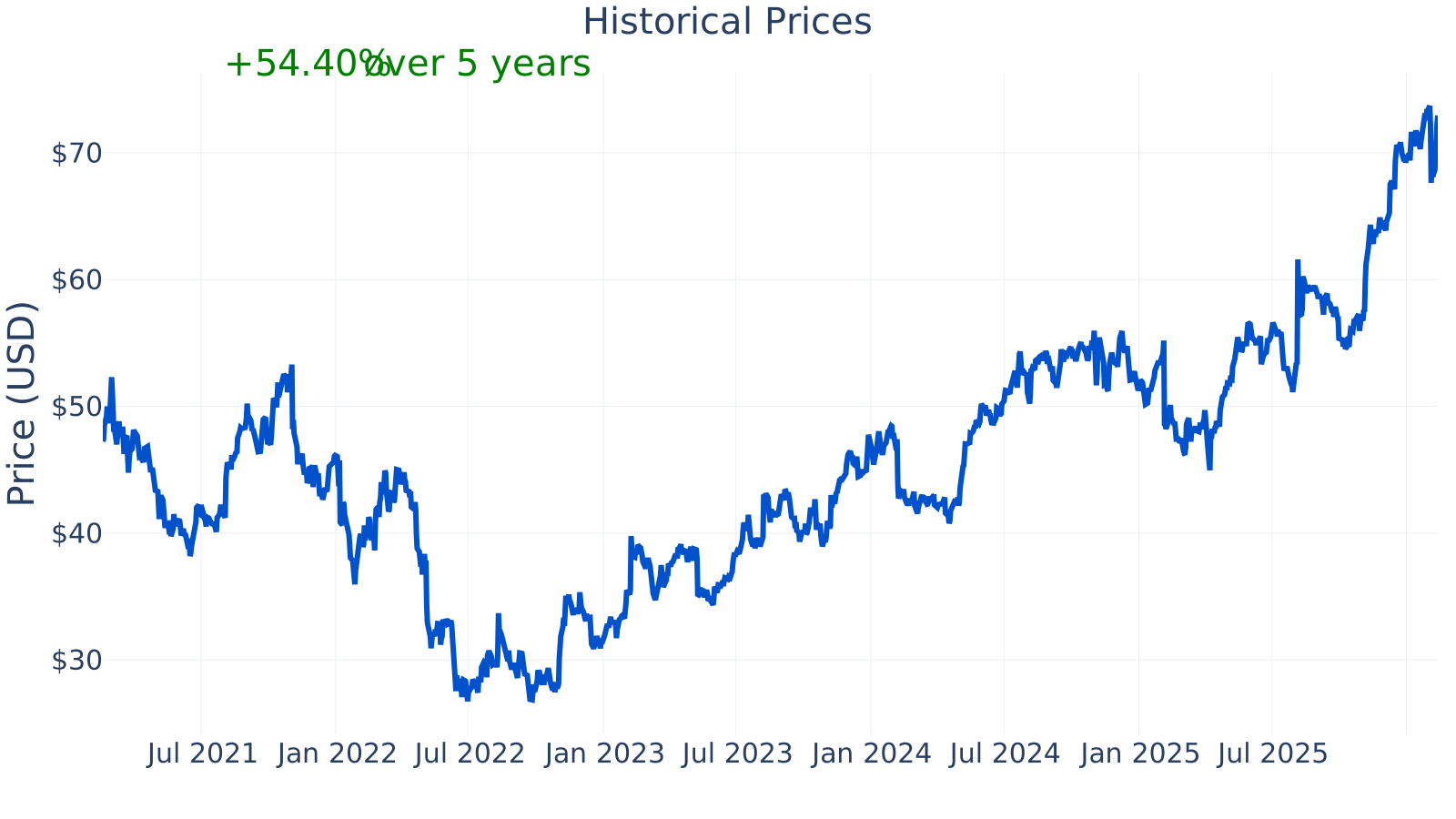
Overview
The New York Times Company is a media and information business best known for The New York Times. It produces and distributes journalism and related content across digital and print formats, and it also operates product lines beyond the core news report (for example, cooking and games) as part of a broader subscription strategy. Operationally, the company focuses on building recurring revenue through paid relationships, while continuing to monetize its audience through advertising and other ancillary streams.
In its financial reporting, the company commonly discusses revenue through two main categories rather than a long list of product-by-product line items:
- Subscription revenue (typically the largest component): paid access to digital and print products and bundles.
- Advertising revenue: primarily digital advertising, with print advertising generally a smaller portion than in earlier industry eras.
- Other revenue: smaller revenue sources (for example, licensing and other activities), generally not the main driver.
The business mix has been shifting over time toward subscriptions, which tends to make revenue more recurring and less sensitive to advertising cycles than a purely ad-funded model.
Across the years shown, total revenue rises from about $2.07B (2021) to about $2.82B (2025), while operating income grows from about $291M to about $451M. This indicates that, despite meaningful ongoing spending (including product and technology-related investment reflected in research and development), profits increased as revenue expanded.
Key Figures
| Metric | Value | Industry ⓘ |
|---|---|---|
| Date | Feb 16, 2026 | |
| Context | ||
| Sector | Communication Services | |
| Industry | Publishing | |
| Market Cap ⓘ | $11.88B | |
| Beta ⓘ | 1.11 | |
| Fundamental | ||
| P/E Ratio ⓘ | 34.90 | |
| Profit Margin ⓘ | 12.18% | |
| Revenue Growth ⓘ | 11.50% | |
| Debt to Equity ⓘ | N/A | |
| PEG ⓘ | 2.11 | |
| Free Cash Flow ⓘ | $536.52M | |
The table highlights a company with a market capitalization of about $11.9B and a P/E ratio around 34.9. Profit margin is about 12.2%, and revenue growth (year over year) is shown at about 11.5%. Free cash flow over the trailing twelve months is about $537M. The beta near 1.1 suggests the shares have historically moved somewhat similarly to the broader market, though beta can change over time and does not capture business-specific risks.
Growth (Medium)
The company operates in an industry that has been structurally reshaped by the shift from print to digital consumption and by changes in the digital advertising market. Within that landscape, paid digital subscriptions are one of the more durable growth areas for publishers with strong brands, distinctive content, and product ecosystems that keep readers engaged. The New York Times Company’s strategy—building a multi-product subscription bundle and investing in its digital experience—fits that direction because it aims to convert audience attention into recurring payments rather than relying primarily on ads.
The year-over-year revenue growth rates shown generally remain positive, with periods of slower growth in 2023 and a re-acceleration into 2024–2025 (ending around ~10.4% in 2025). For a mature media business, sustained positive growth at these levels typically implies that subscriptions and related products are contributing meaningfully.
Free cash flow over the trailing twelve months increases from roughly $266M (2021) to roughly $425M (2025). In simple terms, this suggests the company has been generating more cash after operating needs and capital spending, which can support reinvestment in products, resilience during downturns, and potential capital returns (subject to board decisions and financial priorities).
Potential catalysts are generally tied to execution rather than one-off events: continued growth in paid digital relationships, improved retention (keeping subscribers longer), expanding product offerings that increase bundle value, and maintaining pricing power while managing churn. Because the business is also exposed to advertising, cyclical improvements in ad demand can help results, but that tends to be less predictable than subscription-driven growth.
Risks (Medium)
This article is for informational purposes only and does not constitute financial advice. Some content is AI-generated. See Disclaimer


