Stock Analysis · Netflix Inc (NFLX)
Overview
Netflix, Inc. (NFLX) is a global entertainment company best known for its streaming service. Subscribers pay for access to a library of TV series, films, and other content that can be watched on connected devices. Netflix also develops and licenses content, including a large catalog of original programming, and distributes it to audiences across many countries.
Netflix’s business model is centered on recurring payments, with a growing contribution from advertising in certain plans and markets. Its reported revenue sources are primarily:
- Streaming subscriptions (the large majority of revenue; paid monthly/annual access to the service)
- Advertising (from ad-supported plans; reported within streaming revenue in company financial reporting)
- Other revenue (smaller items such as certain licensing/ancillary activities, depending on the period and reporting)
Over time, Netflix has also emphasized improving the economics of its content spending—aiming to turn revenue growth into higher operating profit and cash generation rather than relying on external financing.
From 2021 to 2025, total revenue increased from about $29.7B to about $45.2B, while operating income rose from about $6.6B to about $13.5B and net income from about $5.1B to about $11.0B. This suggests that Netflix has recently converted a larger share of sales into profit, even as content and operating costs continued to rise.
Key Figures
| Metric | Value | Industry ⓘ |
|---|---|---|
| Date | Apr 20, 2026 | |
| Context | ||
| Sector | Communication Services | |
| Industry | Entertainment | |
| Market Cap ⓘ | $410.86B | |
| Beta ⓘ | 1.67 | |
| Fundamental | ||
| P/E Ratio ⓘ | 31.49 | 54.38 |
| Profit Margin ⓘ | 28.52% | 3.44% |
| Revenue Growth ⓘ | 16.20% | 7.65% |
| Debt to Equity ⓘ | 46.14% | 80.15% |
| PEG ⓘ | 2.04 | |
| Free Cash Flow ⓘ | $11.89B | |
Netflix’s market capitalization is about $411B. The stock’s beta of ~1.67 indicates it has historically moved more than the overall market (higher volatility). The latest P/E ratio is ~31.5, which is below the provided industry median (~54.4). Profitability stands out: Netflix’s profit margin is ~28.5% versus an industry median of roughly 3.4%. Recent year-over-year revenue growth is ~16.2% (industry median ~7.7%). Financial leverage appears lower than the industry median, with debt-to-equity ~46% (industry median ~80%). Trailing twelve-month free cash flow is about $11.9B. The PEG ratio of ~2.0 implies the valuation is meaningfully tied to continued growth expectations.
Growth (Medium)
Netflix operates in the broader shift from traditional linear TV toward on-demand streaming. While streaming is a mature category in some regions, it continues to evolve through product changes (pricing tiers, password-sharing policies, bundling) and monetization improvements (advertising, better churn management). In that sense, the industry’s growth is no longer only about new subscribers—it is also about increasing revenue per user and expanding profit per user over time.
Revenue growth slowed significantly in 2022–2023 (dropping to low single digits at points), then re-accelerated, reaching the mid-teens more recently (about 16% year-over-year in the latest period shown). That pattern is consistent with a business moving from a pure “subscriber land-grab” phase toward a mix of subscriber growth plus monetization levers.
Cash generation has strengthened notably: trailing twelve-month free cash flow moved from roughly -$27M (2022) to about $2.9B (2023), $6.9B (2024), and about $11.9B most recently. For long-term fundamentals, this matters because free cash flow can support debt reduction, share repurchases, and reinvestment in content—without depending as much on capital markets.
Potential catalysts commonly discussed in company communications include scaling the ad-supported offering, improving monetization across tiers and regions, and continuing to produce content that performs well globally (where a single successful series can have multi-country impact).
Risks (Medium-High)
Netflix’s main risks center on competition, content economics, and changing consumer behavior. Streaming audiences can switch services quickly, and competitors may use exclusive sports, franchises, or bundling with other products to reduce churn. Another key risk is content performance variability: large investments in programming do not guarantee success, and a weaker slate can pressure engagement and subscriber retention.
Competitive positioning is strong in global streaming scale and brand recognition, but the market remains crowded. Major competitors include large media and technology companies offering subscription streaming services (often alongside broader ecosystems). Netflix’s advantage has historically come from (1) a large global subscriber base, (2) product and recommendation technology that supports engagement, and (3) the ability to spread content costs across a wide audience. The trade-off is that competitors may accept lower margins on streaming to support other business lines, which can intensify pricing and content competition.
Netflix’s debt-to-equity has declined meaningfully over time, reaching about 46% in the latest period shown—below the industry median (about 76%). Lower leverage can reduce financial risk, but it does not remove operating risks tied to content spending and subscriber dynamics.
Profitability has improved substantially, with profit margin reaching about 28.5% most recently. This is well above the industry median shown (around 4.4%). Higher margins can provide a cushion during slower growth periods, but margins can also compress if content costs rise faster than revenue, if competition increases, or if pricing power weakens.
Other important risks include regulatory and policy differences across countries (e.g., content rules, taxes), foreign exchange impacts because Netflix earns revenue globally, and reputational or operational risks such as service disruptions or security incidents.
Valuation
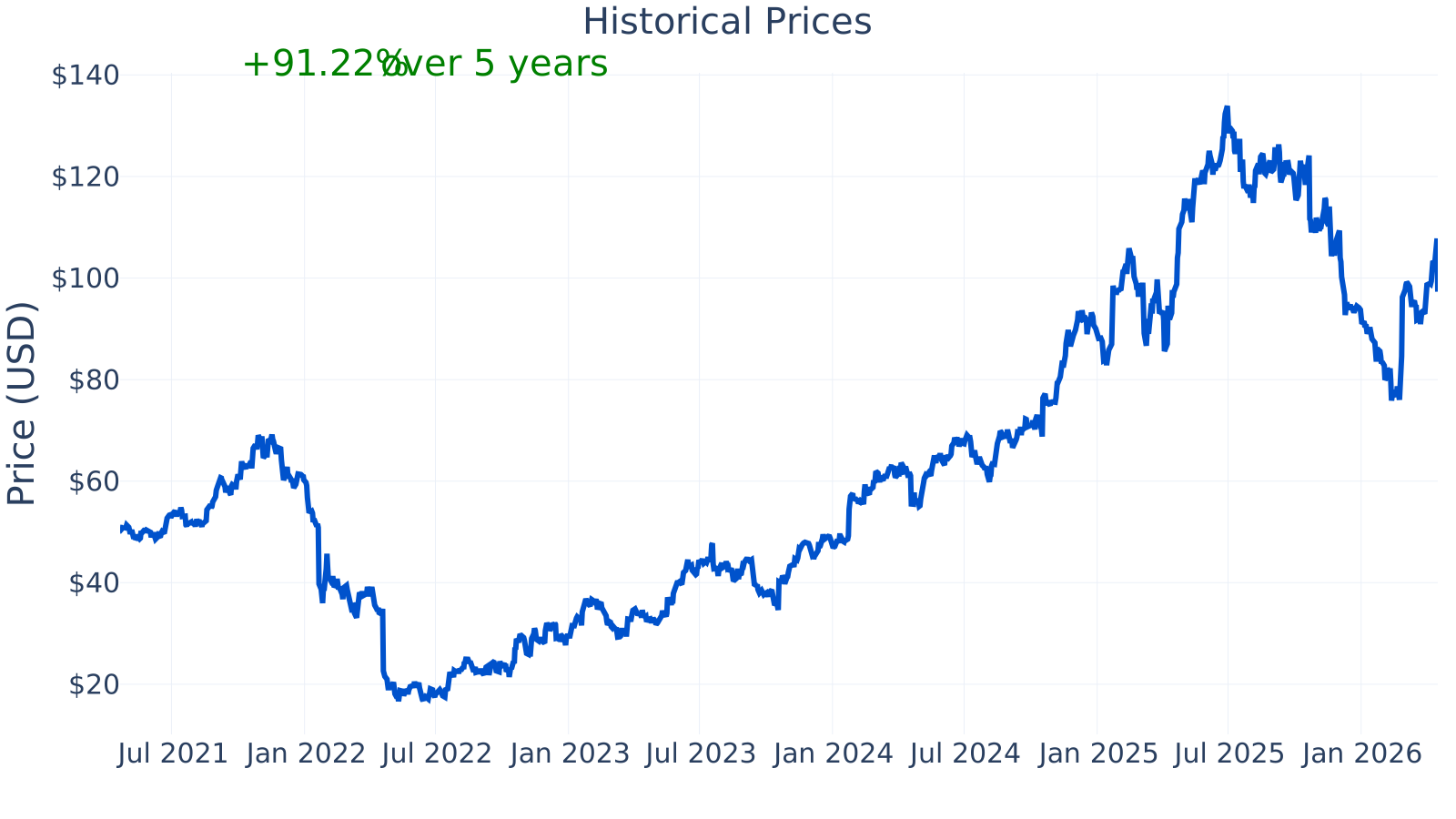
Netflix’s current P/E ratio (about 31.5) is below the industry median provided (about 54.4). The chart also shows the P/E has fluctuated widely over the last several years, with a notable decline into 2022 followed by periods of higher multiples and then a more recent move lower again. In practical terms, that variability means the market has repeatedly re-priced Netflix as expectations for growth and profitability changed.
Whether the current price level is “expensive” depends less on the P/E alone and more on the sustainability of (1) mid-teens revenue growth, (2) high profit margins, and (3) strong free cash flow generation. The PEG ratio of ~2.0 signals that the valuation still embeds meaningful growth assumptions, even after profitability improvements. If growth slows materially or margins revert, valuation ratios can change quickly; if growth and cash generation hold up, valuation may look more supported by fundamentals.
Conclusion
Netflix is a large global streaming company with a subscription-led model and an expanding advertising component. Financially, recent years show a combination of re-accelerating revenue growth, sharply higher profit margins, and a major improvement in free cash flow. Balance-sheet leverage (as measured by debt-to-equity) has also trended down.
The long-term debate is largely about durability: how well Netflix can sustain engagement and pricing power in a highly competitive market where content costs are significant and consumer preferences can shift quickly. Valuation levels appear tied to continued execution on growth and profitability, and the stock has historically been sensitive to changing expectations. Overall, the facts point to a business that has recently strengthened its earnings and cash profile, while still facing meaningful competitive and content-related risks typical of the streaming industry.
Sources:
- U.S. SEC EDGAR — Netflix, Inc. filings (Form 10-K, Form 10-Q)
- Netflix Investor Relations — Shareholder letters, financial statements, and quarterly materials
- Wikipedia — “Netflix” (basic company background)
This article is for informational purposes only and does not constitute financial advice. Some content is AI-generated. See Disclaimer


