Stock Analysis · Netflix Inc (NFLX)
Overview
Netflix, Inc. (NFLX) is a global entertainment company best known for its subscription streaming service. It offers TV series, films, documentaries, and other content that members can watch on connected TVs, mobile devices, and computers. Netflix also develops and licenses content (including a large slate of “original” programming) and distributes it to audiences across many countries.
In recent years, Netflix has expanded how it monetizes its audience by introducing an advertising-supported plan in some markets. That adds a second major business engine alongside its traditional membership model.
Netflix’s revenue is primarily generated from:
- Streaming memberships (subscription revenue) — monthly/annual fees paid by members (historically the dominant share of total revenue)
- Advertising — ad sales tied to advertising-supported viewing (smaller than subscriptions, but strategically important)
- Other revenues — limited amounts from areas such as licensing and ancillary activities (generally not the main driver)
At a high level, Netflix’s business model depends on (1) growing or retaining its paying audience, (2) managing content spending effectively, and (3) turning engagement into profit and cash generation.
Across the period shown, total revenue rises meaningfully (from about $29.7B in 2021 to about $45.2B in 2025), while operating income and net income also expand. Costs and operating expenses grow too, but profits grow faster by the end of the period, indicating improved operating leverage.
Key Figures
| Metric | Value | Industry ⓘ |
|---|---|---|
| Date | Feb 07, 2026 | |
| Context | ||
| Sector | Communication Services | |
| Industry | Entertainment | |
| Market Cap ⓘ | $348.68B | |
| Beta ⓘ | 1.71 | |
| Fundamental | ||
| P/E Ratio ⓘ | 32.49 | 50.96 |
| Profit Margin ⓘ | 24.30% | 4.93% |
| Revenue Growth ⓘ | 17.60% | 5.20% |
| Debt to Equity ⓘ | N/A | 80.15% |
| PEG ⓘ | 1.71 | |
| Free Cash Flow ⓘ | $8.67B | |
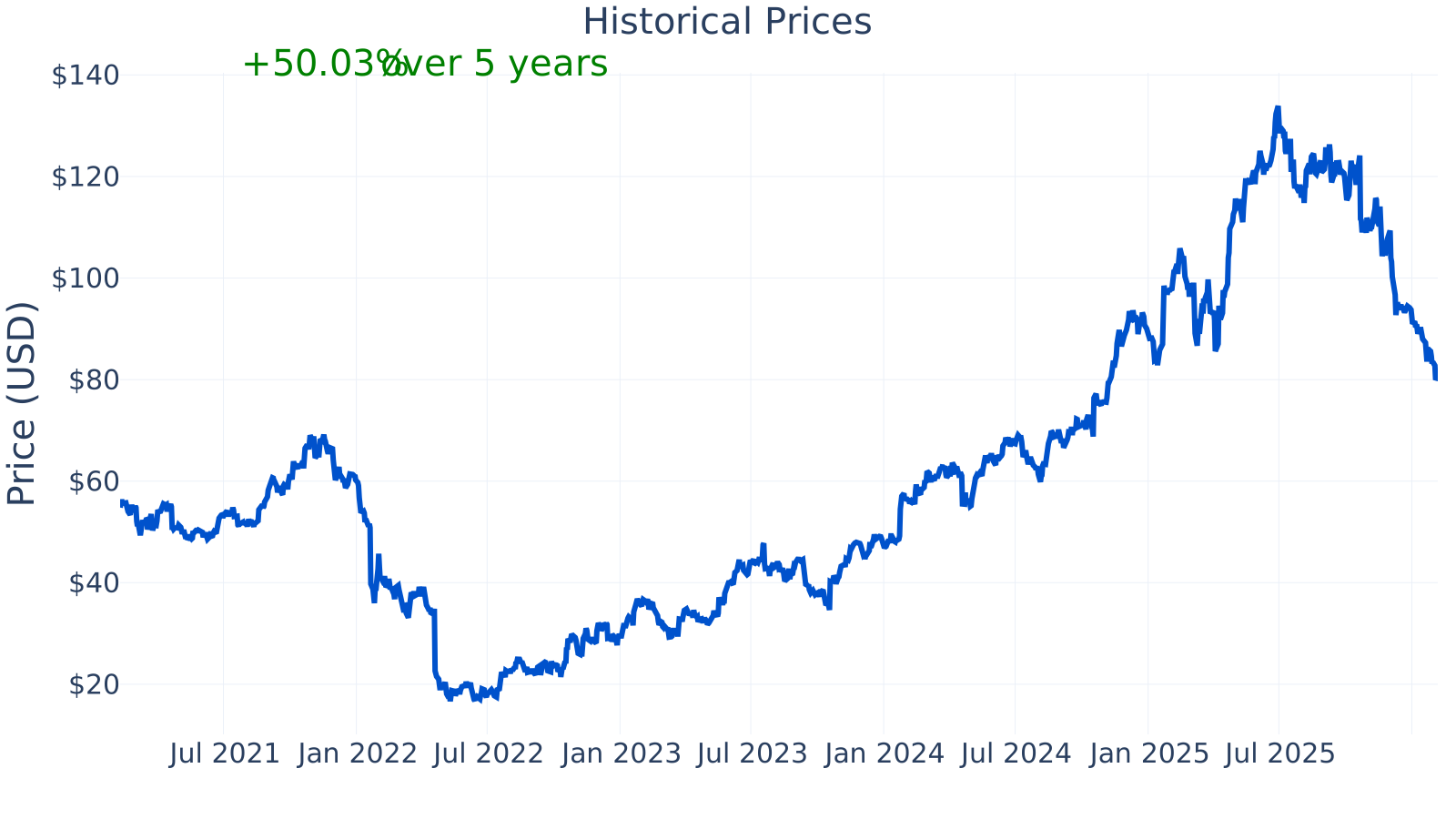
Netflix’s market capitalization is about $348.7B. The stock’s beta of ~1.71 suggests it has tended to move more than the overall market (both up and down). The company’s P/E ratio is ~32.5, below the industry median shown (~51.0), while its profit margin is ~24.3%, well above the industry median shown (~4.9%). Revenue growth year-over-year is ~17.6%, also above the industry median shown (~5.2%). Trailing twelve-month free cash flow is ~$8.67B, indicating substantial cash generation relative to many media peers.
Growth (Medium)
Netflix operates in the global streaming entertainment market, where long-term demand is tied to broad trends: audiences shifting viewing time from traditional linear TV to on-demand streaming, global distribution of content, and increasing acceptance of subscription bundles and ad-supported viewing. The industry is competitive and mature in some regions, but still evolving in monetization models and international penetration.
Strategically, Netflix’s approach centers on increasing the value of its service (content breadth, frequent releases, localized programming) and improving monetization per household. The move into advertising creates a potential additional growth lever: it can broaden the addressable audience (people who prefer a lower price) while adding ad revenue on top of subscription fees. Another long-term lever is continued improvement in operating efficiency—turning revenue growth into expanding margins and rising cash generation.
The year-over-year revenue growth rate slowed into 2022–2023, then re-accelerated through 2024 and into 2025, reaching the high teens and above 20% in one quarter shown. That pattern is consistent with a business that can cycle between slower and faster periods depending on pricing, plan mix, and subscriber dynamics.
Free cash flow (trailing twelve months) improves substantially over time, moving from about $2.46B (2021) to slightly negative around 2022, then rising to roughly $2.93B (2023) and about $6.95B–$7.45B (2024–2025). For long-term fundamentals, sustained positive free cash flow can matter because it supports flexibility (content investment, buybacks, debt management) without needing external funding.
Risks (High)
This article is for informational purposes only and does not constitute financial advice. Some content is AI-generated. See Disclaimer


