Stock Analysis · NetApp Inc (NTAP)
Overview
NetApp Inc (NTAP) is a technology company focused on helping organizations store, manage, protect, and move data across on‑premises systems and public cloud platforms. In simple terms, it sells the “plumbing” that keeps business data available and secure, whether that data sits in a company’s own data center or in cloud services. Its offerings include storage systems, software, and cloud-based services, with an emphasis on hybrid cloud setups (mixing on‑premises and cloud environments).
NetApp reports its business mainly through two product groupings in its filings:
- Hybrid Cloud: NetApp’s storage and data management products designed for enterprise data centers and hybrid environments.
- Public Cloud: Cloud data services delivered in partnership with major cloud providers (for example, offerings that help customers manage data in the cloud).
In its annual reporting, revenue is commonly discussed through categories such as Product revenue (systems and related items) and Support revenue (customer support and maintenance), with additional discussion of cloud-related services. The exact mix can shift over time as customers move from buying hardware to consuming more software and services.
Across the recent fiscal years shown, total revenue has been relatively stable in the mid‑$6B range, while operating income and net income have generally held up, indicating that profitability has been supported even without rapid top-line expansion.
Key Figures
| Metric | Value | Industry ⓘ |
|---|---|---|
| Date | Feb 07, 2026 | |
| Context | ||
| Sector | Technology | |
| Industry | Software - Infrastructure | |
| Market Cap ⓘ | $20.63B | |
| Beta ⓘ | 1.39 | |
| Fundamental | ||
| P/E Ratio ⓘ | 17.37 | 25.66 |
| Profit Margin ⓘ | 17.73% | 6.68% |
| Revenue Growth ⓘ | 2.80% | 15.20% |
| Debt to Equity ⓘ | 277.79% | 19.82% |
| PEG ⓘ | 1.16 | |
| Free Cash Flow ⓘ | $1.68B | |
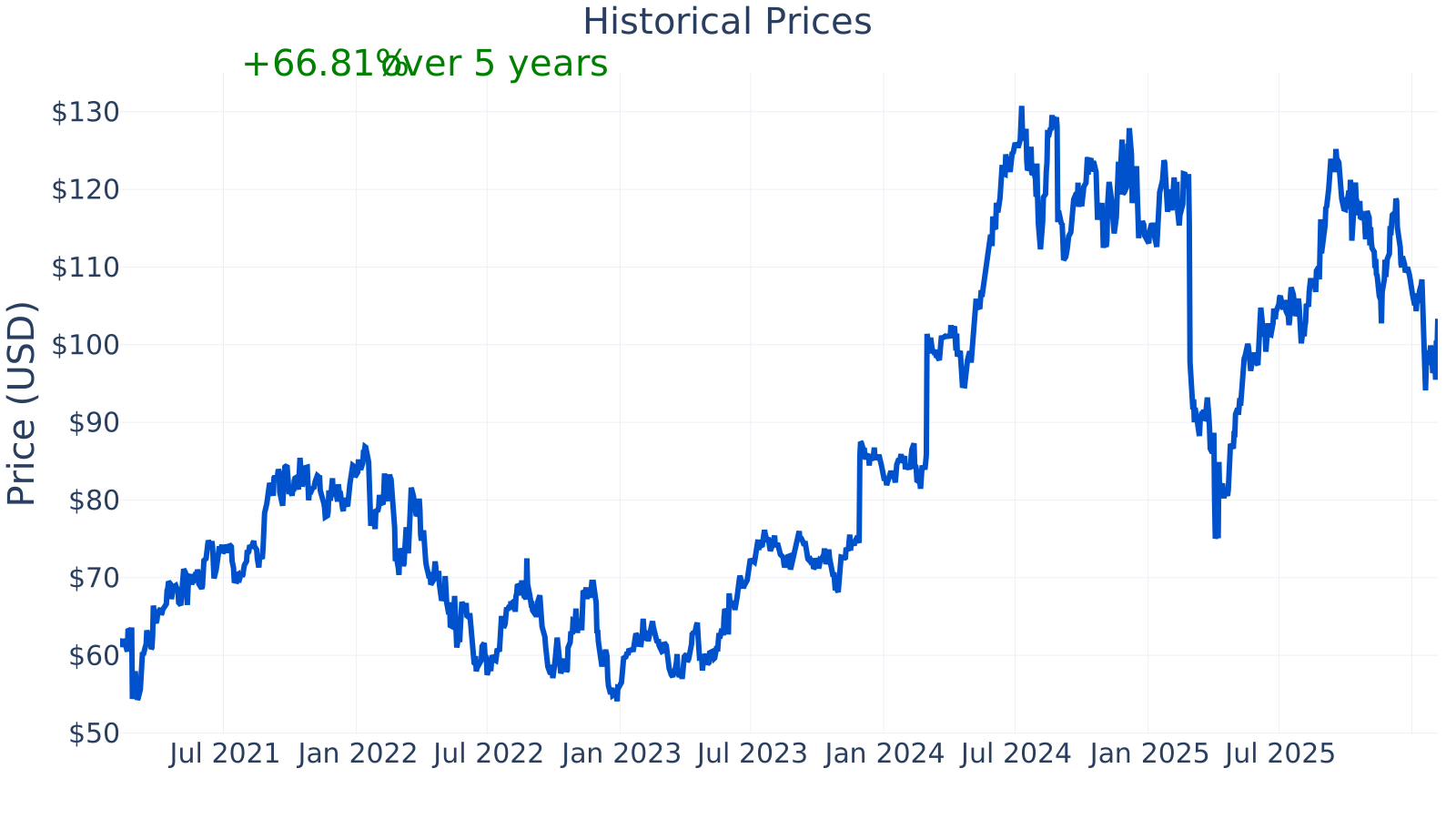
NetApp’s market capitalization is about $20.6B. The stock’s beta of ~1.39 indicates it has tended to move more than the broader market, which can matter for investors who prefer steadier price swings.
Profitability stands out versus the industry median: NetApp’s profit margin is ~17.7% versus an industry median near 6.7%. At the same time, the company’s most recent year-over-year revenue growth is ~2.8%, below the industry median shown (~15.2%), suggesting NetApp is currently more of a “profitability/efficiency” story than a “fast growth” story.
NetApp also reports substantial cash generation, with trailing twelve-month free cash flow of about $1.676B, which can be an important cushion for investment, debt service, and shareholder returns.
Growth (medium)
NetApp operates in the broader data infrastructure market, where long-term demand is tied to data growth, cybersecurity needs, cloud adoption, and modern application development. In many industries, data volumes continue to expand, and organizations often need to keep some data on‑premises for performance, cost, or regulatory reasons while also using public cloud platforms. That dynamic supports ongoing demand for hybrid approaches—the area NetApp emphasizes in its positioning and product strategy.
Strategically, NetApp’s relevance depends on how well it helps customers simplify hybrid environments and manage data consistently across locations. In its filings and investor materials, the company highlights software and cloud data services alongside its traditional enterprise storage base, aiming to remain part of customer architectures even as buying patterns shift from large one‑time hardware purchases toward subscription and service consumption models.
The revenue growth pattern shown is uneven: growth was solid earlier in the period, turned negative in parts of 2023, and then returned to modest positive growth more recently (about 2.8% year-over-year in the latest point). This profile can be consistent with a mature segment facing periodic spending slowdowns, where execution and product cycle timing matter.
Free cash flow has been consistently positive and has increased overall from about $1.16B (2022) to about $1.27B (2025), ending most recently around $1.68B on a trailing basis. For long-term company durability, sustained cash generation can be a meaningful support—especially in periods when revenue growth is not strong.
Risks (medium to high)
This article is for informational purposes only and does not constitute financial advice. Some content is AI-generated. See Disclaimer


