Stock Analysis · nCino Inc (NCNO)
Overview
nCino, Inc. is a software company focused on helping financial institutions (such as banks and credit unions) run key parts of their operations on a single, modern platform. Its products are designed to support workflows like customer onboarding, lending, account opening, and related processes, with the goal of replacing manual steps and older, fragmented systems.
The business model is primarily recurring software revenue, where customers pay to use the platform over time. This tends to create ongoing relationships because once a bank embeds software into core processes, switching can be disruptive and time-consuming.
Based on how the company describes its business in its SEC filings, the main revenue sources are typically organized as:
- Subscription (recurring) revenue (generally the largest component)
- Professional services revenue (implementation, configuration, and related support; typically smaller than subscriptions)
Public filings should be used for the most current revenue mix percentages, since these can shift over time with customer deployments and contract structures.
Over the last several fiscal years, total revenue increased steadily (from about $274M in FY2022 to about $595M in FY2026). At the same time, operating losses narrowed substantially, and the latest period shows a small net profit, suggesting improved cost discipline while maintaining investment in product development and customer support.
Key Figures
| Metric | Value | Industry ⓘ |
|---|---|---|
| Date | Apr 06, 2026 | |
| Context | ||
| Sector | Technology | |
| Industry | Software - Application | |
| Market Cap ⓘ | $1.98B | |
| Beta ⓘ | 0.61 | |
| Fundamental | ||
| P/E Ratio ⓘ | 342.00 | 25.34 |
| Profit Margin ⓘ | 0.87% | 7.69% |
| Revenue Growth ⓘ | 5.90% | 16.05% |
| Debt to Equity ⓘ | 26.39% | 27.34% |
| PEG ⓘ | N/A | |
| Free Cash Flow ⓘ | $82.56M | |
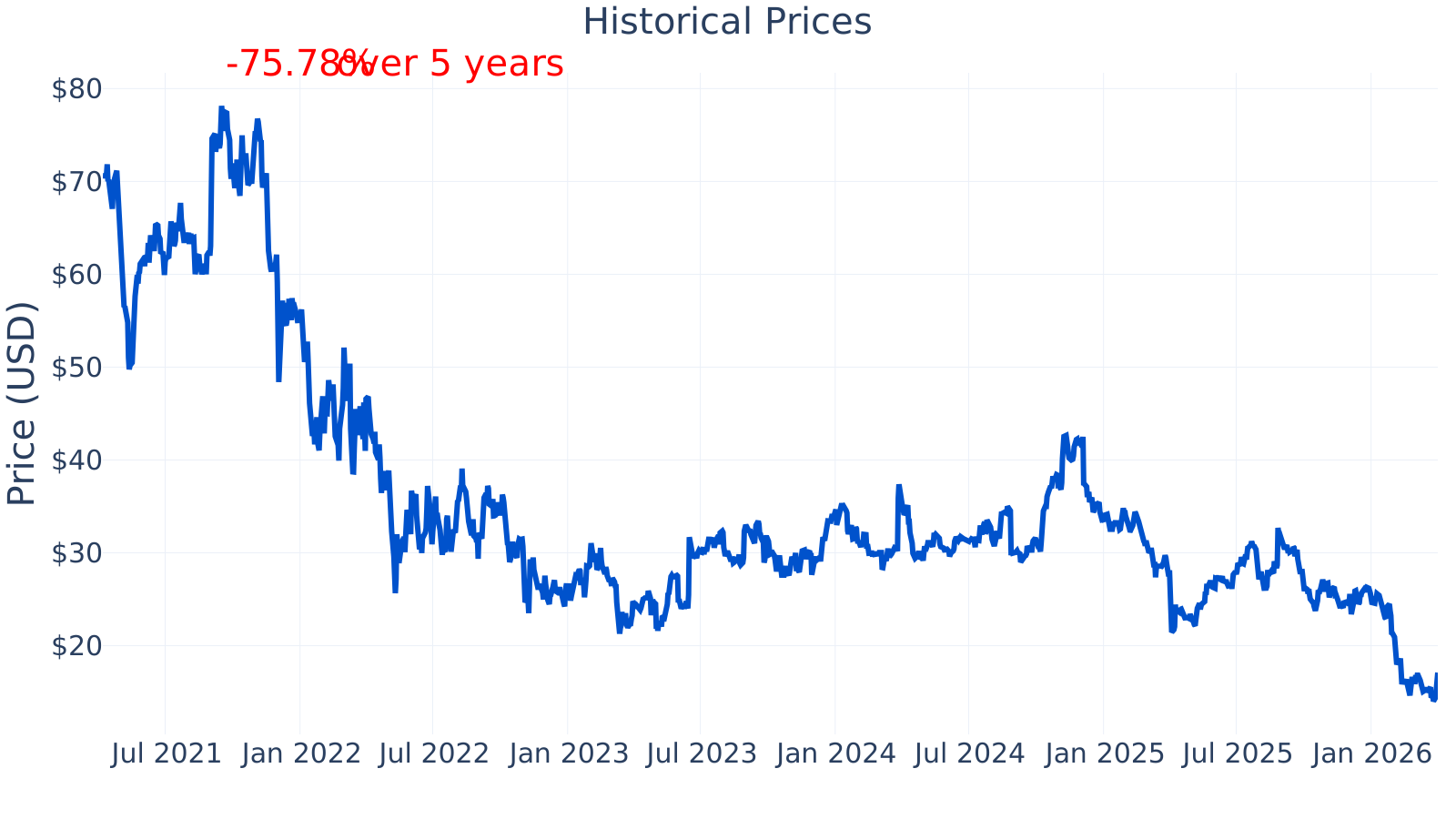
nCino’s market capitalization is about $2.0B, and the stock’s beta (~0.61) indicates it has historically moved less than the broader market on average (though that can change, especially for smaller software companies). Recent profit margin is ~0.9%, which is below the software application industry median (~7.7%), but it also marks a meaningful improvement versus prior periods when margins were negative. Year-over-year revenue growth is about 5.9%, below the industry median (~16.1%). Debt-to-equity is about 26%, close to the industry median (~27%). Trailing twelve-month free cash flow is about $82.6M, indicating cash generation despite historically low reported profitability.
Growth (Medium)
nCino operates in the broader shift toward cloud software in financial services. Many banks continue modernizing legacy technology stacks and digitizing customer-facing and back-office processes, which can support long-term demand for platforms that standardize workflows, improve compliance processes, and reduce manual work.
The company’s strategy is centered on embedding software into high-value, operationally critical banking activities (especially lending-related workflows). If customers expand usage across more departments or product lines, that can increase revenue per customer over time without relying entirely on winning brand-new clients.
Revenue growth has slowed from very high rates earlier in the period (above 30% and even 50% in parts of FY2021–FY2023) to single-digit growth (~5.9%) most recently. This trend matters for long-term expectations because software valuations often depend on either sustained growth or strong profitability (ideally both).
Free cash flow has improved significantly: it moved from negative levels in FY2022–FY2023 to positive in FY2024 and rose further to about $82.6M in the latest period. For a software business, sustained positive free cash flow can provide flexibility to invest in the product, support customers, and navigate slower spending cycles.
Potential catalysts (in a neutral, factual sense) often include increased adoption of cloud solutions in regulated industries, new product capabilities that expand use cases within existing bank clients, and improved operating efficiency that turns revenue into more consistent profits.
Risks (High)
A key risk is that nCino sells into financial institutions that can have long budgeting cycles and complex procurement processes. When banks slow technology spending, projects can be delayed, expanded more cautiously, or require heavier discounting, which can pressure growth and margins.
Competition is another major factor. The market for banking and lending software includes a mix of large, diversified software vendors, established core banking providers, and specialized fintech companies. Competitors may bundle products, compete aggressively on price, or offer broader suites that reduce the need for a separate platform.
nCino’s competitive advantages described in filings commonly relate to domain focus (banking workflows), integration into mission-critical processes, and the switching costs that come from being embedded into operations. However, the company’s positioning as a “leader” depends on product area and geography, and leadership is not uniform across all banking software categories.
The debt-to-equity ratio is about 26%, broadly in line with the industry median. Historically, it increased from very low levels earlier in the period to the current range, which suggests leverage has become a more notable part of the capital structure than it was several years ago (even though it remains moderate versus many companies).
Profitability has been a central risk area historically. Profit margins were negative for multiple years and only recently turned slightly positive (~0.9%). This is a meaningful improvement, but it also indicates the company is still early in establishing consistently higher profitability compared with the industry median (~8.2%). If growth remains modest, the path to stronger margins can become more important for long-term results.
Valuation
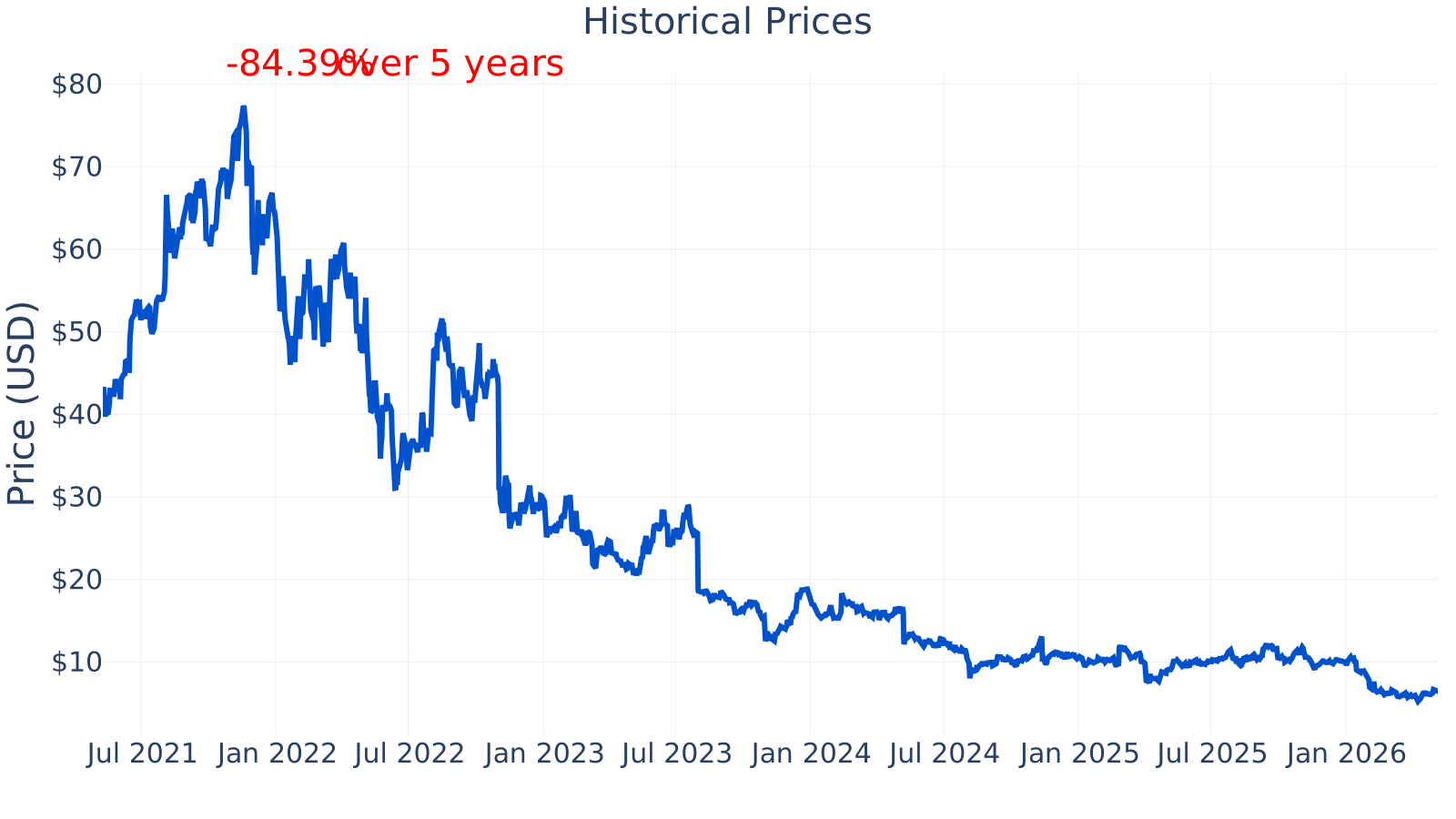
On an earnings basis, the latest P/E ratio is about 342, far above the software application industry median (~25). This gap can happen when a company’s reported earnings are still low (even if improving), because a small earnings number can mechanically produce a very high P/E.
In practical terms, this means the stock’s valuation is not strongly supported by current earnings alone. For the valuation to look more conventional over time, it typically requires some combination of higher profitability, stronger earnings consistency, faster growth, or a lower stock price relative to earnings. Because nCino’s recent revenue growth is below the industry median while profits are still thin, the valuation can be sensitive to execution (for example, whether cash flow strength converts into more durable net income and higher margins).
Conclusion
nCino is a banking-focused software platform business with a revenue model that is largely recurring and tied to long-term customer relationships. The company has continued to grow revenue over multiple years and has made visible progress on financial sustainability, including a sharp improvement in free cash flow and a recent shift toward slightly positive profit margins.
At the same time, recent growth rates have slowed materially compared with earlier years, and profitability remains below typical software industry levels. Competitive pressure and the pace of technology spending by banks are important factors that can influence results. With a very high P/E ratio alongside modest current growth and thin profits, the stock’s valuation appears highly dependent on continued improvement in operating performance rather than on present-day earnings.
Sources:
- SEC EDGAR — nCino, Inc. filings (Form 10-K, Form 10-Q)
- nCino Investor Relations — Quarterly and annual shareholder materials (press releases and presentations)
- Wikipedia — “nCino” (company background overview)
This article is for informational purposes only and does not constitute financial advice. Some content is AI-generated. See Disclaimer