Stock Analysis · Navitas Semiconductor Corp (NVTS)
Overview
Navitas Semiconductor Corp (NVTS) designs power semiconductor products that aim to make electric energy conversion more efficient. In plain terms, its chips help convert and control electricity inside everyday hardware such as fast chargers, data centers, solar inverters, and electric vehicles. Navitas focuses heavily on next-generation materials—especially gallium nitride (GaN) and silicon carbide (SiC)—which are often used when customers want smaller, lighter, and more energy-efficient power systems than traditional silicon-based designs.
The company primarily generates revenue by selling semiconductors (power ICs and related components) to electronics manufacturers and their supply chains. In its filings, Navitas discusses revenue in terms of product families and end markets, but precise public percentages by product line are not provided here. At a high level, revenue is commonly associated with:
- GaN power products (used in compact, high-efficiency power conversion such as consumer fast charging and certain data-center power applications)
- SiC power products (commonly used in high-power systems such as electric vehicles, charging infrastructure, and renewable energy)
- Development-related and other revenue (when applicable, such as engineering-related arrangements described in filings)
One practical way to read Navitas is as an “enabler” company: rather than selling finished chargers or EV components, it sells the specialized chips that other manufacturers build into those products.
Across the years shown, revenue expanded into 2024 but then declined in 2025, while operating expenses remained large relative to gross profit. This pattern helps explain why operating income and net income were negative in multiple years even when gross profit was positive.
Key Figures
| Metric | Value | Industry ⓘ |
|---|---|---|
| Date | Mar 09, 2026 | |
| Context | ||
| Sector | Technology | |
| Industry | Semiconductors | |
| Market Cap ⓘ | $1.89B | |
| Beta ⓘ | 3.21 | |
| Fundamental | ||
| P/E Ratio ⓘ | N/A | 40.44 |
| Profit Margin ⓘ | -254.71% | 10.84% |
| Revenue Growth ⓘ | -59.40% | 16.00% |
| Debt to Equity ⓘ | 1.46% | 25.70% |
| PEG ⓘ | N/A | |
| Free Cash Flow ⓘ | -$44.37M | |
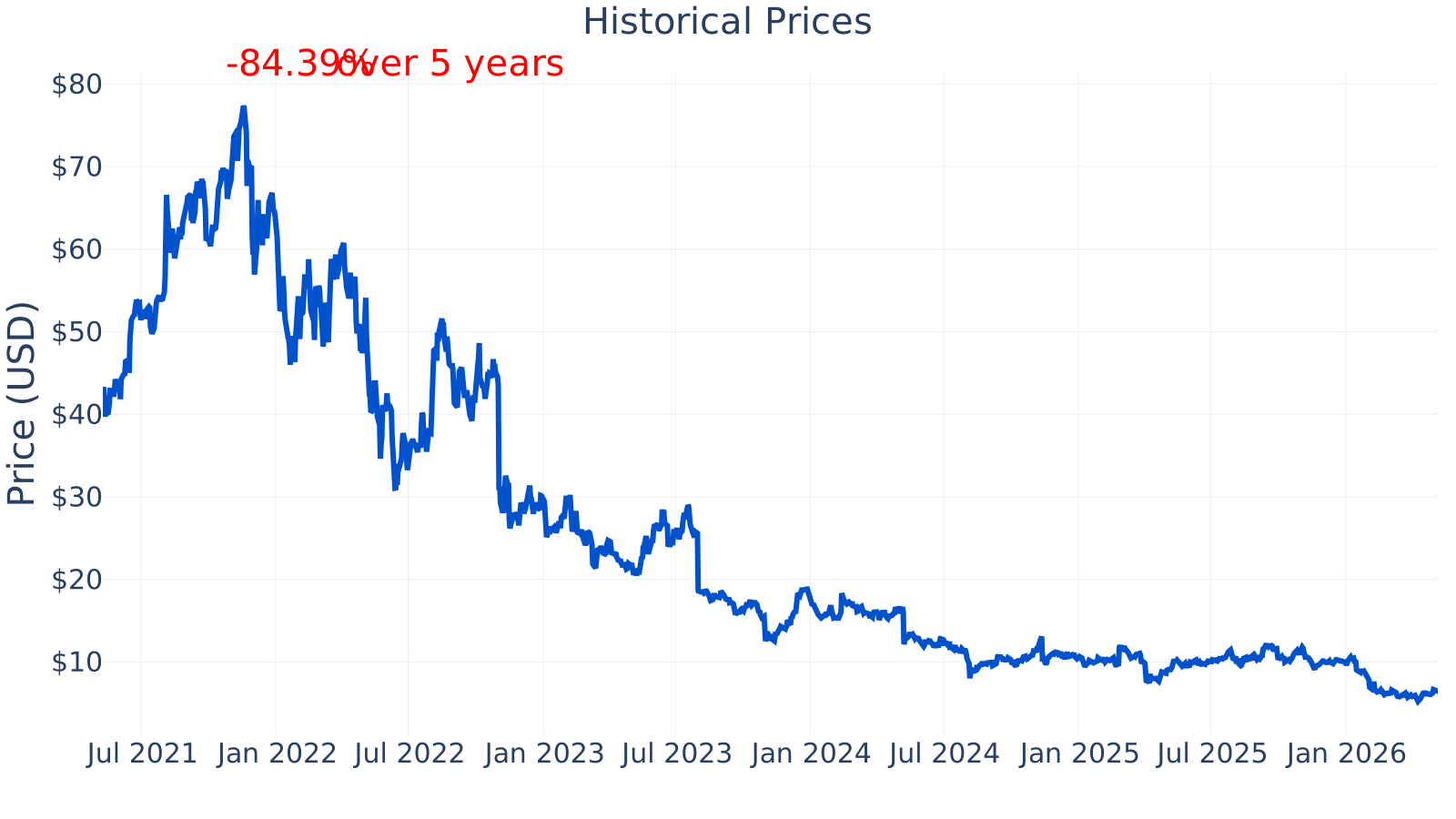
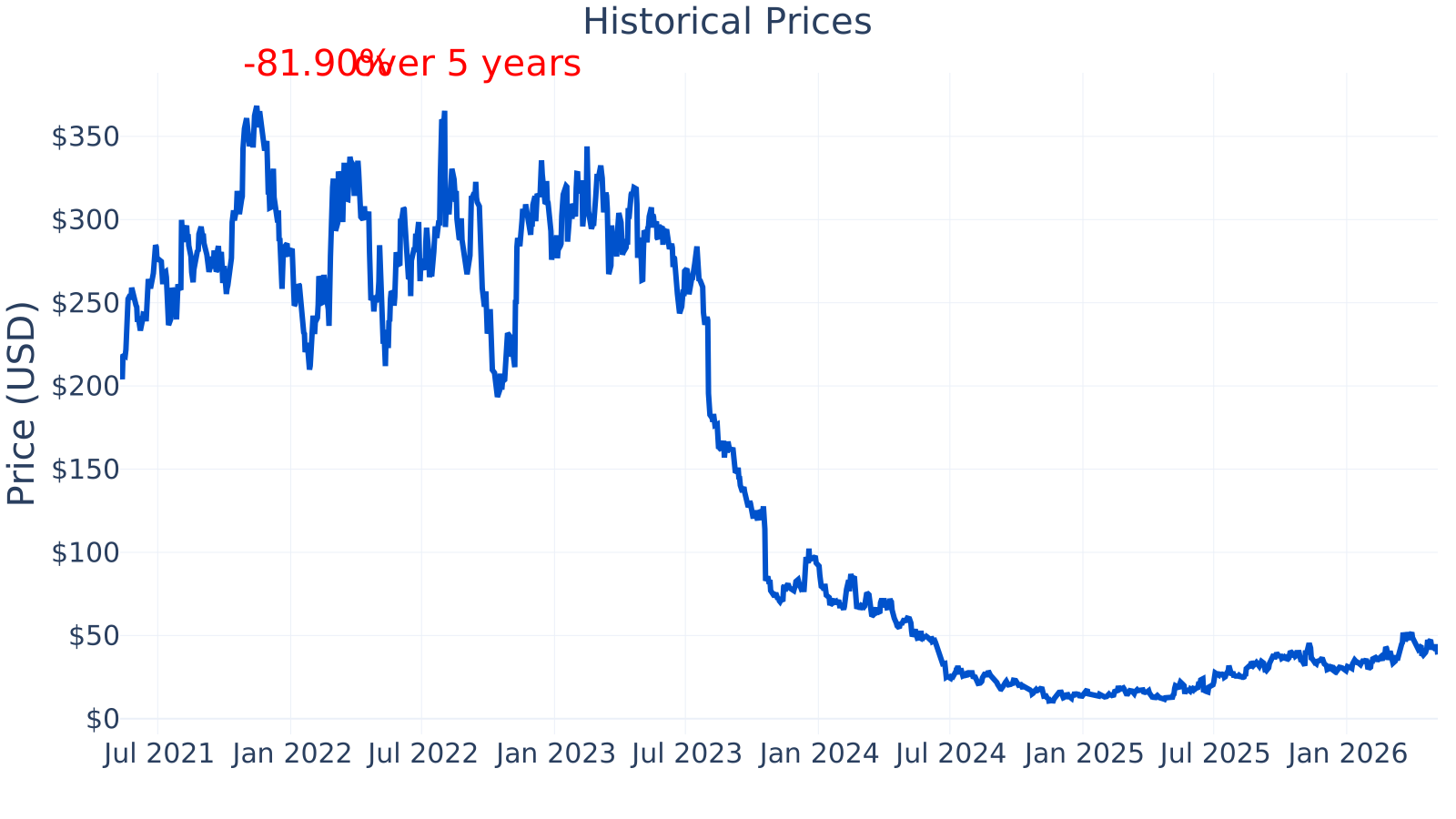
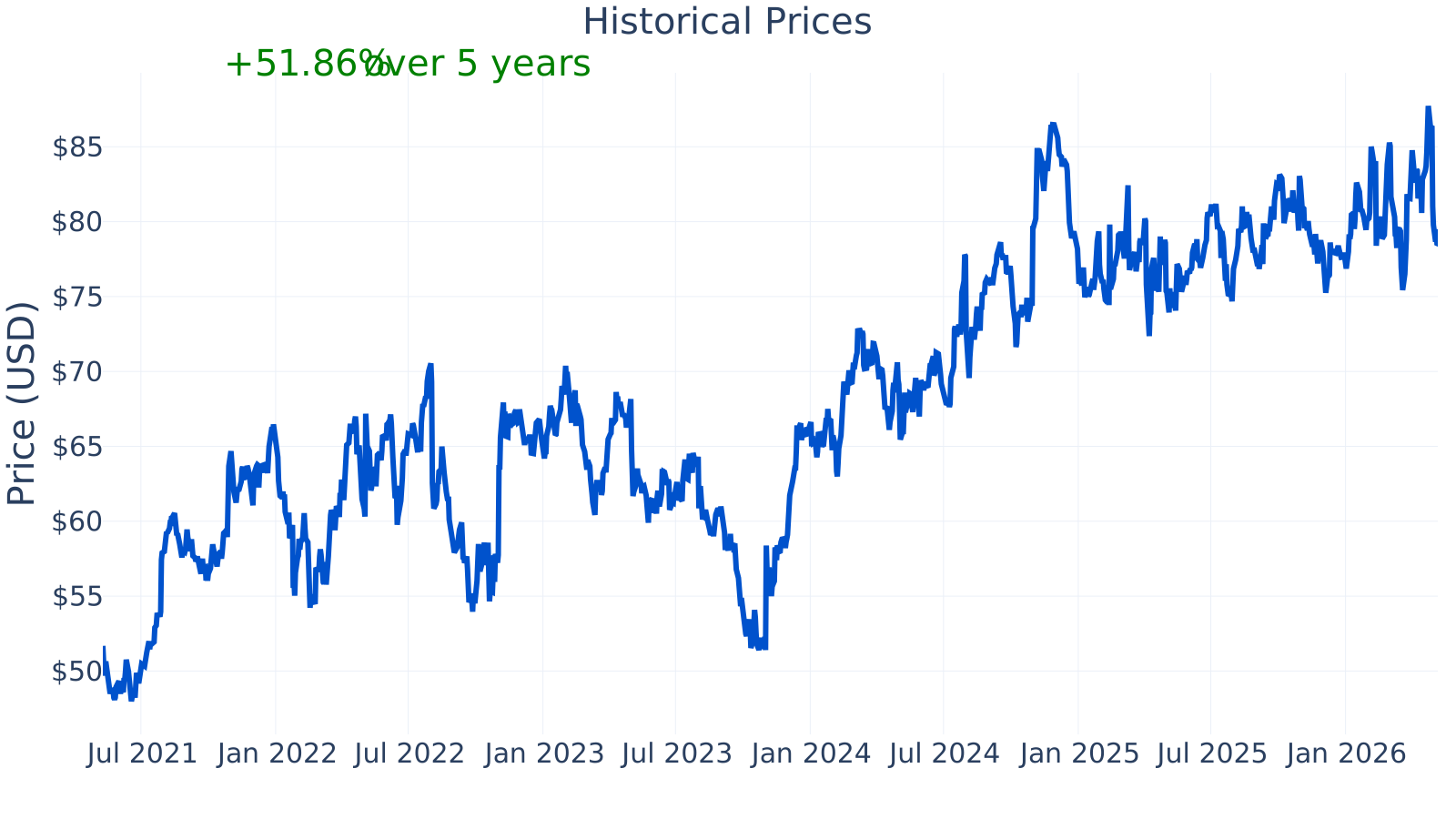
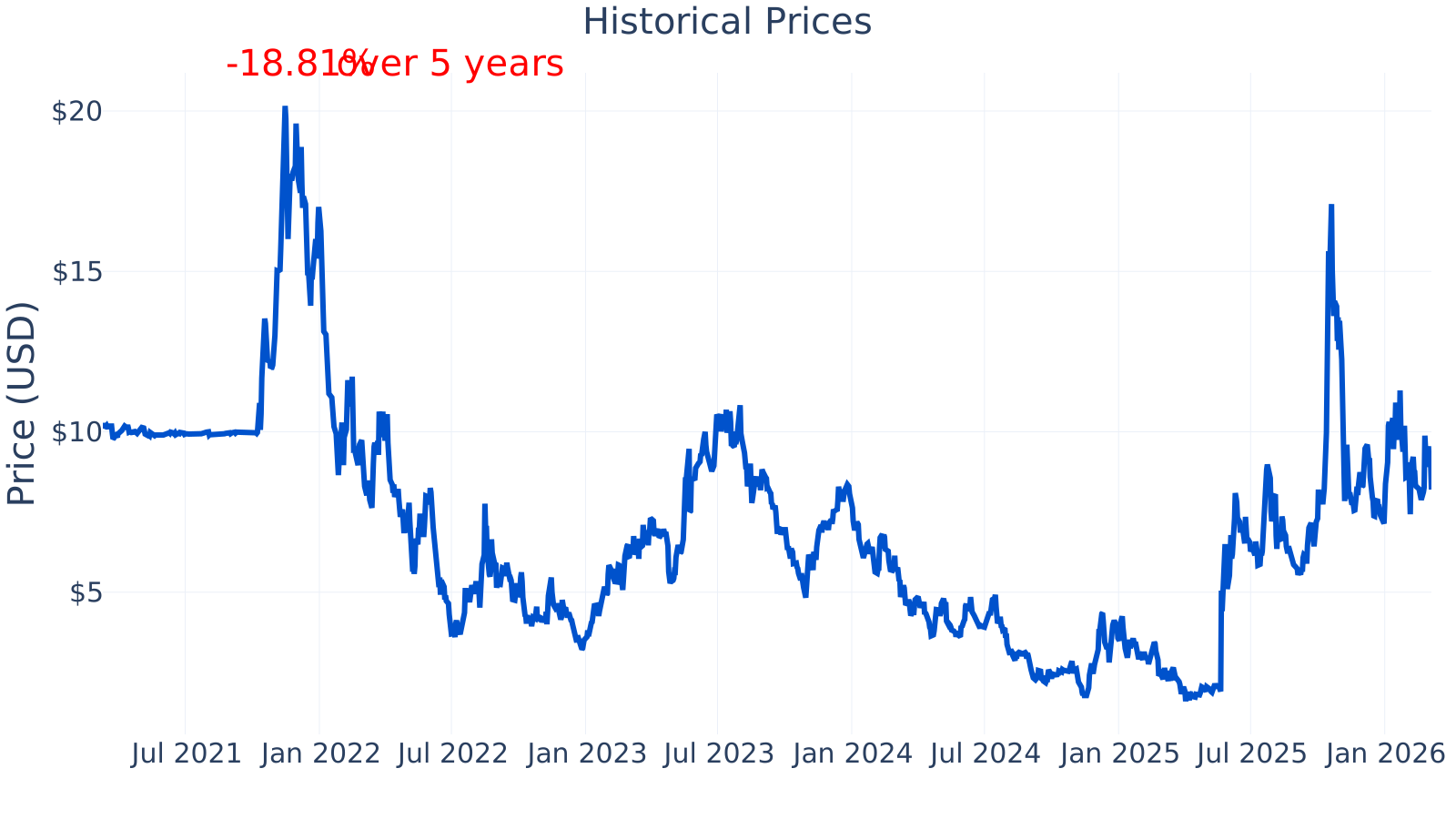
Navitas’s market capitalization is about $1.9B and the stock has a high beta (~3.21), meaning it has historically moved much more than the broader market. Profitability is currently weak: the latest profit margin shown is about -255% versus an industry median near 11%, reflecting that the company is not consistently profitable at this stage. Recent year-over-year revenue growth is also negative (about -59% versus an industry median near 16%). On balance sheet leverage, debt-to-equity is very low at roughly 1.5% versus an industry median near 25.7%, indicating limited use of debt. Free cash flow over the trailing twelve months is negative (~-$44M), which implies the business has been consuming cash rather than generating it recently.
Growth (Medium)
Navitas operates in power semiconductors, an area tied to several long-term electrification and efficiency trends. Many end markets are structurally driven by the same theme: more electricity is being converted, managed, and moved through systems, and efficiency standards (and energy cost) make power conversion performance increasingly important. Examples include:
- Electric vehicles and charging, where power electronics can influence range, charging speed, and thermal performance
- Data centers, where power losses translate into heat and operating cost at massive scale
- Renewable energy and industrial power, where conversion efficiency and power density can affect total system cost
- Consumer fast charging, where compactness and efficiency are differentiators
Strategically, Navitas’s emphasis on GaN and SiC aligns with where many designers look when they want better efficiency or higher switching performance than conventional silicon. The company’s growth outlook therefore depends less on overall “chip demand” and more on whether these newer materials continue gaining share in real products—and whether Navitas can win and retain design positions with large customers.
The revenue growth profile is uneven. Growth was very strong through 2023 (well above 100% year-over-year at points), cooled sharply during 2024, and turned negative through 2025, ending around -59% year-over-year. For a long-term view, this suggests the business has not yet reached a stable scaling phase and may be sensitive to customer ordering cycles and end-market demand swings.
Free cash flow has been consistently negative across the periods shown (roughly in the -$44M to -$59M range). That is common for earlier-stage semiconductor companies investing in product development and market expansion, but it also means future progress is often judged by whether losses narrow and cash usage improves over time.
Potential catalysts described in company materials generally center on: (1) broader adoption of GaN and SiC in mainstream platforms, (2) expansion into higher-volume or higher-power applications, and (3) translating design wins into sustained production revenue. The timing and magnitude of these are uncertain and typically depend on customers’ product cycles.
Risks (High)
A key risk is that Navitas is not consistently profitable, and recent margins and cash generation are weak. The latest profit margin shown is deeply negative, and the multi-year pattern indicates that operating expenses have often been much larger than gross profit. If revenue growth does not return or if gross margins do not improve enough, losses can persist.
Profitability has been volatile and mostly negative. The company briefly showed a positive margin in late 2022 in the series shown, but it returned to negative levels afterward, ending around -255% while the industry median is positive (roughly high single digits to low double digits depending on the quarter). This gap highlights execution risk: scaling revenue and improving unit economics are essential for the business model to look more like established semiconductor peers.
Another risk is competitive pressure. Power semiconductors is a crowded field with large, well-capitalized companies and many specialists. Navitas competes in segments where customers value reliability, supply assurance, cost, and proven performance. Larger rivals may have advantages in manufacturing scale, long customer relationships, and the ability to bundle products.
Key competitive groups include:
- Large diversified semiconductor and power electronics suppliers (broad portfolios and scale advantages)
- Specialists in GaN power (competing for the same next-generation charger and power-conversion sockets)
- Major SiC suppliers (where supply chain control and production scale can be differentiators)
A further risk is customer concentration and design-cycle timing, which is common in semiconductors: a small number of major customer programs can influence revenue, and ramps can be delayed or canceled. In addition, technology transitions can cut both ways—if GaN or SiC adoption is slower than expected in certain end markets, revenue growth can lag.
Financial leverage appears low: debt-to-equity declined over time and is about 1.5% at the latest point shown versus an industry median near 21%–36% across the series. Low debt can reduce financial stress, but it does not remove the core operating risk of negative cash flow and potential future funding needs if losses continue.
Finally, the stock’s historically high beta suggests an additional “risk layer” for shareholders: the price has tended to swing significantly, which can amplify both positive and negative periods independent of company fundamentals.
Valuation
Traditional valuation tools like the price-to-earnings (P/E) ratio are difficult to use when earnings are negative or unstable. That limitation appears relevant here based on the profitability profile.
In the P/E history shown, Navitas’s P/E is often not meaningful (displayed as 0 in many periods, consistent with losses or extreme values), while the industry median P/E remains positive and generally ranges from the mid-teens to around the 40s+ depending on the date. In practice, when a company is loss-making, investors often focus more on revenue scale, gross margin progression, operating expense discipline, cash runway, and whether the business can reach sustainable profitability.
With a market capitalization around $1.9B and recent revenue contraction, the key valuation question becomes how much future growth and margin improvement is already reflected in the price. Without stable earnings, valuation tends to be more sensitive to changes in growth expectations, which can contribute to volatility.
Conclusion
Navitas Semiconductor is positioned in a part of the semiconductor industry tied to long-term electrification and efficiency trends, with a strategy centered on GaN and SiC power technologies. The company has shown the ability to grow revenue sharply in earlier periods, but the more recent pattern includes a meaningful slowdown and a decline in year-over-year revenue.
The main fundamental tension is clear: the business operates in promising end markets, yet profitability and free cash flow remain negative, and results have been volatile. Balance sheet leverage appears low, which can be a stabilizing factor, but competitive intensity and execution (turning design activity into durable, profitable volume) are central uncertainties. Any long-term assessment typically depends on whether Navitas can return to sustained revenue growth while steadily improving margins and cash generation.
Sources:
- U.S. SEC EDGAR — Navitas Semiconductor Corp filings (Form 10-K, Form 10-Q, Form 8-K)
- Navitas Semiconductor Corp — Investor Relations materials and press releases
- Wikipedia — “Navitas Semiconductor” (basic company background)
This article is for informational purposes only and does not constitute financial advice. Some content is AI-generated. See Disclaimer