Stock Analysis · Navitas Semiconductor Corp (NVTS)
Overview
Navitas Semiconductor Corp (NVTS) designs power semiconductors that help convert and control electricity more efficiently. In plain terms, its chips can make power adapters, fast chargers, data-center power supplies, solar inverters, and electric-vehicle power systems smaller, cooler, and more energy-efficient than many traditional solutions.
Navitas focuses on “next-generation” power technologies, particularly gallium nitride (GaN) and silicon carbide (SiC). GaN is commonly discussed for compact, high-frequency power conversion (such as consumer fast charging and some data-center uses). SiC is often associated with high-voltage, high-power uses (such as EVs and certain industrial applications). The company’s long-term plan, as described in its SEC filings, is to expand design wins with equipment makers and grow production volume through manufacturing partners.
Revenue primarily comes from selling semiconductor products (power ICs and related devices) to customers through a mix of direct sales and distributors. Navitas discloses revenue by end market in its filings; the exact split can change materially from period to period depending on customer demand and program ramps. In general, the company describes its key end markets as:
- Mobile/consumer fast charging (compact chargers and adapters)
- Data center (power supplies and power conversion inside server infrastructure)
- Electric vehicle (high-voltage power components, including SiC)
- Solar and industrial (power conversion for renewable energy and factory/industrial equipment)
Across the years shown, revenue increased substantially from 2021 to 2024, while operating expenses (especially R&D and selling/general/administrative) remained high. That combination has kept operating income negative in the periods displayed, even as gross profit improved with higher revenue.
Key Figures
| Metric | Value | Industry ⓘ |
|---|---|---|
| Date | Feb 08, 2026 | |
| Context | ||
| Sector | Technology | |
| Industry | Semiconductors | |
| Market Cap ⓘ | $2.04B | |
| Beta ⓘ | 3.17 | |
| Fundamental | ||
| P/E Ratio ⓘ | N/A | 45.89 |
| Profit Margin ⓘ | -220.85% | 9.42% |
| Revenue Growth ⓘ | -53.40% | 12.95% |
| Debt to Equity ⓘ | 2.41% | 25.62% |
| PEG ⓘ | N/A | |
| Free Cash Flow ⓘ | -$46.97M | |
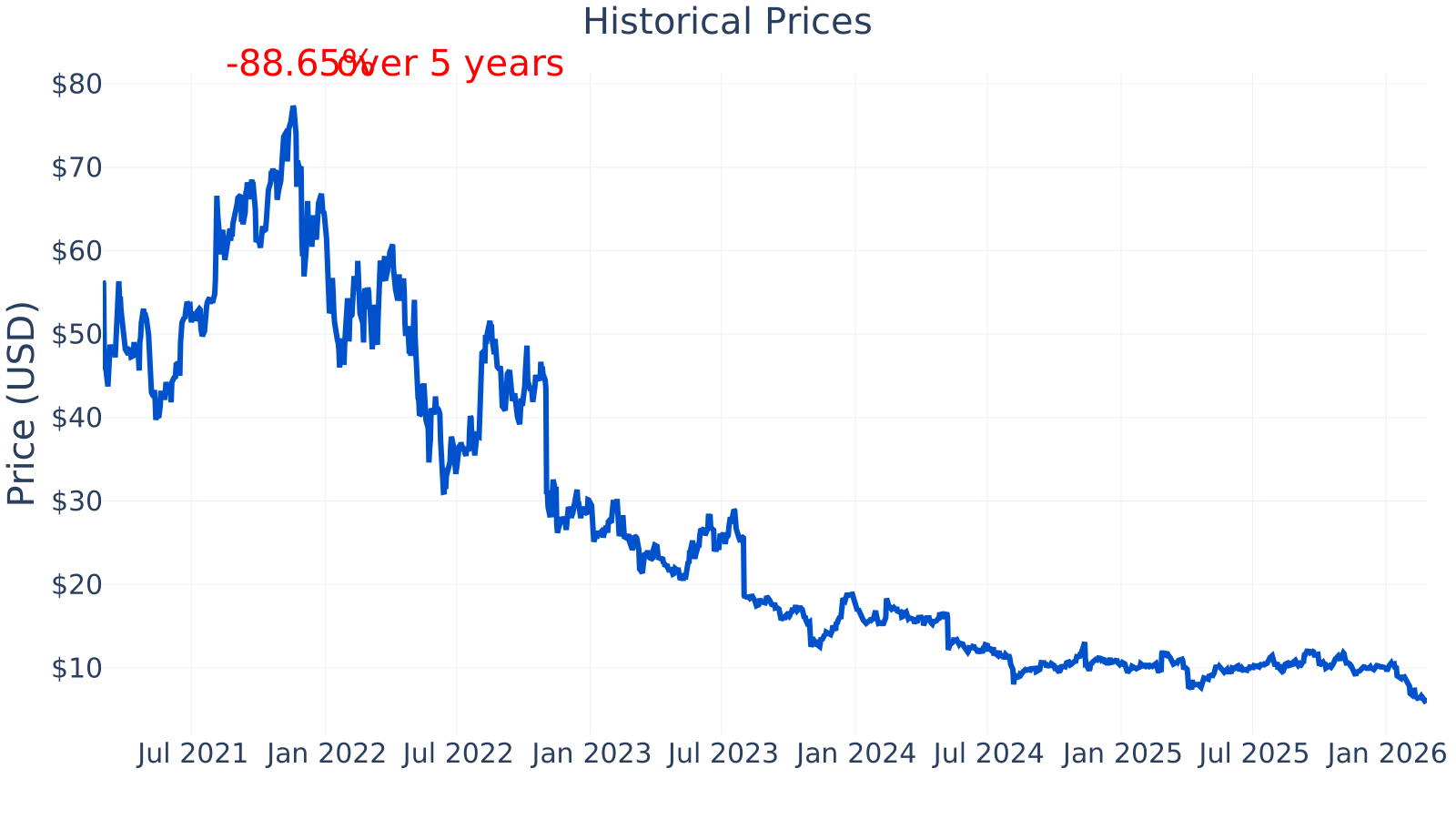
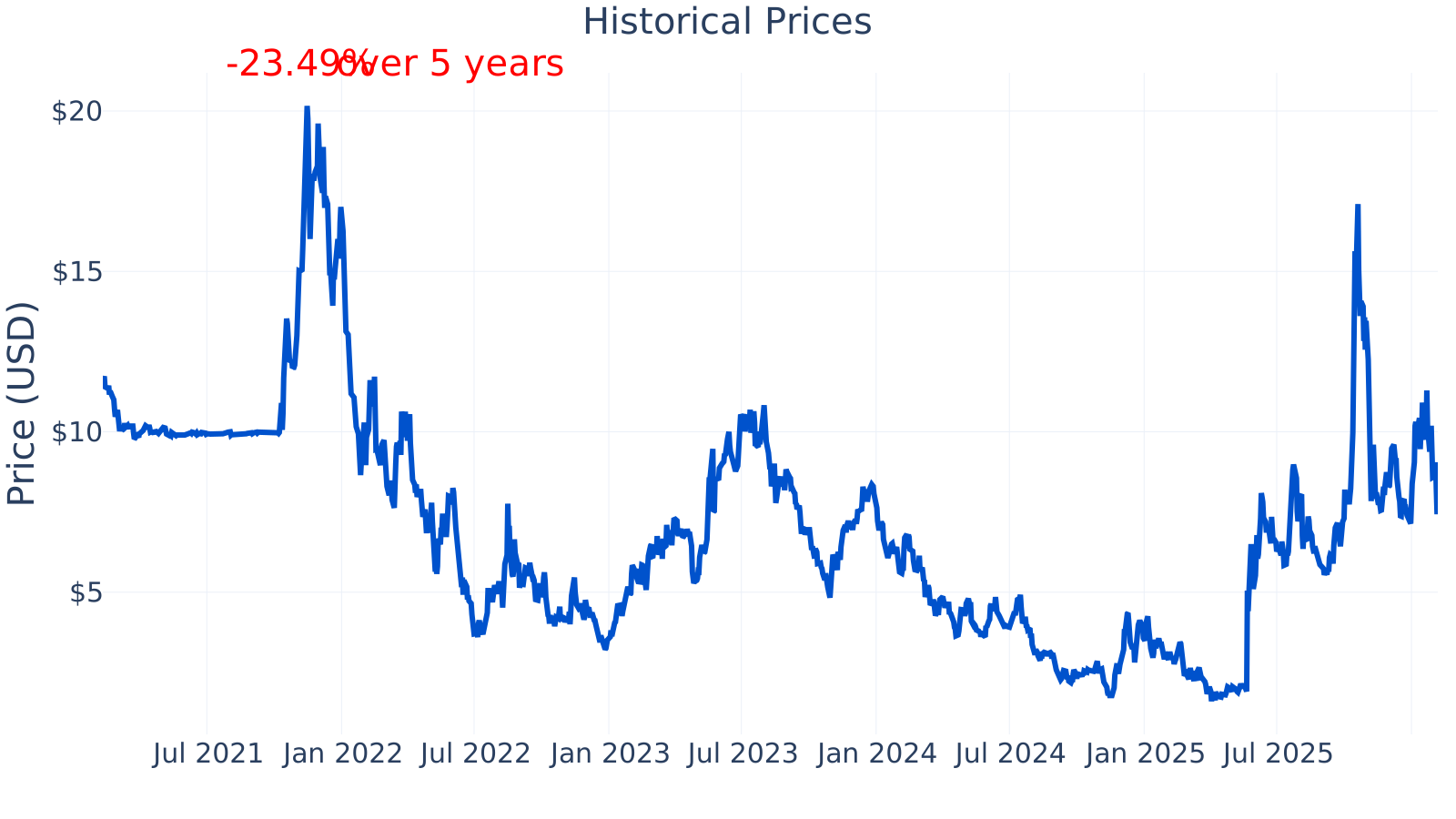
Navitas’ market capitalization is about $2.04B. The stock’s beta (~3.17) indicates it has historically moved much more than the overall market, which can translate into large swings in both directions. Profitability is currently weak: the latest profit margin is about -221% versus an industry median near 9%, meaning losses remain large relative to revenue. Recent growth has also been pressured, with the latest year-over-year revenue growth around -53% compared with an industry median near 13%. On balance sheet leverage, debt-to-equity is about 2.4%, well below the industry median (~25.6%), indicating relatively low financial leverage. Free cash flow over the trailing twelve months is about -$47.0M, showing the business has been consuming cash recently.
Growth (medium)
Navitas participates in the broader power semiconductor market, which is tied to long-running trends such as electrification, energy efficiency standards, higher power density in electronics, and growing electricity demand from data centers. These trends can support demand for more efficient power conversion components over time.
Strategically, the company’s approach centers on gaining adoption of GaN and SiC in end products where efficiency, size, and thermal performance matter. If customers redesign chargers, power supplies, or vehicle power systems around these materials, successful suppliers can benefit from multi-year production runs. Navitas’ filings emphasize design wins and scaling programs as the pathway from engineering engagement to recurring production revenue.
The year-over-year revenue growth pattern shows a shift from very high growth in 2022–2023 to a marked slowdown and then contraction through 2024–2025 (down to roughly -53% in the latest point shown). That kind of change can happen in semiconductors due to inventory corrections, customer de-stocking, slower ramps, or product transition timing. For long-term analysis, the key question is whether growth resumes as customers restart ordering and new programs reach volume.
Free cash flow has been negative across the periods shown (roughly -$44M to -$59M in trailing twelve-month figures). This indicates the company has not yet reached a level of scale where operating cash generation consistently covers spending needs, which can matter for how long it can fund R&D and commercialization without relying on external capital.
Potential catalysts discussed in company materials typically relate to (1) new design wins moving into production, (2) increased penetration of GaN in higher-power charging and data center power, and (3) progress in SiC products aimed at EV and industrial markets. These are not guaranteed outcomes, but they are the main business drivers Navitas highlights in filings and investor communications.
Risks (high)
This article is for informational purposes only and does not constitute financial advice. Some content is AI-generated. See Disclaimer