Stock Analysis · NVR Inc (NVR)
Overview
NVR Inc (NVR) is a U.S. homebuilder. It builds and sells single-family homes, townhomes, and condominiums under brands such as Ryan Homes, NVHomes, and Heartland Homes. The company also provides mortgage-related services to support its homebuyers, primarily through mortgage origination and title services.
In simple terms, NVR earns most of its money by selling newly built homes. A smaller portion comes from services linked to those sales (financing and settlement), which tend to rise and fall with housing demand and closing volumes.
Main revenue sources (largest to smallest):
- Homebuilding (home sales) — the core business and the main driver of revenue
- Mortgage banking and settlement services — primarily tied to NVR’s homebuyers
The company reports its results in these business segments in its annual filings, but the exact percentage split can vary by year and is not provided here.
Looking across recent years, total revenue moved from about $9.0B (2021) to about $10.3B (2025), with a peak around $10.5B (2022 and 2024). Profitability also varied with housing conditions: net income increased from about $1.24B (2021) to about $1.73B (2022), then ended at about $1.34B (2025). Interest expense is relatively small compared with operating profit in these years, which suggests financing costs were not the dominant factor in overall profitability.
Key Figures
| Metric | Value | Industry ⓘ |
|---|---|---|
| Date | Apr 27, 2026 | |
| Context | ||
| Sector | Consumer Cyclical | |
| Industry | Residential Construction | |
| Market Cap ⓘ | $17.77B | |
| Beta ⓘ | 1.07 | |
| Fundamental | ||
| P/E Ratio ⓘ | 15.87 | 13.07 |
| Profit Margin ⓘ | 12.49% | 8.30% |
| Revenue Growth ⓘ | -21.40% | -12.85% |
| Debt to Equity ⓘ | 30.05% | 31.99% |
| PEG ⓘ | 4.97 | |
| Free Cash Flow ⓘ | $1.10B | |
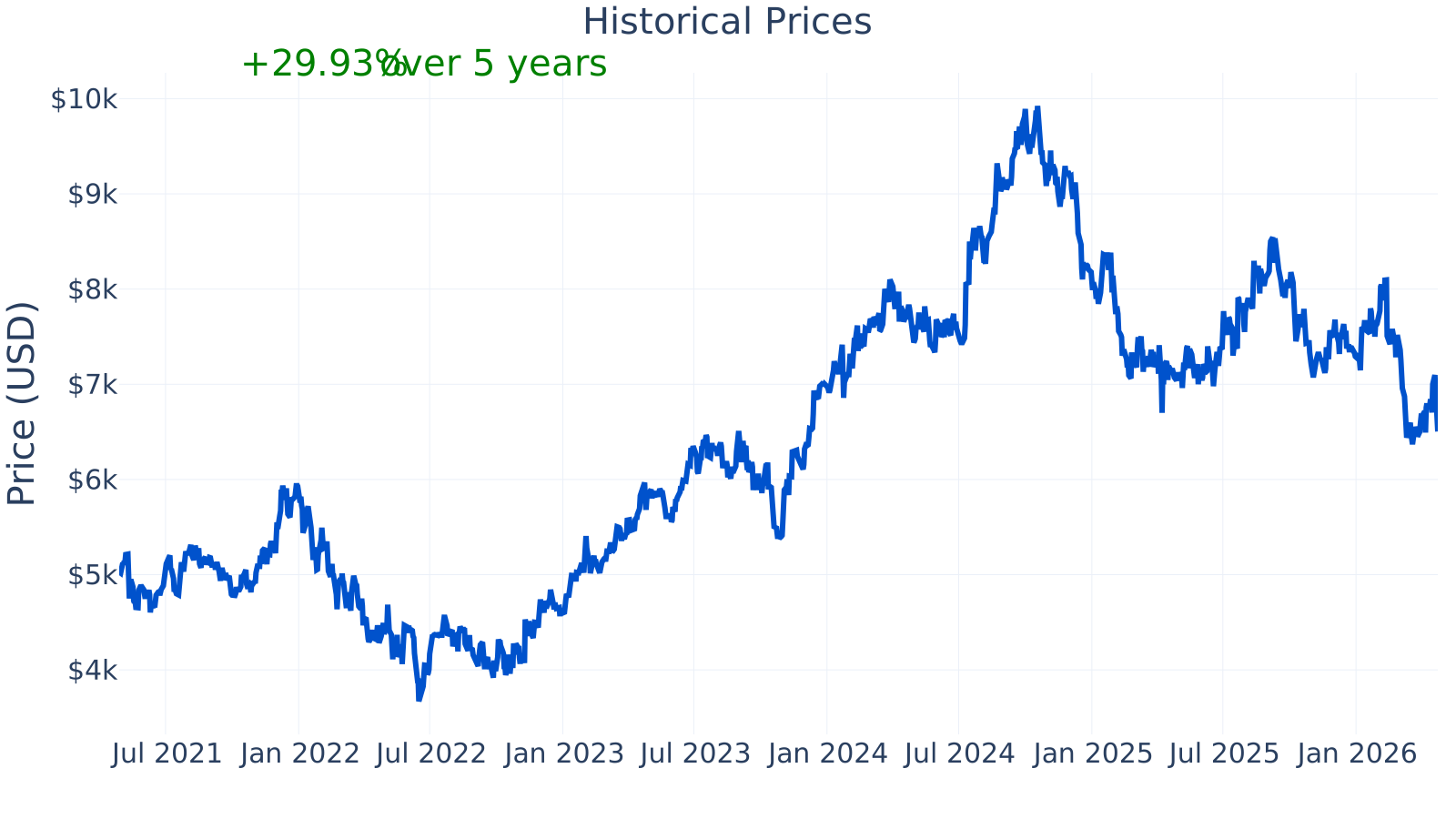
NVR’s market capitalization is about $17.8B, and its beta of ~1.07 suggests the stock has historically moved roughly in line with the broader market (though housing cycles can still create sharp swings).
Profitability stands out versus the industry median: the latest profit margin is ~12.5% versus an industry median around 8.3%. On the other hand, the latest year-over-year revenue growth is about -21.4%, which is weaker than the industry median (about -12.9%) and consistent with a softer period for homebuilding volumes and/or pricing.
Leverage is moderate: debt-to-equity is ~30%, slightly below the industry median near 32%. Free cash flow over the trailing twelve months is about $1.10B, indicating meaningful cash generation even during a period of slower top-line growth.
Growth (Medium)
NVR operates in residential construction, an industry that is closely tied to household formation, employment, wage levels, and—most importantly—mortgage rates and credit availability. Over long periods, U.S. housing demand tends to be supported by demographics and the need to replace aging housing stock, but the path is rarely smooth. The industry is cyclical: strong years are often followed by slower periods when affordability worsens or economic conditions tighten.
NVR’s strategy is often discussed in terms of discipline and flexibility: aligning construction pace with demand, managing the lot pipeline, and focusing on returns rather than pursuing maximum volume at all times. In a cyclical business, that type of approach can matter because it may reduce the risk of being locked into too much inventory or land during a downturn.
The recent trend shows how quickly conditions can change. Revenue growth was positive in several periods (including parts of 2024), then turned negative again, ending around -20% in the most recent quarter shown. For a homebuilder, this can reflect fewer closings, shifts in product mix, incentives used to support affordability, or changing local market conditions.
Despite fluctuations in growth, free cash flow remains substantial (roughly $1.1B most recently, after being higher in earlier periods shown). Consistent cash generation can support flexibility across the cycle—such as investing in operations, maintaining liquidity, and returning capital to shareholders—though future levels can still vary widely with the housing market.
Potential catalysts in this business are typically macro-driven rather than company-specific: easing mortgage rates, improving affordability, stronger consumer confidence, and a healthier resale market. Because these are external factors, timing and magnitude are uncertain.
Risks (High)
The largest risk for NVR is the housing cycle itself. Demand for new homes can fall quickly when mortgage rates rise, lending standards tighten, or buyers become more cautious. Even when demand exists, affordability constraints can force builders to use incentives or accept lower margins to keep volumes moving.
From a balance-sheet perspective, NVR’s debt-to-equity is about 30%, which is in the same general range as peers and slightly below the industry median in the latest period shown. The ratio also declined meaningfully from earlier levels above 50% in 2021, indicating a less levered position than a few years ago. Even so, homebuilding remains capital-intensive and sensitive to land, labor, and materials costs.
Margins are a key swing factor in this sector. NVR’s profit margin remains above the industry median (latest about 12.8% vs. an industry median around 8.3%), but the chart shows a clear downward move from peaks around 16%–17% in 2023–2024 to the most recent level. This pattern is consistent with a more competitive or affordability-constrained environment where pricing power is weaker and/or incentives and costs take a bigger share of each sale.
Competition is intense and largely regional. NVR competes with other large public homebuilders and many private/local builders. Major public competitors include companies such as D.R. Horton, Lennar, PulteGroup, and Toll Brothers, among others. Competitive positioning often depends on local market share, product fit (entry-level vs. move-up vs. luxury), build times, access to lots, and the ability to offer attractive financing solutions through captive or affiliated mortgage operations.
As for competitive advantages, scale and operational consistency can help in purchasing, construction processes, and market coverage. However, there is no single nationwide “winner” in homebuilding the way there might be in some technology markets; leadership is fragmented, and results can vary significantly by geography and product segment. NVR’s higher-than-median margins suggest strengths in execution and cost control in recent years, but those advantages can narrow when the market slows.
Other important risks include:
- Interest-rate risk (affecting affordability and buyer demand)
- Input cost volatility (labor, materials, and subcontractor availability)
- Land and development risk (availability, pricing, zoning, and timing)
- Regulatory and legal risk (building codes, environmental rules, and litigation)
- Geographic concentration (performance can depend on the specific regions where NVR builds)
Valuation
NVR’s current P/E ratio is about 15.9, compared with an industry median around 13.1. Historically in the period shown, NVR’s P/E often traded above the industry median, and it has ranged roughly from the high single digits to around the high teens. A higher P/E than peers can be consistent with stronger profitability, steadier execution, or balance-sheet characteristics that the market values more highly.
At the same time, valuation should be read together with the current operating backdrop. Recent negative year-over-year revenue growth and declining margins versus 2023–2024 highs indicate the business is in a softer part of the cycle. In cyclical industries like homebuilding, a P/E multiple can look “low” or “high” depending on whether earnings are near a peak or a trough.
The PEG ratio of ~5.0 (which compares valuation to expected growth) is one indication that the market is not pricing the company as a rapid, steady grower. That is common for cyclical businesses where growth rates can be uneven and heavily influenced by macro conditions.
Conclusion
NVR is a large U.S. homebuilder whose results are primarily driven by home sales, with additional contribution from mortgage and settlement services tied to its buyers. The company has shown the ability to generate strong profits relative to industry averages, and its leverage appears moderate in the latest period.
At the same time, the operating environment reflected here is clearly cyclical: recent revenue growth has turned negative and profit margins have moved down from prior highs. For long-term analysis, the central question is less about any single quarter and more about how the company performs across full housing cycles—especially when affordability is pressured and competition increases.
Sources:
- SEC EDGAR — NVR Inc. Form 10-K (Annual Report)
- SEC EDGAR — NVR Inc. Form 10-Q (Quarterly Report)
- NVR Inc. Investor Relations — SEC filings repository / investor materials
- Wikipedia — “NVR, Inc.” (basic company background)
This article is for informational purposes only and does not constitute financial advice. Some content is AI-generated. See Disclaimer


