Stock Analysis · Monolithic Power Systems Inc (MPWR)
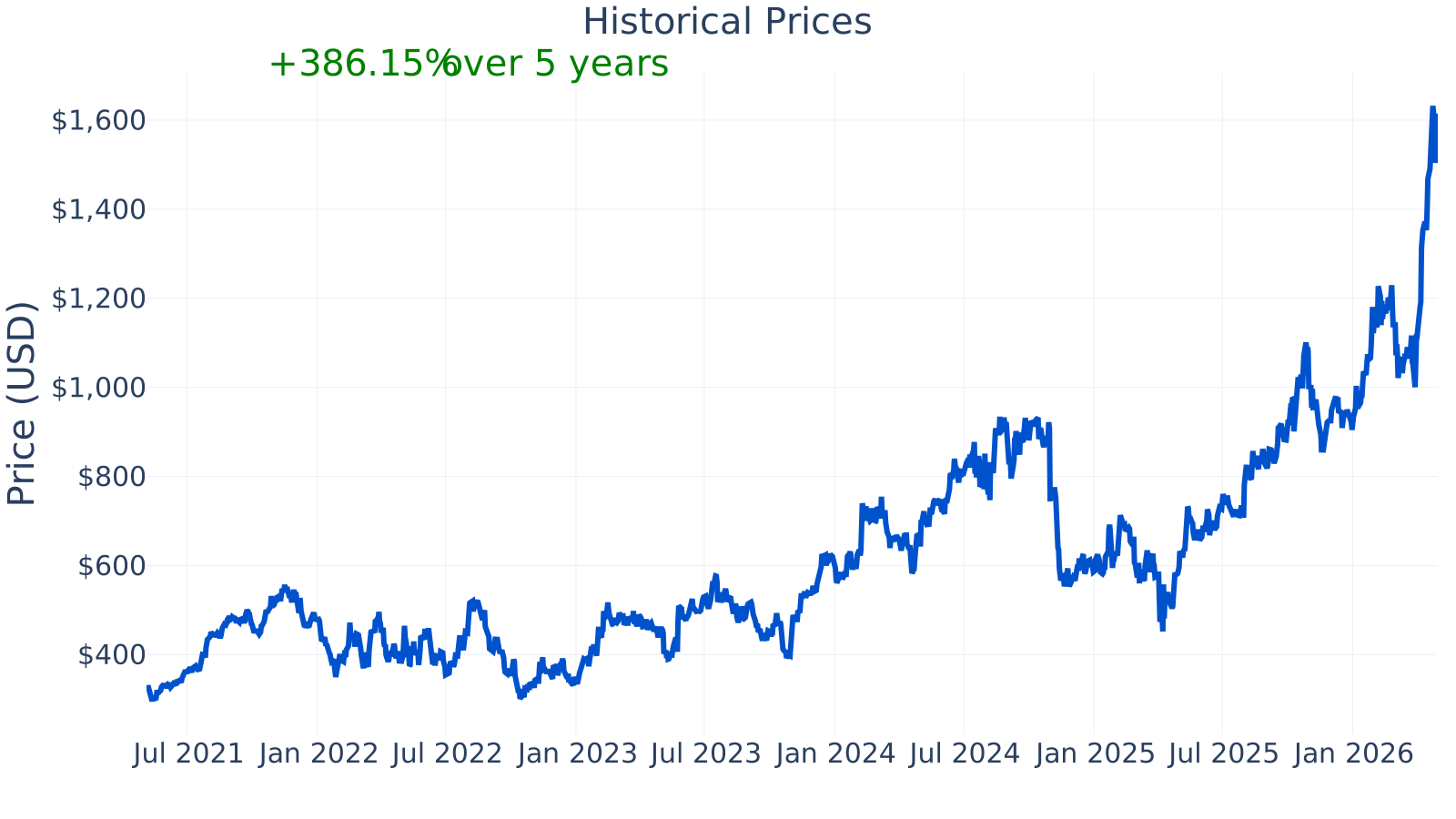
Overview
Monolithic Power Systems, Inc. (MPWR) designs and sells power-management semiconductor products. In simple terms, its chips help electronic devices and systems convert and control electricity efficiently (for example, turning power from a battery or wall outlet into the exact voltage a processor, sensor, or motor needs). Because power efficiency and heat management matter in almost every modern device, these products can be found across many end markets, from data centers to vehicles.
MPWR primarily generates revenue from selling its semiconductor solutions (power-management integrated circuits and related products) through a mix of direct sales and distribution partners. The company discusses its end markets in its annual report filings, typically including areas such as:
- Enterprise data (e.g., data centers and cloud/server applications)
- Automotive (electronics inside vehicles)
- Consumer (devices like TVs, appliances, and other electronics)
- Industrial (factory equipment, power supplies, infrastructure)
- Communications (networking and connectivity equipment)
Percentages by end market can change year to year and are best confirmed in the latest Form 10‑K segment/end-market discussion.
Over the last several years, revenue and gross profit have generally expanded, and the company has maintained meaningful ongoing spending on research and development (R&D), which is typical for a semiconductor designer aiming to keep releasing improved products. One notable item in the timeline is an unusually large negative income tax expense in one year, which can cause net income to look abnormally high for that period and is typically tied to one-time tax items disclosed in filings.
Key Figures
| Metric | Value | Industry ⓘ |
|---|---|---|
| Date | May 04, 2026 | |
| Context | ||
| Sector | Technology | |
| Industry | Semiconductors | |
| Market Cap ⓘ | $77.78B | |
| Beta ⓘ | 1.48 | |
| Fundamental | ||
| P/E Ratio ⓘ | 113.67 | 53.51 |
| Profit Margin ⓘ | 22.98% | 6.16% |
| Revenue Growth ⓘ | 26.10% | 19.70% |
| Debt to Equity ⓘ | 0.68% | 20.71% |
| PEG ⓘ | 2.60 | |
| Free Cash Flow ⓘ | $664.19M | |
MPWR has a market capitalization of about $77.8B and a beta of 1.48, which indicates the stock has historically moved more than the broader market (higher volatility). The company’s profit margin is ~23.0% versus an industry median of ~6.2%, suggesting stronger profitability than many semiconductor peers. Latest year-over-year revenue growth is ~26.1% (industry median ~19.7%). The balance sheet leverage shown here is very low: debt-to-equity is ~0.7% versus an industry median of ~20.7%. Trailing free cash flow is about $664M. The listed P/E ratio is ~113.7 versus an industry median near 53.5, implying a significantly higher earnings multiple than typical peers.
Growth (medium)
MPWR operates in the semiconductor industry, and more specifically in power management—an area supported by long-running trends: growing compute needs (including data centers), electrification in vehicles, and increasing electronics content in industrial systems. Power efficiency also tends to become more important as performance rises, because wasted power becomes heat, which creates reliability and cooling challenges.
The year-over-year growth pattern shows a cyclical profile: very strong growth in 2021–2022, a slowdown with some negative growth quarters around 2023, followed by a recovery into 2024–2026 with growth returning to materially positive levels (most recently ~26%). This type of cycle is common in semiconductors, where customer ordering and inventory adjustments can amplify ups and downs.
Free cash flow has increased substantially over the period shown (from roughly $247M to $626–664M), which matters for long-term resilience because it can fund R&D, hiring, and strategic initiatives without relying heavily on debt. A potential catalyst for continued growth is expansion in higher-demand applications like data-center power architectures and automotive electronics, where efficiency and reliability requirements can support more specialized power solutions.
Risks (medium)
The largest category of risk is the normal cyclicality of semiconductors. Customer demand can change quickly due to inventory corrections, shifts in end-market spending (enterprise, consumer, industrial), or broader economic slowdowns. This can affect revenue growth and operating leverage (profits can swing faster than sales).
Competition is another major risk. Power management is a crowded field with large and well-resourced rivals. MPWR competes with diversified analog and power semiconductor companies and other specialized suppliers. Commonly cited competitors in company disclosures and industry context include firms such as Texas Instruments, Analog Devices, onsemi, Infineon Technologies, STMicroelectronics, and others depending on the specific application. MPWR’s competitive positioning generally relies on product performance, efficiency, integration, and the ability to deliver new designs that win “design slots” in customers’ systems. A key point for long-term outcomes is whether MPWR can keep innovating fast enough and support customers through long product lifecycles (especially in automotive and industrial).
Financial leverage appears low relative to the industry. Debt-to-equity remains under 1% across the period shown and is far below the industry median (often in the mid-teens to mid-30% range on the chart). Low leverage can reduce financial risk during downturns, though it does not remove business-cycle risk.
Profitability has generally been well above the industry median for most periods shown. However, there is a visible anomaly where profit margin spikes to extremely high levels in late 2024 and into parts of 2025 before returning closer to prior levels (~22–25%). Large swings like that typically reflect unusual items (for example, tax effects or one-time accounting impacts) rather than a sustainable operating margin shift, and it is something readers may want to reconcile with the company’s filings for those periods.
Valuation
The P/E ratio shown is high in absolute terms and also higher than the semiconductor industry median at most points on the chart. The latest value is about 113.7x versus an industry median around ~53.5x. Historically, the company’s P/E has varied widely (including much lower periods), which can happen when either the stock price changes quickly or when earnings fluctuate due to business cycles and one-time items.
In practical terms, a higher P/E typically implies the market is assigning a larger value to each dollar of current earnings, often associated with expectations for stronger growth, higher long-term margins, or durability of the business model. The main valuation question becomes whether MPWR can sustain above-peer profitability and deliver growth through cycles without significant margin erosion—because if growth slows or profitability normalizes downward, high multiples can compress.
Conclusion
Monolithic Power Systems is a semiconductor designer focused on power management, a category with broad and growing relevance across data centers, vehicles, industrial equipment, and consumer electronics. The company shows strong profitability versus industry norms and very low balance-sheet leverage, alongside rising free cash flow over time. Growth has also re-accelerated after a cyclical slowdown, consistent with how many semiconductor businesses behave.
At the same time, the business operates in a competitive and cyclical industry, where demand swings and pricing pressure can occur. The valuation metrics shown (notably the P/E ratio relative to peers) indicate the stock is priced at a premium compared with the broader semiconductor group, which increases sensitivity to changes in growth and earnings outcomes. Any long-term assessment typically benefits from reading the most recent Form 10‑K for end-market exposure, customer concentration details, and explanations for unusual profitability and tax-related effects seen in certain periods.
Sources:
- U.S. SEC EDGAR — Monolithic Power Systems, Inc. Form 10-K (Annual Report)
- U.S. SEC EDGAR — Monolithic Power Systems, Inc. Form 10-Q (Quarterly Reports)
- Monolithic Power Systems, Inc. Investor Relations — SEC Filings / Annual Report materials
- Wikipedia — “Monolithic Power Systems” (basic company background)
This article is for informational purposes only and does not constitute financial advice. Some content is AI-generated. See Disclaimer


