Stock Analysis · MongoDB (MDB)
Overview
MongoDB is a software company best known for its database technology. In simple terms, databases are the systems organizations use to store, organize, and retrieve information for applications (for example: user profiles, transactions, product catalogs, logs, and other operational data). MongoDB’s products are designed to support modern applications that need flexibility and scalability, especially when applications evolve quickly or handle large volumes of information.
The business is generally described through two main ways customers use MongoDB:
- MongoDB Atlas (a cloud-based, managed offering): MongoDB runs and maintains the database service for customers on major cloud platforms.
- Enterprise/Commercial offerings (often self-managed or supported software): customers run MongoDB in their own environments with paid subscriptions/support.
MongoDB reports revenue primarily through subscriptions and, to a smaller extent, services. Based on the company’s filings, the main revenue sources typically are:
- Subscription revenue (largest): recurring revenue tied to usage and/or contracted access to MongoDB products (including cloud and commercial subscriptions).
- Services revenue (smaller): consulting, training, and other professional services.
From an economic perspective, the company’s model leans toward recurring revenue (subscriptions) rather than one-time product sales, which can support visibility and long-term customer relationships, but also makes results sensitive to customer usage patterns and renewal behavior.
The operating picture over recent years shows revenue rising meaningfully (from about $0.87B to about $2.46B over the period shown), while operating losses narrowed (from roughly -$292M to about -$56M). Research and development spending also increased over time, reflecting continued investment to expand the product and ecosystem.
Key Figures
| Metric | Value | Industry ⓘ |
|---|---|---|
| Date | Mar 06, 2026 | |
| Context | ||
| Sector | Technology | |
| Industry | Software - Infrastructure | |
| Market Cap ⓘ | $21.48B | |
| Beta ⓘ | 1.51 | |
| Fundamental | ||
| P/E Ratio ⓘ | N/A | 24.58 |
| Profit Margin ⓘ | -2.89% | 6.79% |
| Revenue Growth ⓘ | 26.70% | 16.35% |
| Debt to Equity ⓘ | 1.11% | 26.59% |
| PEG ⓘ | 1.67 | |
| Free Cash Flow ⓘ | $509.64M | |
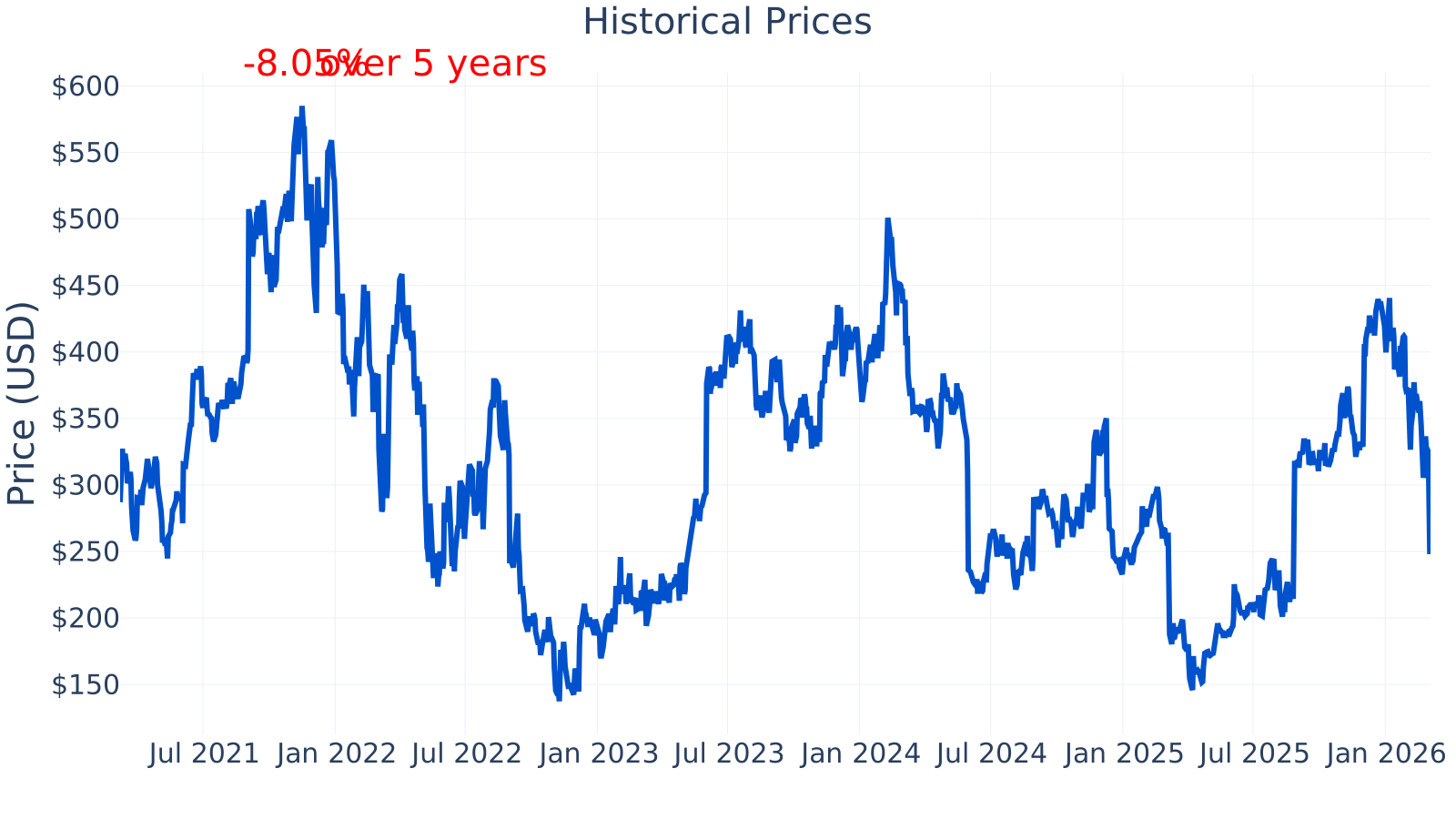
MongoDB’s market capitalization is about $21.5B, and the stock’s beta of 1.51 indicates it has historically been more volatile than the overall market. The company’s profit margin is about -2.9% versus an industry median near 6.8%, meaning it is still slightly unprofitable on a net basis in the period referenced. At the same time, its year-over-year revenue growth is about 26.7%, which is above the industry median (about 16.4%). Balance-sheet leverage appears low in the latest point shown, with debt-to-equity around 1.1% versus an industry median near 26.6%. Free cash flow over the trailing twelve months is about $510M, showing cash generation even while net income remains negative (which can happen due to non-cash expenses and timing effects).
Growth (Medium)
MongoDB operates in the database software market, which is closely tied to long-term trends such as cloud adoption, digitization of business processes, software-driven products, and data-intensive applications. As more services move online and applications become more personalized and real-time, demand for systems that can reliably store and serve information tends to expand.
A key part of MongoDB’s growth strategy is pushing adoption of Atlas, its managed cloud offering. Managed services can reduce operational burden for customers (MongoDB handles more of the setup, scaling, and maintenance), and they often align vendor revenue with customer usage. This strategy also places MongoDB closer to where many new applications are being built (cloud environments), potentially supporting broader adoption.
The growth rate has fluctuated over time: it was very high earlier in the period shown (often above 40–50%) and later moderated, while the most recent value shown is around 26.7%. Even after moderation, growth remains meaningfully above the industry median in the latest snapshot, which can be important for a company still working toward consistent profitability.
Free cash flow improved substantially across the period shown: from slightly negative to strongly positive, reaching roughly $510M most recently. For long-term business durability, this trend matters because cash generation can help fund product development and go-to-market investment without relying as heavily on external financing.
Risks (High)
MongoDB’s core category is highly competitive. Organizations can choose among several database types and vendors depending on performance, cost, features, and the environment where the application runs. Competition can pressure pricing, slow new customer wins, or increase sales and marketing costs required to grow.
The company’s profitability profile is another key risk area. While losses have narrowed and cash generation improved, the latest net profit margin shown is still slightly negative. That implies MongoDB’s long-term outcome depends on sustaining growth while continuing to improve operating efficiency (for example, balancing research investment and customer acquisition costs against revenue expansion).
Debt levels appear low in the most recent period, with debt-to-equity around 1.1% (below the industry median). The longer history shown includes much higher ratios earlier, followed by a steep decline. Even if leverage is currently low, investors often watch whether future financing needs (or changes in equity levels) could affect this profile.
Margins have improved materially over time, moving from deeply negative levels earlier in the series toward about -2.9% most recently. Despite the improvement, the company still trails the industry median margin (around 6.7%), highlighting that competitive pressure and ongoing investment remain meaningful factors.
Competitive positioning has both strengths and vulnerabilities. MongoDB benefits from brand recognition in modern application development, a broad developer community, and a product approach designed for flexible data models. However, it competes with large platform providers and established enterprise vendors that can bundle database offerings with broader cloud or software suites.
Main competitors typically include:
- Cloud provider databases offered by major cloud platforms (managed database services that can be tightly integrated with the provider’s broader cloud ecosystem).
- Large enterprise software vendors offering established database products and enterprise relationships.
- Other open-source and commercial database companies, including both relational and non-relational systems.
Another practical risk is customer spending variability. For usage-based cloud services, revenue can be influenced by how much customers consume and whether they optimize workloads to reduce costs, especially during tighter IT budget cycles.
Valuation
A traditional price-to-earnings (P/E) ratio is not meaningful in the periods shown (values are not displayed), which commonly occurs when earnings are negative or not stable enough for a standard P/E comparison. In these cases, investors often rely more on operating metrics, revenue growth, cash flow trends, and the path to sustained profitability rather than on a single earnings-multiple snapshot.
What can be said from the available metrics is that MongoDB combines above-industry revenue growth with improving (but still negative) net margins and strongly positive free cash flow in the latest period shown. Valuation discussions for companies in this profile typically hinge on whether growth remains durable as the business scales and whether margin improvement continues—because small changes in growth or profitability expectations can meaningfully affect how the market prices the stock.
Conclusion
MongoDB is a database software company with a subscription-led model and a strategic emphasis on its managed cloud offering. Over the period shown, revenue expanded substantially, operating losses narrowed, and free cash flow turned strongly positive, indicating improving financial efficiency alongside ongoing investment in product development.
The main areas that frame a long-term assessment are (1) the durability of demand for modern database platforms as cloud and data-driven applications expand, (2) MongoDB’s ability to keep growing while improving profitability, and (3) the intensity of competition from large platform providers and established enterprise vendors. The facts discussed above point to a business with meaningful growth and improving fundamentals, alongside competitive and profitability risks that remain important to monitor over time.
Sources:
- MongoDB, Inc. — Annual Report (Form 10-K) (business overview, revenue discussion, risk factors, financial statements)
- SEC EDGAR — MongoDB, Inc. filings (Forms 10-K, 10-Q, 8-K)
- MongoDB Investor Relations — Shareholder letters / quarterly results materials (as published by the company)
- Wikipedia — “MongoDB Inc.” (basic company background)
This article is for informational purposes only and does not constitute financial advice. Some content is AI-generated. See Disclaimer