Stock Analysis · MongoDB (MDB)
Overview
MongoDB is a software company best known for its modern database platform. A database is the “system of record” where applications store and retrieve information (for example: user profiles, transactions, product catalogs, logs, and messages). MongoDB’s products are designed to support flexible, fast-changing applications, which is especially common in web, mobile, and cloud software development.
The company’s strategy centers on making it easy for organizations to run MongoDB in the cloud (managed by MongoDB) or in their own environments, while keeping a consistent developer experience across setups. In practice, this aims to reduce the work of operating databases and to help teams build and scale applications faster.
MongoDB reports revenue in two main categories:
- Subscription revenue (typically the largest): recurring revenue from its database software and cloud offerings, including MongoDB Atlas and related subscriptions.
- Services revenue (typically smaller): professional services such as consulting and training.
Over the last several fiscal years, MongoDB’s total revenue increased from about $873.8M (fiscal year ended 2022-01-31) to about $2.006B (fiscal year ended 2025-01-31), reflecting a business that has scaled materially while continuing to invest heavily in product development and go-to-market activities.
From 2022 to 2025, revenue rose from $873.8M to $2.006B, while the company remained unprofitable on a net income basis (net income improved from about -$306.9M in 2022 to about -$129.1M in 2025). Research and development spending also expanded (about $308.8M in 2022 to about $596.8M in 2025), consistent with a strategy focused on product expansion and long-term platform adoption.
Key Figures
| Metric | Value | Industry ⓘ |
|---|---|---|
| Date | Feb 07, 2026 | |
| Context | ||
| Sector | Technology | |
| Industry | Software - Infrastructure | |
| Market Cap ⓘ | $28.03B | |
| Beta ⓘ | 1.39 | |
| Fundamental | ||
| P/E Ratio ⓘ | N/A | 25.66 |
| Profit Margin ⓘ | -3.06% | 6.68% |
| Revenue Growth ⓘ | 18.70% | 15.20% |
| Debt to Equity ⓘ | 1.20% | 19.82% |
| PEG ⓘ | 1.67 | |
| Free Cash Flow ⓘ | $354.60M | |
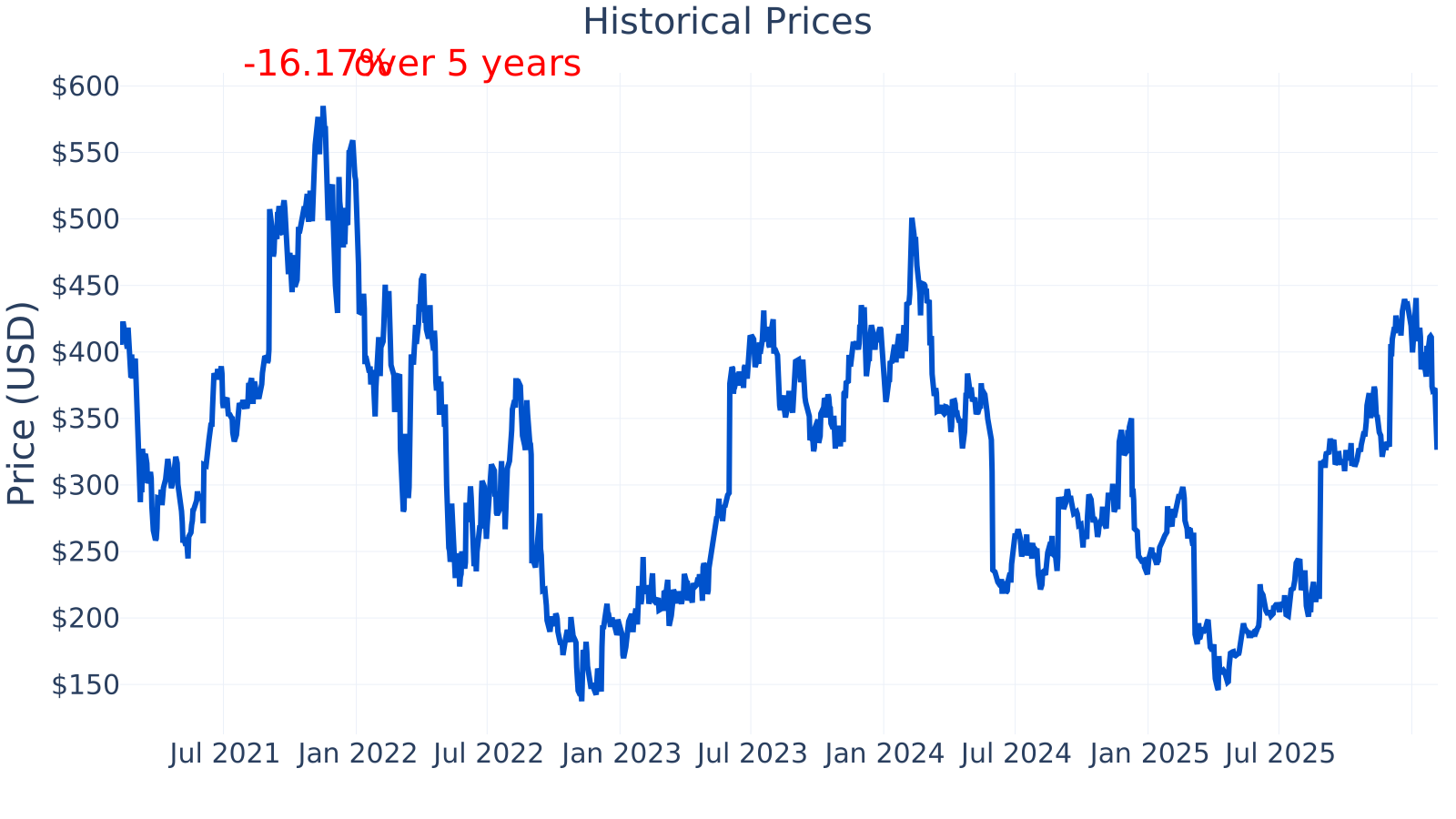
MongoDB’s market capitalization is about $28.0B. The stock has shown meaningful volatility over the last few years, which is also reflected in a beta of ~1.39 (a statistical measure indicating the shares have tended to move more than the broader market).
On fundamentals, the company shows a mix of strong growth and improving cash generation alongside still-negative profitability. The latest figures indicate:
- Revenue growth (YoY): ~18.7% versus an industry median of ~15.2%.
- Profit margin: ~-3.1% versus an industry median of ~6.7%.
- Free cash flow (TTM): ~$354.6M, indicating cash generation even while accounting earnings remain negative.
- Debt-to-equity: ~1.2% versus an industry median of ~19.8%, suggesting comparatively low balance-sheet leverage.
- PEG ratio: ~1.67 (a valuation metric that relates price multiples to growth expectations; it is sensitive to forecasting assumptions and can move significantly over time).
Growth (medium)
MongoDB operates in the infrastructure software segment, where databases are foundational for most digital services. Long-term demand is supported by continued cloud adoption, the expansion of data-driven applications, and the steady creation of new software services across industries. In this environment, vendors that reduce operational complexity and fit modern development workflows can gain share as organizations refresh older systems or build new applications.
A key element of MongoDB’s growth strategy is expanding usage through cloud-managed offerings (which can simplify deployment and scaling), broadening product capabilities around search, analytics, and developer tooling, and increasing adoption within existing customers as applications grow. For many organizations, database standardization can be “sticky” because migrating data platforms can be time-consuming and risky, which can support long customer relationships once adopted at scale.
Revenue growth has slowed compared with earlier high-growth periods, but remains positive. The most recent year-over-year growth shown is about 18.7%, above the industry median shown (about 15.2%). The broader pattern across the timeline shows growth rates that were much higher earlier (often above 30–50%) and then normalized as the business became larger.
Cash generation has improved materially across the period shown. Free cash flow moved from slightly negative territory (around -$1.1M in 2022 and -$20.2M in 2023) to positive levels (around $115.4M in 2024 and $120.6M in 2025). This improvement can matter for long-term durability because it indicates the company has been able to fund operations and investment with less reliance on external financing, even while it continues to report net losses.
Risks (high)
This article is for informational purposes only and does not constitute financial advice. Some content is AI-generated. See Disclaimer