Stock Analysis · Monarch Casino & Resort Inc (MCRI)
Overview
Monarch Casino & Resort, Inc. (MCRI) is a U.S. gaming and hospitality company. It owns and operates casino resorts that combine gambling with hotel rooms, restaurants, bars, and other entertainment. In practice, that means results are driven by how busy its properties are (guest visits, hotel occupancy, and spending per visitor) and how efficiently the company runs those operations.
In its filings, Monarch groups revenue by major operating lines rather than by “products” in the traditional sense. The main revenue streams are typically:
- Casino (slot machines and table games)
- Food & beverage
- Hotel
- Other (which can include items such as entertainment/amenities and certain property-level revenues)
Exact percentages can vary by year and property mix and are detailed in the company’s annual report segment disclosures.
Scale and profitability context (recent years): total revenue rose from about $395M (2021) to about $545M (2025). Over the same period, net income moved from about $68M to about $101M. Interest expense has been relatively small in recent years compared with operating profit, which matters because casino resorts can be highly sensitive to debt costs.
Over 2021–2025, revenue increased overall, while operating income and net income also held up, with year-to-year variability. A notable feature is that interest expense stayed low relative to operating income, which can reduce financial pressure when economic conditions weaken.
Key Figures
| Metric | Value | Industry ⓘ |
|---|---|---|
| Date | Apr 27, 2026 | |
| Context | ||
| Sector | Consumer Cyclical | |
| Industry | Resorts & Casinos | |
| Market Cap ⓘ | $2.04B | |
| Beta ⓘ | 1.34 | |
| Fundamental | ||
| P/E Ratio ⓘ | 19.49 | 19.31 |
| Profit Margin ⓘ | 19.62% | 4.08% |
| Revenue Growth ⓘ | 8.90% | 3.95% |
| Debt to Equity ⓘ | 2.37% | 372.72% |
| PEG ⓘ | 1.07 | |
| Free Cash Flow ⓘ | $128.43M | |
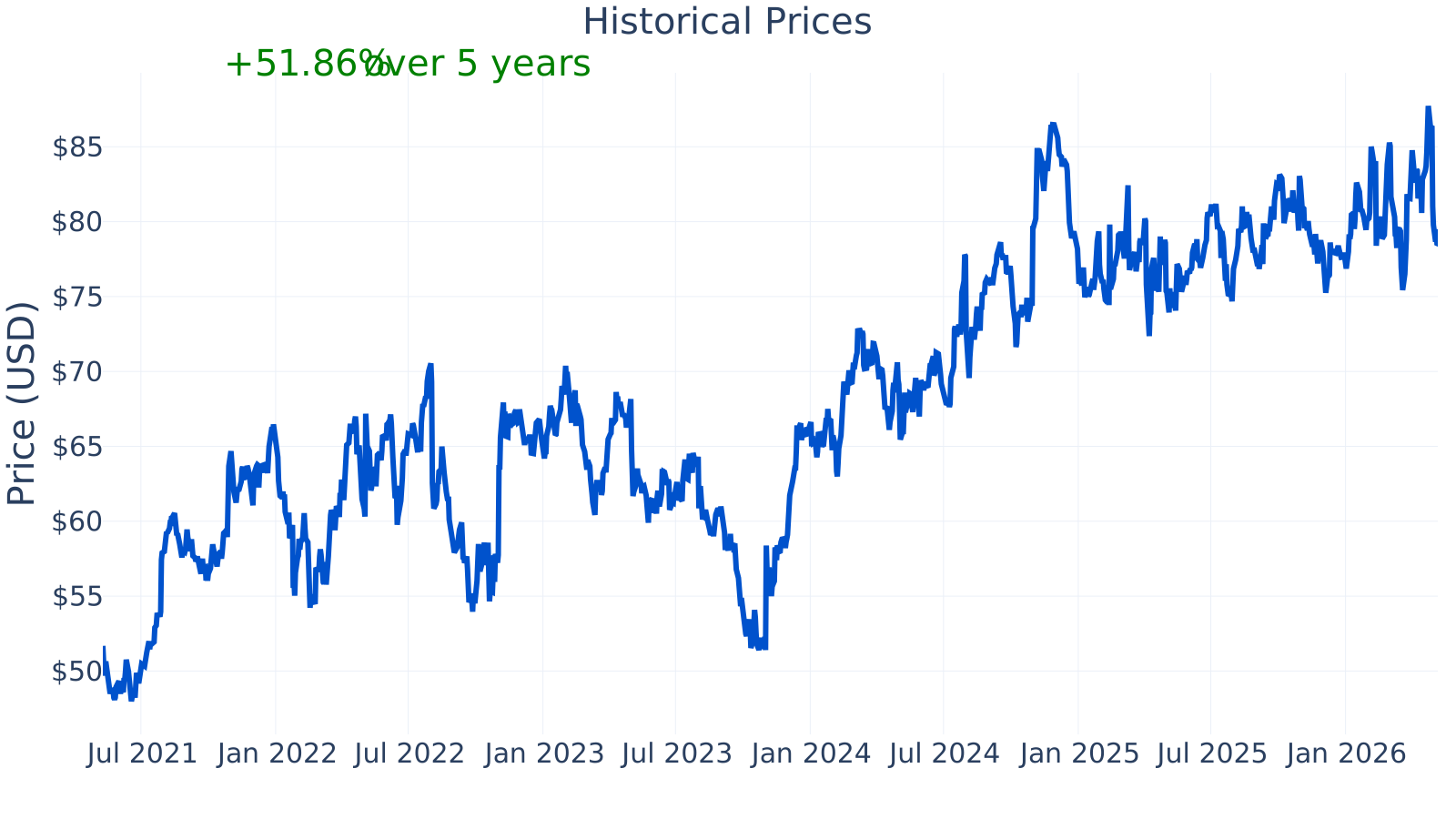
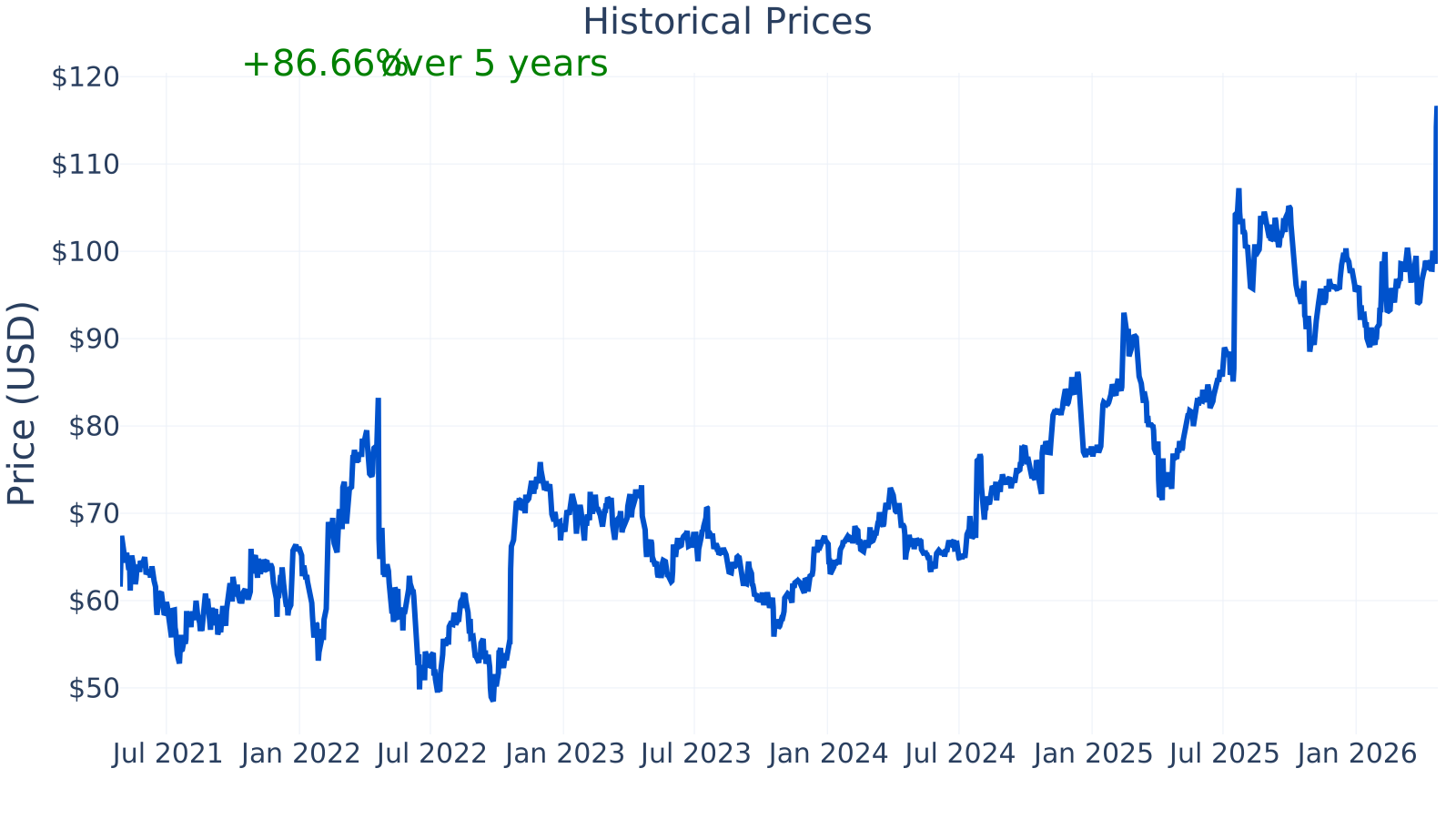
Monarch’s market capitalization is about $2.04B and the stock’s beta is ~1.34, which indicates the share price has historically moved more than the overall market. The P/E ratio is ~19.5, close to the industry median (~19.3). Profitability stands out: the company’s profit margin is ~19.6% versus an industry median around 4.1%. Recent year-over-year revenue growth is ~8.9% versus an industry median around 4.0%. Balance-sheet leverage also appears unusually low for the sector: debt-to-equity is ~2.4% compared with an industry median above 370%. Trailing twelve-month free cash flow is about $128.4M, and the PEG ratio is ~1.07 (a ratio that relates valuation to expected earnings growth).
Growth (Medium)
The resorts and casinos industry is generally tied to consumer discretionary spending: when employment and wages are healthy, visitation and on-property spending often improve; when the economy weakens, demand can soften. Over the long run, well-located, well-run regional casino resorts can grow through a combination of local population/visitor growth, property upgrades that increase capacity and pricing power, and operating efficiency.
Monarch’s recent performance shows steady top-line expansion in normal conditions rather than “hypergrowth.” The most recent year-over-year revenue growth is ~8.9%, above the industry median in the provided peer set. A practical growth lens for a company like this is whether it can (1) keep its properties attractive through reinvestment, (2) maintain strong customer traffic and spend, and (3) protect margins despite labor and food costs.
Revenue growth has normalized in recent quarters after the unusually high growth rates seen in 2021 (a rebound period). More recently, growth has been positive but moderate, including a latest reading near 8.9%.
Another important growth support is cash generation, because free cash flow can be reinvested into the properties (renovations, expansions, and amenities) or used to strengthen the balance sheet. Monarch’s trailing twelve-month free cash flow is about $128.4M, and the multi-year trend shows meaningful cash generation, though it can vary from year to year.
Free cash flow has fluctuated across the periods shown (roughly $78M–$126M in the dates provided), reflecting that capital spending and working capital needs can move around even when the underlying business remains profitable.
Risks (Medium)
Monarch’s business is exposed to the same core risks that affect most casino resort operators. Demand risk is meaningful: gaming and resort spending can decline during recessions or periods of reduced travel and consumer confidence. Cost risk is also important because wages, benefits, and food inputs can rise quickly; if pricing power is limited, margins can compress.
Regulatory and licensing risk is fundamental in gaming. Casino operations depend on maintaining gaming licenses and complying with detailed state and local requirements. Changes in tax rates, rules around gaming, or the competitive landscape created by new licenses in nearby areas can all affect results.
Geographic concentration is another consideration. A company with a small number of properties can be more exposed to local disruptions (weather events, construction impacts, changes in local competition, or regional economic weakness) than a broadly diversified operator.
From a financial-risk standpoint, Monarch’s leverage profile looks conservative compared with many peers in the resorts and casinos space. Low leverage can reduce refinancing risk and interest-rate sensitivity, but it does not eliminate operational volatility.
Debt-to-equity declined dramatically over the period shown, ending near 2.4%, while the industry median stayed far higher (hundreds of percent). This suggests Monarch has relied less on debt financing than many competitors, which can be a meaningful stabilizer in downturns.
Profitability is a potential competitive strength, but it can also be cyclical. Monarch’s profit margin has remained well above the industry median across the period shown, including the latest value near 19.6% versus an industry median near 4.1%.
The margin trend shows variability (including a dip around 2024–2025 before improving again), but the company remained far more profitable than the median peer in the comparison set throughout the timeline.
Competition in U.S. gaming includes both large, diversified operators and strong regional players. Major publicly traded competitors in the broader “resorts & casinos” landscape include companies such as MGM Resorts, Caesars Entertainment, Wynn Resorts, Las Vegas Sands, and regional-focused operators such as Boyd Gaming and Penn Entertainment. Compared with those firms, Monarch is smaller and more concentrated, but the company’s recent margins and low leverage profile suggest it competes through property quality, operating execution, and balance-sheet conservatism rather than sheer scale.
Valuation
For a stock, “valuation” is often summarized by the P/E ratio (price compared with earnings). Monarch’s latest P/E is about 19.5, close to the industry median (~19.3) in the provided peer set. That positioning implies the market is valuing Monarch broadly in line with peers on this single metric, even though the company’s profit margin is notably higher and its leverage is notably lower than the median peer shown.
Over time, Monarch’s P/E ratio has moved within a fairly wide band (roughly mid-teens to low-20s in the period shown). The latest value (about 17.3 on the last point in the series) is below some of the higher points seen in 2025 and also below the last shown industry median (about 20.7).
A complete valuation view typically also considers growth and business risk. Monarch’s recent revenue growth (latest around 8.9%) is positive, but not at a level that would automatically justify very high multiples on growth alone. On the other hand, the combination of strong margins and very low debt can reduce certain risks that often matter in this industry (especially during downturns or tight credit conditions). The net result is that the company’s valuation metrics appear consistent with a mature, cash-generative operator rather than a high-growth story.
Conclusion
Monarch Casino & Resort is a focused gaming and hospitality operator whose business is driven by casino activity and on-property spending across hotel and food & beverage. Financially, it shows a combination that is relatively uncommon in the sector: high profit margins (latest near 19.6%) alongside very low leverage (debt-to-equity near 2.4%). Revenue growth has been positive and recently above the industry median, while free cash flow has been meaningful but can fluctuate.
The main trade-offs are typical for the industry: results can be sensitive to consumer spending cycles, regulation, and local competitive dynamics, and the company’s concentrated footprint can amplify the impact of property-level events. Valuation, as reflected by a P/E near the industry median, suggests the market is not pricing the company as an outlier on earnings multiple alone, despite its distinctive margin and balance-sheet profile.
Sources:
- SEC EDGAR — Monarch Casino & Resort, Inc. Forms 10-K and 10-Q (Annual Report and Quarterly Reports)
- Monarch Casino & Resort, Inc. — Investor Relations materials and SEC filings (company-hosted)
- Wikipedia — “Monarch Casino & Resort, Inc.” (basic company background)
This article is for informational purposes only and does not constitute financial advice. Some content is AI-generated. See Disclaimer