Stock Analysis · Monarch Casino & Resort Inc (MCRI)
Overview
Monarch Casino & Resort, Inc. (MCRI) is a U.S. gaming and hospitality company that owns and operates casino resort properties. In simple terms, it earns money by running casinos and by selling “resort” services around them—hotel rooms, restaurants, bars, and event/entertainment offerings. This mix matters because a well-run resort can attract visitors who spend across multiple areas (gaming plus lodging and food), not just at the casino floor.
In its reporting, Monarch groups revenue into broad categories tied to casino operations and resort/hospitality operations. The main sources are typically:
- Casino revenue (slot machines and table games)
- Food and beverage
- Hotel (rooms and related fees)
- Other (such as entertainment, retail, and other property-related income)
The company’s overall scale is relatively focused compared with the largest U.S. gaming groups, which can be a strength (management attention on fewer assets) but also means results are more dependent on performance at a small number of locations.
Looking at the recent multi-year income flow, total revenue rose from about $395.4M (2021) to about $545.1M (2025). Over the same span, interest expense fell to low levels in 2024 (about $0.1M) and remained modest in 2025 (about $1.9M), which is consistent with a relatively low debt load. Net income also increased over the period (about $68.5M in 2021 to about $101.4M in 2025), although it did not rise smoothly every year.
Key Figures
| Metric | Value | Industry ⓘ |
|---|---|---|
| Date | Feb 23, 2026 | |
| Context | ||
| Sector | Consumer Cyclical | |
| Industry | Resorts & Casinos | |
| Market Cap ⓘ | $1.74B | |
| Beta ⓘ | 1.34 | |
| Fundamental | ||
| P/E Ratio ⓘ | 17.57 | 20.52 |
| Profit Margin ⓘ | 18.60% | 4.87% |
| Revenue Growth ⓘ | 4.10% | 4.10% |
| Debt to Equity ⓘ | 4.76% | 548.08% |
| PEG ⓘ | 1.89 | |
| Free Cash Flow ⓘ | $122.45M | |
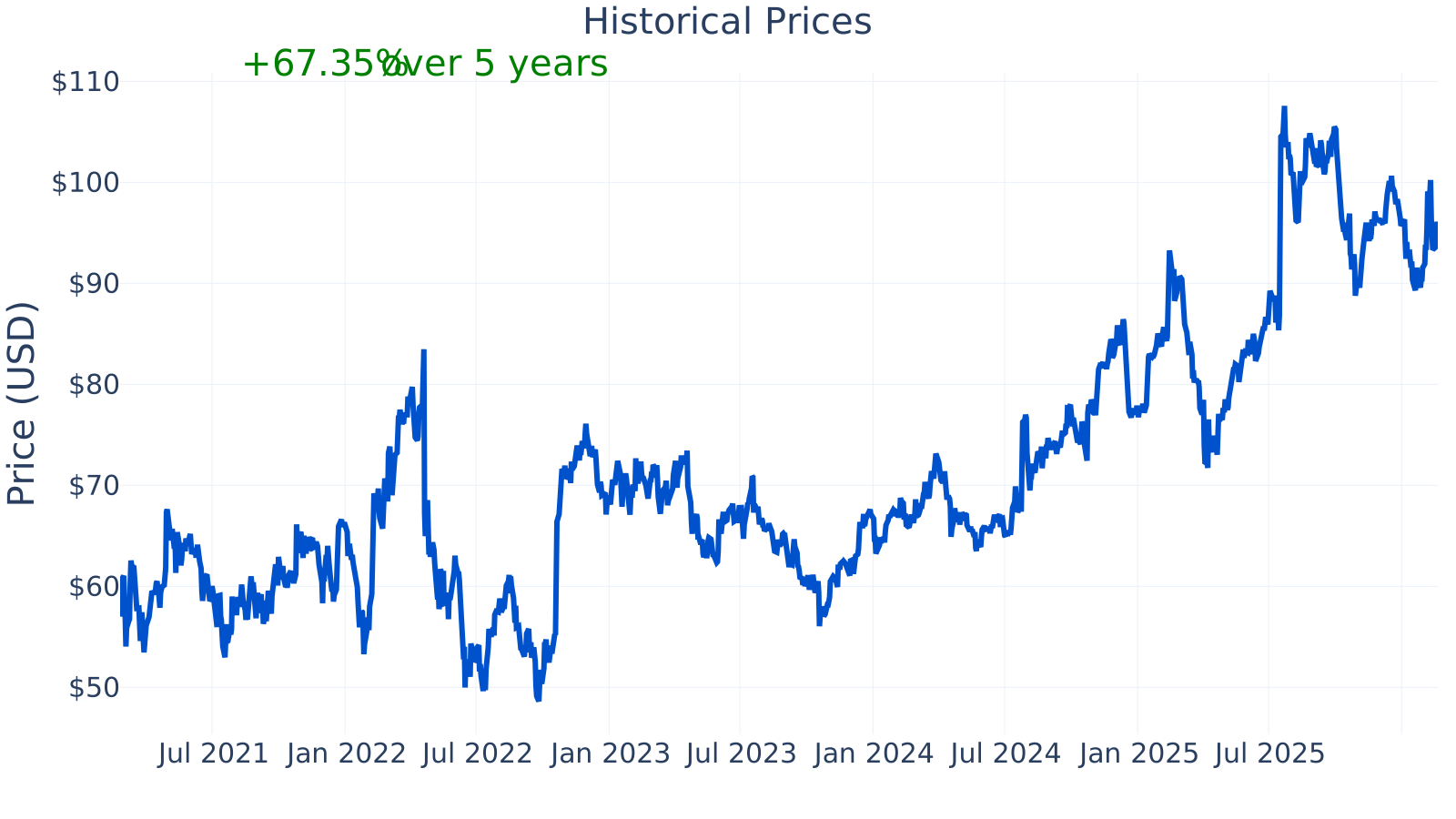
By size, Monarch is a smaller public company with a market capitalization of about $1.74B. The stock’s beta of about 1.34 suggests it has tended to move more than the overall market, which is common for consumer discretionary and travel/leisure-related businesses. Profitability stands out: the latest profit margin is about 18.6% versus an industry median around 4.9%. Revenue growth year-over-year is about 4.1%, roughly in line with the industry median. Balance-sheet leverage is notably low: debt-to-equity is about 4.8% compared with a much higher industry median (over 500%), indicating Monarch uses far less debt than many peers. Free cash flow over the last twelve months is about $122.5M, showing the business has been generating cash after capital spending.
Growth (Medium)
The resorts and casinos industry is tied to consumer spending, employment levels, travel activity, and local/regional competition. It is not a “fast compounding” industry in the way some technology segments can be; instead, long-term growth often comes from (1) property upgrades, (2) better operating efficiency, and (3) capturing a larger share of spending from each visitor through stronger amenities and customer experience.
A practical way to judge Monarch’s growth profile is to look at whether it is expanding revenue steadily while maintaining healthy profitability. The company’s recent revenue growth rate has moderated to the low single digits, which fits a more mature, operations-driven business rather than an aggressively expanding footprint.
The year-over-year revenue growth line shows extremely high growth rates in 2021 (a period affected by comparisons to weaker prior periods for the industry), followed by a return to more typical, modest growth in 2023–2025. The most recent reading is about 4.1%, close to the industry median.
Free cash flow shifted from negative in 2021 (about -$23.5M) to strongly positive in the following years, reaching roughly $126.4M in 2023 and about $89.3M in 2025 (with the latest TTM around $122.5M in the table). For long-term business quality, consistent free cash flow can matter because it gives a company flexibility—such as reinvesting in the property, strengthening the balance sheet, or returning capital—without needing to raise outside funding.
Potential catalysts in this type of business generally come from property-level execution: higher visitation, improved mix (more hotel and non-gaming spend per guest), and cost controls that preserve margins. Because the business is asset-heavy, capital allocation (how much is reinvested and where) can be a meaningful driver of future results.
Risks (Medium)
This article is for informational purposes only and does not constitute financial advice. Some content is AI-generated. See Disclaimer