Stock Analysis · Mobileye Global Inc (MBLY)
Overview
Mobileye Global Inc. develops driver-assistance and autonomous-driving technology used by automakers. In simple terms, it builds the “eyes and brain” that help cars understand what’s around them (cars, pedestrians, lanes, signs) and react more safely. Its products are typically designed into vehicles by car manufacturers and then shipped at scale as those vehicles are produced.
Mobileye’s business is mainly tied to how many vehicles its customers produce and how much advanced safety/autonomy content those vehicles include. The company also invests heavily in research and development to improve its software, mapping, and system performance and to expand from basic safety features toward more advanced automated driving.
Based on Mobileye’s segment reporting in its SEC filings, revenue is primarily generated from two buckets:
- EyeQ / SuperVision and related products (ADAS and automated driving systems) — the core chips, software, and systems sold to automakers and suppliers (largest share in typical periods).
- Services and other revenue — includes items such as mapping-related and other services (smaller share in typical periods).
Percentages can vary by quarter/year and depend on product mix and customer programs; the most reliable breakdown is the company’s latest Form 10-K / 10-Q segment note.
Across the years shown, revenue has fluctuated, while spending on research and development remains very large. The most notable swing is a very large loss in 2024, driven by expenses that outweighed gross profit by a wide margin in that period.
Key Figures
| Metric | Value | Industry ⓘ |
|---|---|---|
| Date | Feb 07, 2026 | |
| Context | ||
| Sector | Consumer Cyclical | |
| Industry | Auto Parts | |
| Market Cap ⓘ | $7.32B | |
| Beta ⓘ | 0.56 | |
| Fundamental | ||
| P/E Ratio ⓘ | N/A | 25.56 |
| Profit Margin ⓘ | -20.70% | 3.38% |
| Revenue Growth ⓘ | -9.00% | 4.95% |
| Debt to Equity ⓘ | 0.56% | 66.87% |
| PEG ⓘ | 0.45 | |
| Free Cash Flow ⓘ | $532.20M | |
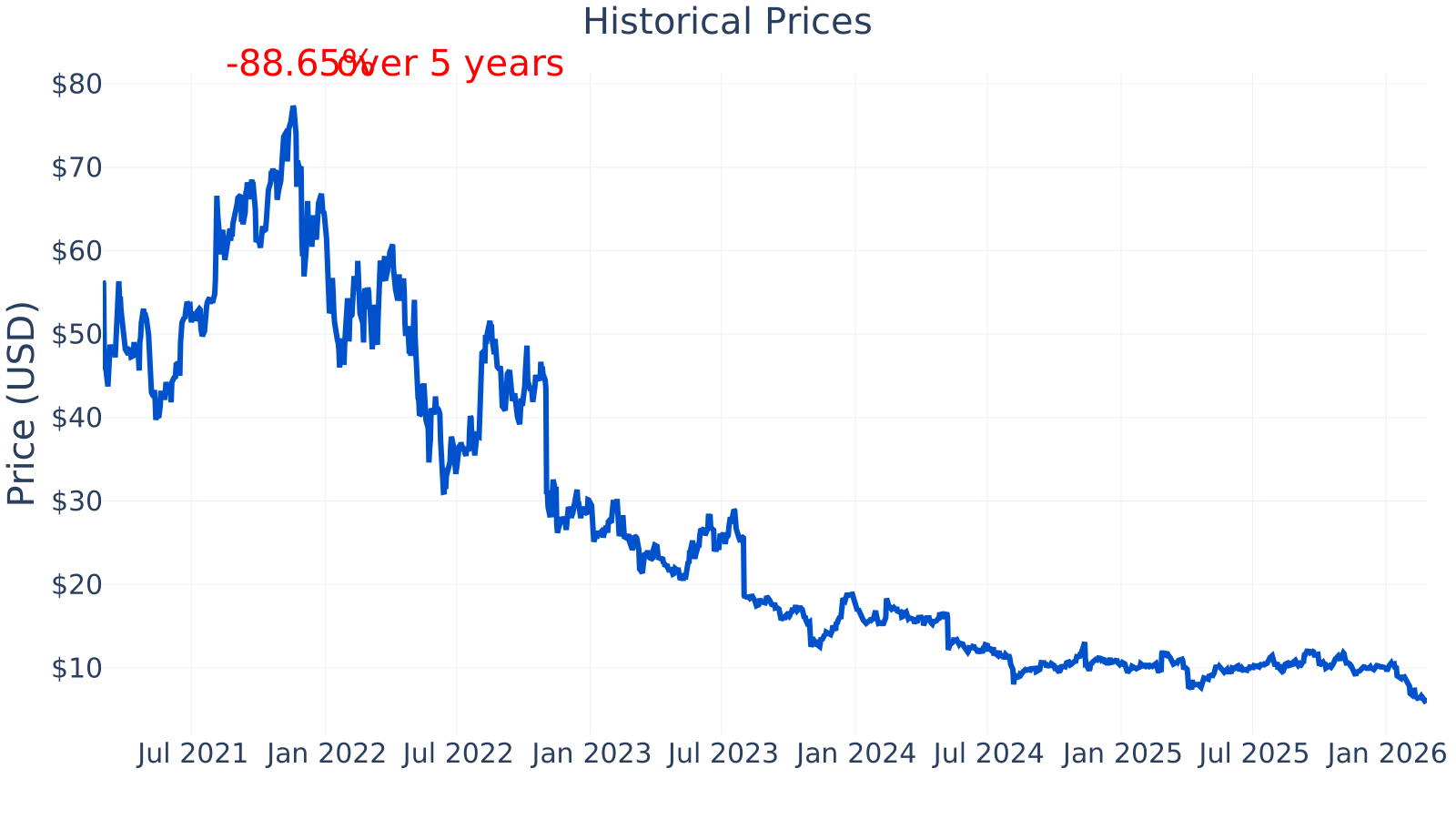
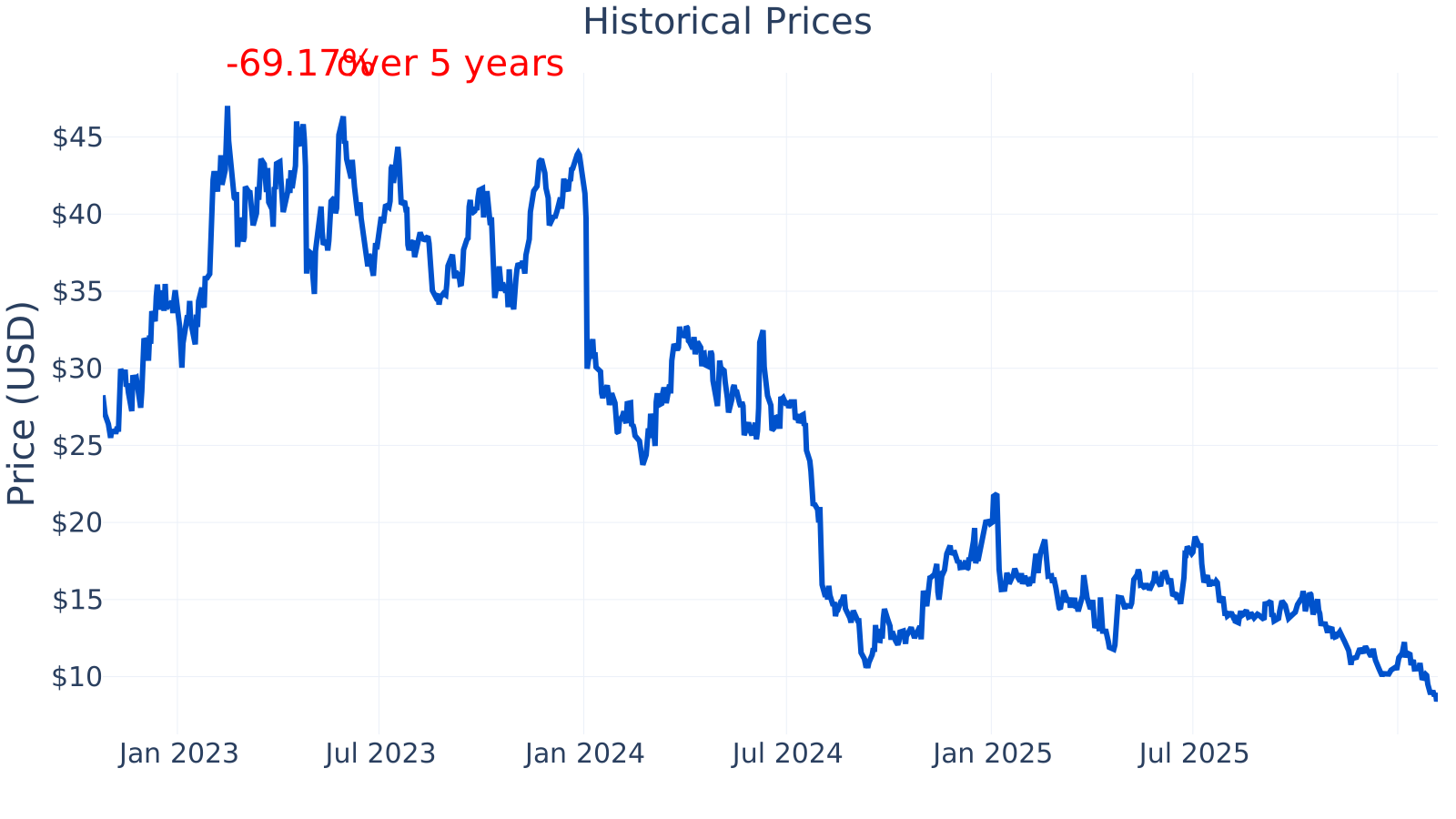
Mobileye’s market capitalization is about $7.3B, and the stock’s beta (~0.56) suggests it has historically moved less than the broader market on average (though this can change).
Profitability is currently a key pressure point: the latest profit margin is about -21% versus an industry median near +3%. Growth has also been choppy: the latest year-over-year revenue growth is about -9% versus an industry median near +5%.
On the balance-sheet side, leverage appears very low: debt-to-equity is about 0.6% (roughly 0.006) compared with an industry median around 67%. Despite net losses, the company shows positive trailing twelve-month free cash flow of about $532M in the table.
Growth (Medium)
Mobileye operates in the broader driver-assistance and vehicle automation market, which is supported by long-term themes such as increased safety requirements, consumer demand for convenience features, and automakers adding more software and sensing capabilities to vehicles. In that sense, the industry backdrop is oriented toward more advanced systems over time.
The company’s strategy centers on being a scalable supplier of “core building blocks” (chips + software + mapping/road data) that can be integrated across many vehicle models. If successful, this approach can benefit from the auto industry’s preference for proven platforms that can be reused globally and updated over time.
However, near- and mid-term growth can be uneven because automotive production cycles, customer inventory adjustments, and the timing of new vehicle program launches can cause large swings from quarter to quarter.
The year-over-year revenue growth pattern is volatile, moving from strong positive growth in parts of 2023 to sharp contraction in 2024, rebounding in early 2025, and turning negative again by the end of 2025 (about -9%). This kind of variability can make long-term trend assessment harder and increases dependence on future program ramps.
Free cash flow over the periods shown remains positive but uneven (roughly $394M in mid-2023, down to about $169M in early 2024, and back to about $396M in early 2025). Positive cash generation can help fund R&D and absorb cyclical slowdowns, but it does not remove the need to eventually convert technology leadership into durable profitability.
Risks (High)
This article is for informational purposes only and does not constitute financial advice. Some content is AI-generated. See Disclaimer