Stock Analysis · Mister Car Wash Inc (MCW)
Overview
Mister Car Wash Inc (MCW) operates a chain of car washes in the United States. The business is built around offering quick, standardized washes through physical locations, with a strong focus on recurring customer relationships (notably through subscription-style wash plans). In simple terms, the company earns money by washing cars frequently, at scale, across a large network of sites.
Its revenue mainly comes from selling car wash services directly to customers at its locations, with a mix that typically includes unlimited wash plans (memberships) and single-wash purchases. Based on how the business is described in company filings, the main revenue streams can be grouped as follows:
- Subscription / unlimited wash plans (recurring monthly revenue; typically the largest component)
- Retail (single) washes (one-time purchases at the site)
- Other site-level sales (ancillary items and services; generally smaller)
The company’s cost structure is influenced by labor, site operating costs, water/chemicals/utilities, maintenance, rent/real estate costs (where applicable), and spending to attract and retain members.
Across the years shown, total revenue rises (from about $758M in 2021 to about $995M in 2024). Profitability improved after 2021, but interest expense remains a noticeable drag (rising from about $39M in 2021 to about $79M in 2024), which matters for a business that uses debt to fund expansion.
Key Figures
| Metric | Value | Industry ⓘ |
|---|---|---|
| Date | Feb 08, 2026 | |
| Context | ||
| Sector | Consumer Cyclical | |
| Industry | Auto & Truck Dealerships | |
| Market Cap ⓘ | $2.01B | |
| Beta ⓘ | 1.47 | |
| Fundamental | ||
| P/E Ratio ⓘ | 22.74 | 16.79 |
| Profit Margin ⓘ | 8.85% | 2.73% |
| Revenue Growth ⓘ | 5.70% | 5.70% |
| Debt to Equity ⓘ | 84.79% | 143.50% |
| PEG ⓘ | N/A | |
| Free Cash Flow ⓘ | $26.68M | |
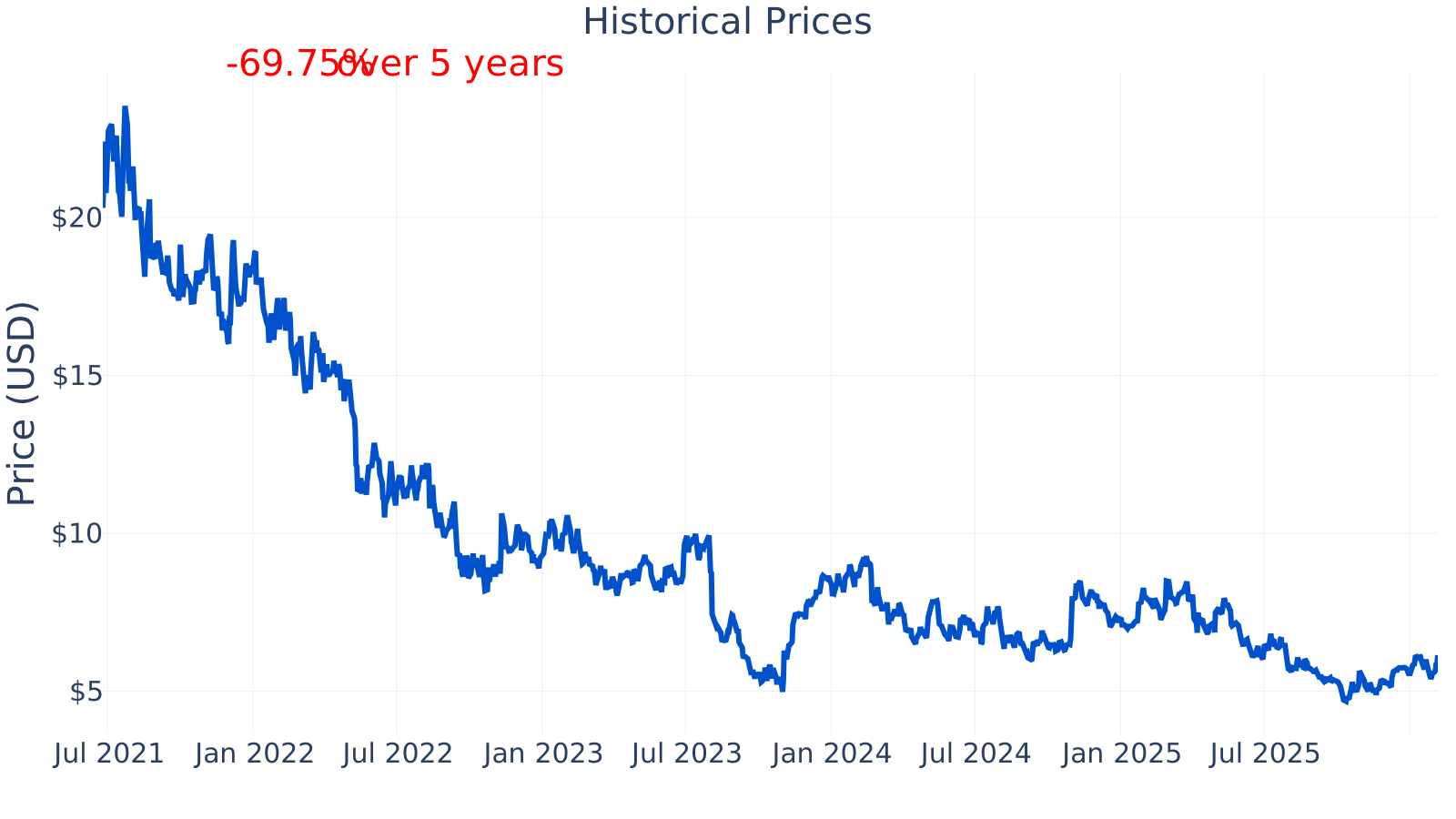
Mister Car Wash’s market capitalization is about $2.0B, and the stock has a beta of ~1.47, which signals it has tended to move more than the broader market. The latest P/E ratio is ~22.7 versus an industry median near 16.8. The latest profit margin is ~8.9%, above the industry median of roughly 2.7%. Latest year-over-year revenue growth is ~5.7%, in line with the industry median (~5.7%). Debt-to-equity is ~84.8%, below the industry median (~143.5%). Trailing twelve-month free cash flow is about $26.7M.
Growth (Medium)
The car wash industry is generally tied to a stable underlying need—vehicles require regular cleaning—rather than to fast-changing technology cycles. Over time, a key growth angle for large operators is consolidation: building or acquiring more locations, improving site productivity, and increasing the share of customers on recurring plans to make demand more predictable. This approach can work well if the company can keep unit-level economics healthy (site traffic, pricing, and operating efficiency) while expanding the footprint.
Revenue growth was high in 2021–2022 (often in the double digits), then moderated meaningfully. In the most recent periods shown, growth sits mostly in the mid-single digits (for example, about 5.7% most recently). That pattern is consistent with a company moving from a rapid post-expansion phase toward a more normalized pace, where execution and local market performance matter more than headline growth.
Free cash flow has been volatile, including negative periods (notably around 2023–2024) before improving to a positive level most recently (about $26.7M TTM). For a location-based business, this often reflects the timing of expansion and investment spending: building and upgrading sites consumes cash upfront, while the benefits are expected to show up later through higher revenue and operating leverage. A practical long-term checkpoint is whether positive free cash flow becomes more consistent as the store base matures.
Potential catalysts (in a purely factual, non-predictive sense) often discussed in filings for this type of business include: continued rollout of new sites, acquisition integration, increased penetration of subscription plans, and operational initiatives that improve throughput and labor efficiency. The durability of these drivers depends on local competition, customer retention, and cost control.
Risks (Medium)
This article is for informational purposes only and does not constitute financial advice. Some content is AI-generated. See Disclaimer