Stock Analysis · MillerKnoll Inc (MLKN)
Overview
MillerKnoll Inc. is a design and furniture company that develops, manufactures, and sells products used in workplaces and homes. Its portfolio includes well-known furniture and interior brands that are sold through a mix of company-owned channels and independent dealers. In simple terms, the business earns money by selling furniture and related interior solutions, with demand closely linked to office and home furnishing cycles.
In its financial reporting, MillerKnoll groups revenue into two main operating segments:
- Americas Contract (typically the largest): workplace/contract furniture and related solutions sold mainly across the Americas through dealer and project-based channels.
- International Contract & Specialty: contract sales outside the Americas plus “specialty” lines that include retail and e-commerce-oriented brands.
Percentages by segment can shift year to year and are best read directly from the company’s most recent annual report segment footnote.
Across recent fiscal years, revenue has been relatively stable in the mid-to-high $3B range, but profitability has been more uneven. A visible pressure point is that operating costs (especially selling, general, and administrative expenses) take a large share of gross profit, and interest expense is a meaningful recurring cost—both of which can matter when demand is soft.
Key Figures
| Metric | Value | Industry ⓘ |
|---|---|---|
| Date | Feb 08, 2026 | |
| Context | ||
| Sector | Consumer Cyclical | |
| Industry | Furnishings, Fixtures & Appliances | |
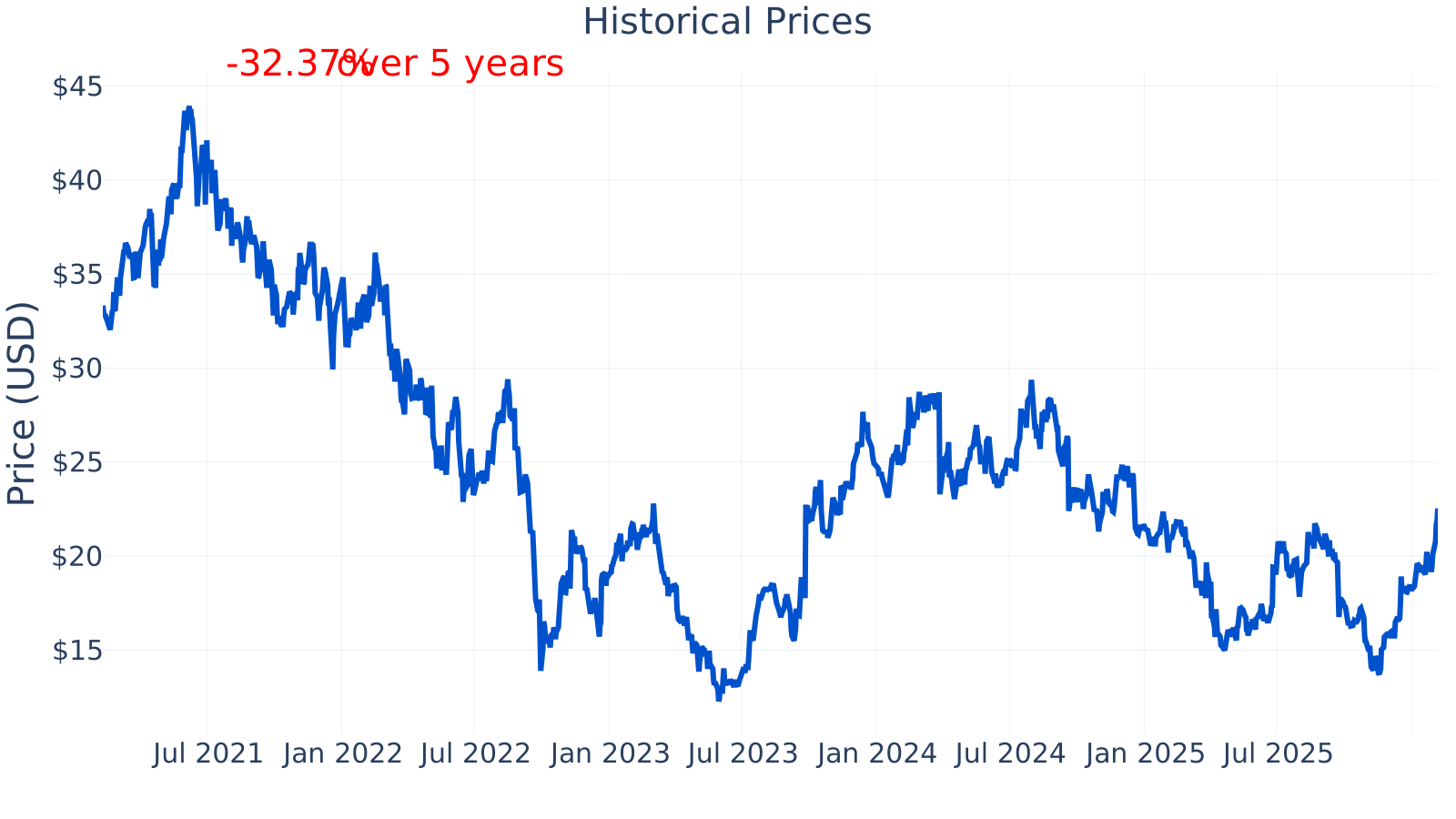
| Market Cap ⓘ | $1.54B | |
| Beta ⓘ | 1.31 | |
| Fundamental | ||
| P/E Ratio ⓘ | N/A | 18.82 |
| Profit Margin ⓘ | -0.68% | 4.29% |
| Revenue Growth ⓘ | -1.60% | 0.30% |
| Debt to Equity ⓘ | 133.68% | 77.79% |
| PEG ⓘ | 1.04 | |
| Free Cash Flow ⓘ | $70.20M | |
MillerKnoll’s market capitalization is about $1.54B, placing it in the small-to-mid cap range. The stock’s beta of 1.31 suggests it has tended to move more than the overall market. Recent profitability is weak: the latest profit margin is about -0.68% versus an industry median near 4.29%. Year-over-year revenue growth is about -1.6%, slightly below an industry median near 0.3%. Leverage is notable: debt-to-equity is about 133.7% versus an industry median near 77.8%. On cash generation, trailing twelve-month free cash flow is about $70.2M, which indicates the business has recently generated cash even though accounting earnings have been pressured.
Growth (Medium)
MillerKnoll operates in the furnishings market, which tends to be cyclical. Demand is influenced by office buildouts and renovations, corporate hiring and space planning, and consumer/home spending. A major structural question for the industry is how companies redesign offices in response to hybrid work, and whether this leads to multi-year refresh cycles (a potential tailwind) or persistently lower office furniture demand (a headwind). As a result, long-term growth often depends less on “one big trend” and more on how well a company adapts its product mix, channel strategy, and cost structure across cycles.
Strategically, a combined portfolio of workplace and home-oriented brands can make sense: it can broaden the customer base and reduce reliance on a single channel. In practice, the benefit depends on execution—keeping brands distinct, managing costs, and maintaining pricing power while responding to shifts in customer preferences.
Recent year-over-year revenue growth has swung from very strong growth in 2021–2022 to negative readings across much of 2023–2024, with brief improvement in parts of 2025 before turning slightly negative again (about -1.6% most recently). This pattern is consistent with a business exposed to project timing and broader demand cycles.
Free cash flow has also been uneven—ranging from negative in 2022 (about -$68.5M) to a strong level in 2024 (about $269.9M), and then moderating to about $70.2M most recently. For long-term monitoring, cash flow matters because it influences the company’s ability to invest in products and operations while also managing debt.
Risks (High)
This article is for informational purposes only and does not constitute financial advice. Some content is AI-generated. See Disclaimer