Stock Analysis · Microchip Technology Inc (MCHP)
Overview
Microchip Technology Inc. designs and sells semiconductor products that help electronic devices “sense, compute, and control” the real world. In plain terms, its chips and related software are used inside everyday and industrial products such as cars, factory equipment, power supplies, home appliances, telecom gear, and many other embedded systems. A large part of its business is about long-lived components that customers can keep using in products for many years, which can support repeat sales over time.
Microchip reports revenue primarily by product categories rather than by end-customer “subscriptions” or similar models. Its main revenue streams are typically described as:
- Microcontrollers (MCUs) (the “small computers” inside devices)
- Analog (chips that manage real-world signals like power, sensing, and audio)
- FPGA and related products (programmable chips often used in communications, industrial, aerospace/defense)
- Other semiconductor products and related development tools/software
Percentages can vary by fiscal year and cycle; the company’s annual report (Form 10‑K) is the best place to confirm the latest product mix.
The recent income-flow picture shows a company that historically generated substantial gross profit and operating income, but experienced a sharp downturn in the most recent year shown: total revenue fell significantly (from about $7.63B in fiscal 2024 to about $4.40B in fiscal 2025), and operating income compressed sharply (from about $2.56B to about $0.29B). R&D spending remained large in absolute dollars, which can matter for long-term product competitiveness, but it also weighs more heavily on profit during downturns.
Key Figures
| Metric | Value | Industry ⓘ |
|---|---|---|
| Date | Feb 07, 2026 | |
| Context | ||
| Sector | Technology | |
| Industry | Semiconductors | |
| Market Cap ⓘ | $41.13B | |
| Beta ⓘ | 1.44 | |
| Fundamental | ||
| P/E Ratio ⓘ | N/A | 45.89 |
| Profit Margin ⓘ | -1.57% | 9.42% |
| Revenue Growth ⓘ | 15.60% | 13.10% |
| Debt to Equity ⓘ | 81.79% | 25.62% |
| PEG ⓘ | 5.70 | |
| Free Cash Flow ⓘ | $819.90M | |
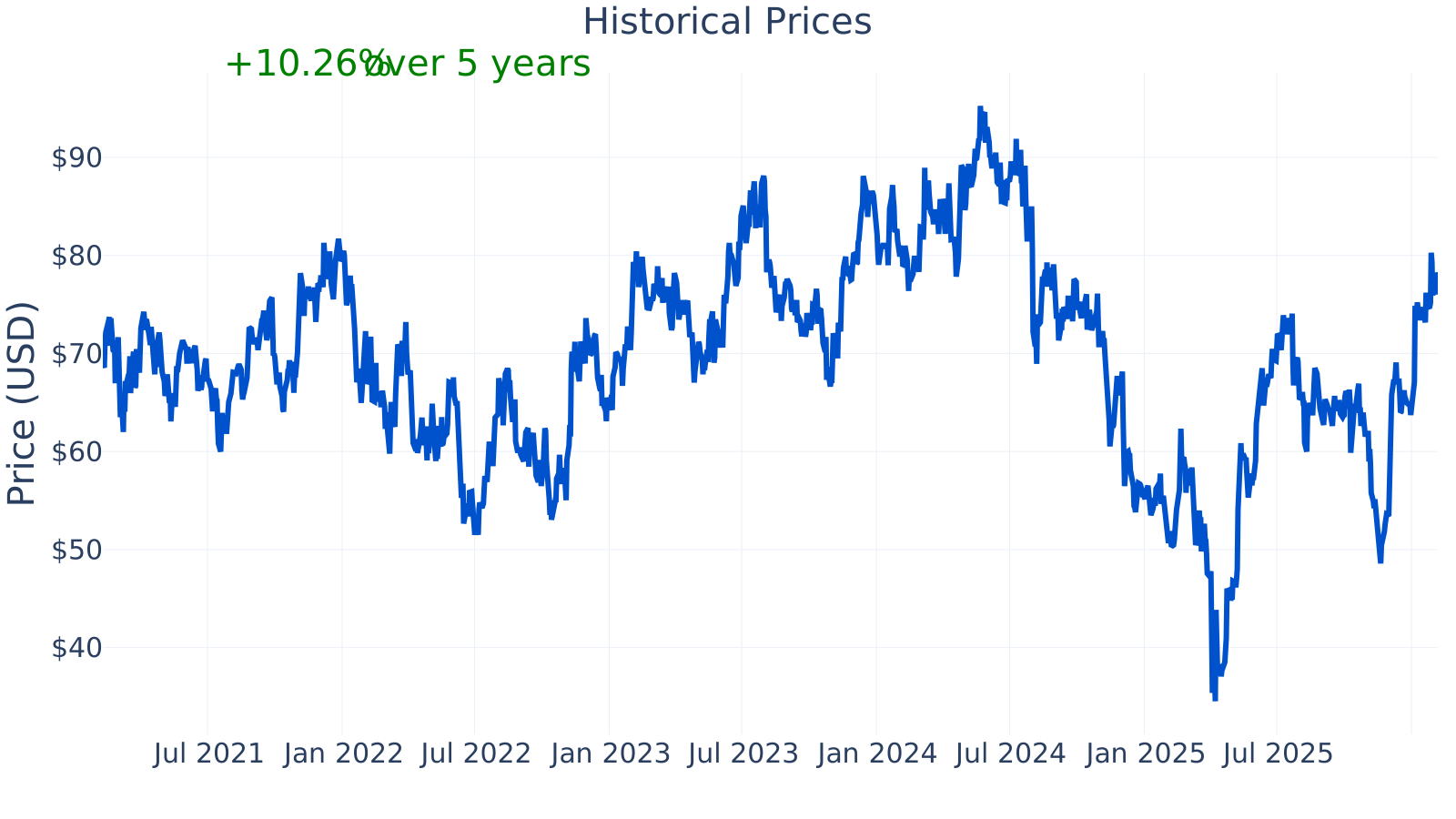
Microchip’s market capitalization is about $41.1B. The stock’s beta of ~1.44 indicates it has tended to move more than the broader market (higher volatility). Recent profitability is currently weak: the latest profit margin is about -1.6%, below the semiconductor industry median shown (~9.4%). On the other hand, the latest year-over-year revenue growth is about +15.6%, modestly above the industry median shown (~13.1%). The company’s debt-to-equity is ~81.8%, which is materially higher than the industry median shown (~25.6%). The latest trailing twelve-month free cash flow is about $820M, and the PEG ratio (~5.7) suggests the market price implies relatively high expectations compared with the growth rate used in that calculation (PEG interpretation depends heavily on how growth is estimated).
Growth (Medium)
Microchip operates in the semiconductor industry, which is a long-term growth market because more “electronics content” keeps getting added to products. Demand is supported by themes such as increasing automation in factories, electrification in vehicles, connectivity in infrastructure, and the ongoing shift toward smarter energy usage. These trends tend to require the kind of embedded control and power-management components Microchip sells.
That said, semiconductors are also cyclical. Microchip’s results can swing when customers build inventory and then later reduce orders to work down stock. This matters for long-term holders because the business can look very different at different points in the cycle (strong margins and cash generation in upcycles, pressure during downcycles).
The year-over-year revenue growth pattern shows that Microchip moved from strong positive growth in 2021–2023 to a deep contraction through much of 2024, followed by a return to positive growth by late 2025 (about +15.6% most recently). This kind of “boom-to-correction-to-recovery” shape is common in semiconductors, and it suggests the company may be moving out of a downturn phase—though the durability of the rebound typically depends on end-demand and customer inventory levels.
Free cash flow (cash generated after operating needs and capital spending) peaked around $3.13B (TTM) in 2023, eased in 2024, and then fell sharply to about $0.77–$0.82B by 2025. For long-term business quality, this metric is important because it is one way a company can fund dividends, debt reduction, and reinvestment. The recent decline highlights how sensitive Microchip’s cash generation can be to revenue and margin changes during downcycles.
Potential catalysts for future growth are mostly tied to broad end-market normalization and longer-term content growth in industrial and automotive electronics, plus continued product development in microcontrollers, analog, and programmable solutions. The company’s long history of acquisitions also means integration and product portfolio expansion can play a role, although acquisitions can introduce added execution and balance sheet considerations.
Risks (High)
This article is for informational purposes only and does not constitute financial advice. Some content is AI-generated. See Disclaimer