Stock Analysis · MicroStrategy Incorporated (MSTR)
Overview
MicroStrategy Incorporated (MSTR) is a software company best known for enterprise analytics and business intelligence tools. In practice, it sells software that helps organizations combine data from different systems and turn it into dashboards, reports, and decision-making insights. The company also offers cloud-based options and related services (such as support and consulting) tied to its software deployments.
In addition to its software operations, MicroStrategy has become widely associated with a large Bitcoin treasury position. This makes the company’s overall financial results and stock behavior more complex than a typical application software business, because Bitcoin price moves and related accounting can meaningfully affect reported profits, losses, and cash flow in certain periods.
Main revenue sources generally fall into these buckets (ordering reflects typical reporting structure in company filings; exact percentages can vary by period and are not provided in the figures shown here):
- Product licenses and subscription services (software access, including term-based arrangements)
- Product support (maintenance and support tied to deployed software)
- Other services (consulting and related professional services)
Over the years shown, total revenue stays in a relatively narrow range (roughly the mid-$400M to ~$500M area), while operating expenses swing much more dramatically. That mismatch helps explain why operating income and net income can be volatile even when revenue looks comparatively steady.
Key Figures
| Metric | Value | Industry ⓘ |
|---|---|---|
| Date | Feb 07, 2026 | |
| Context | ||
| Sector | Technology | |
| Industry | Software - Application | |
| Market Cap ⓘ | $39.04B | |
| Beta ⓘ | 3.54 | |
| Fundamental | ||
| P/E Ratio ⓘ | 5.88 | 27.79 |
| Profit Margin ⓘ | 1667.09% | 6.02% |
| Revenue Growth ⓘ | 10.90% | 15.80% |
| Debt to Equity ⓘ | 1.85% | 25.15% |
| PEG ⓘ | 3.09 | |
| Free Cash Flow ⓘ | -$37.56B | |
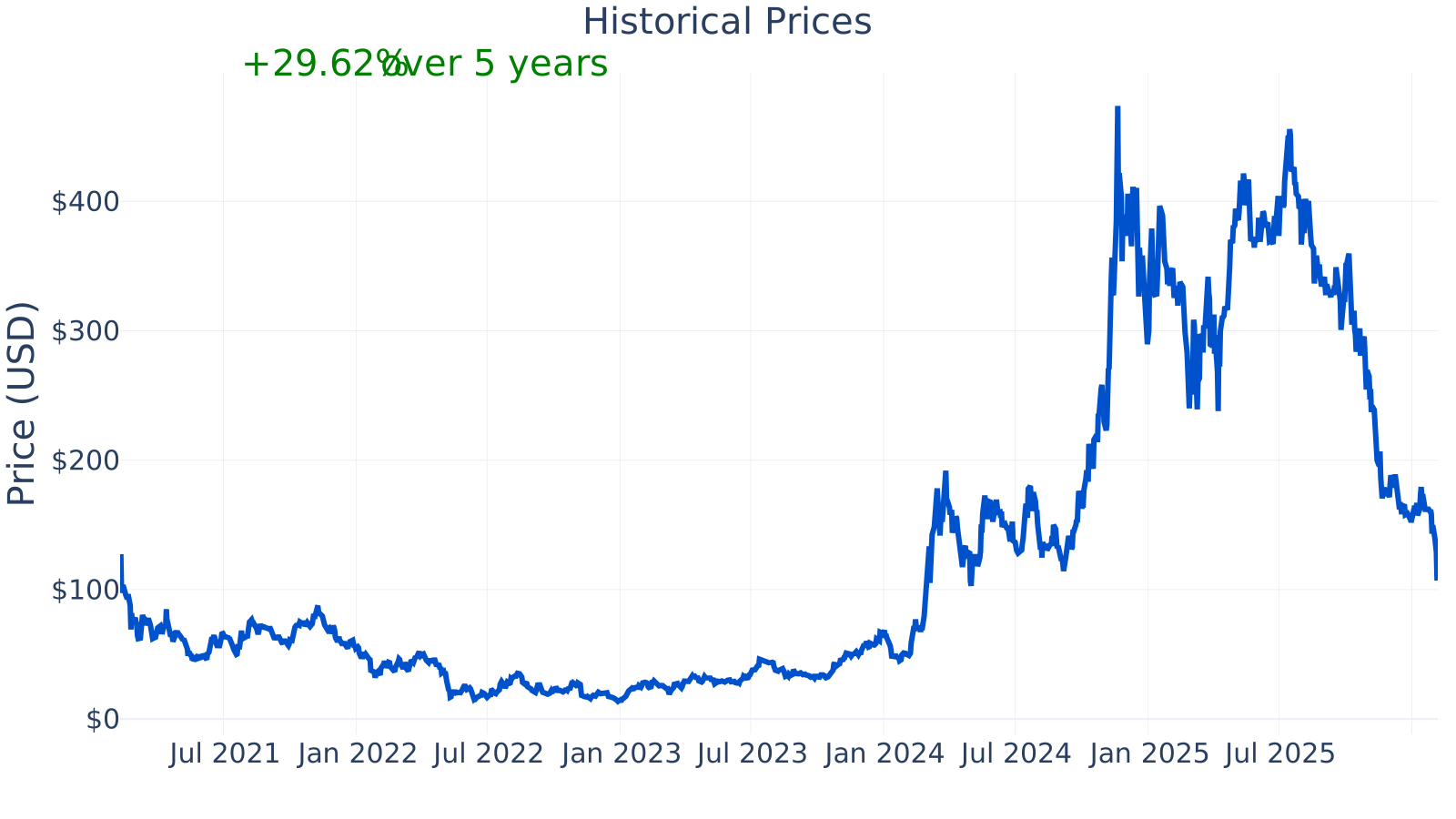
MicroStrategy’s latest market capitalization is about $39.0B. The stock’s beta of ~3.54 indicates that the share price has tended to move far more than the broader market, consistent with a company whose equity can be heavily influenced by Bitcoin-related exposure.
On profitability, the profit margin figure shown for the latest period is ~16.7%, compared with an industry median of ~6.0%. However, the historical margin series has been extremely volatile, including deep negative periods and sharp positive quarters, which suggests profitability is not steady and can be affected by non-operating factors and accounting impacts.
For growth, the latest year-over-year revenue growth shown is ~10.9%, below the industry median of ~15.8%. This points to a business that, at least recently, has not consistently outgrown the broader application software peer group.
On balance sheet leverage, the latest debt-to-equity is ~1.8%, well below the industry median of ~25.2%. The longer history is unusual (including very large or even negative ratios in some periods), which can happen when accounting equity fluctuates significantly; the key takeaway is that this metric has not been stable over time.
Finally, trailing twelve-month free cash flow is shown at -$37.6B, and the multi-year trend displayed remains negative. For many companies, persistent negative free cash flow would primarily reflect operating losses or heavy investment; in MicroStrategy’s case, large cash flow swings can also be influenced by treasury actions and financing decisions.
Growth (Medium)
MicroStrategy operates in the application software market, where long-term demand is supported by broad trends such as data-driven decision-making, cloud adoption, and analytics embedded into business workflows. In that sense, the company participates in an industry with durable use cases.
That said, the company’s reported revenue over the years displayed has not shown a strong upward trajectory, and growth has been uneven. The charted year-over-year revenue growth includes multiple negative periods, followed by improvement later on, which suggests that software demand and renewals have not translated into consistent expansion.
A major differentiator for MicroStrategy versus many software peers is that its overall corporate strategy and market narrative can be heavily shaped by its Bitcoin treasury position. This can act as a catalyst during periods when Bitcoin rises (through sentiment, perceived asset value, and financing optionality) and a headwind when Bitcoin declines. As a result, “growth drivers” for the stock can be meaningfully different from “growth drivers” for the underlying software business.
The cash flow trend shown is notably negative across the periods displayed, culminating in a very large negative trailing twelve-month value in 2025. Regardless of the cause, this highlights that headline cash generation has not been consistently positive, which increases the importance of understanding what is driving those swings (operations versus treasury/financing actions).
Risks (Very High)
This article is for informational purposes only and does not constitute financial advice. Some content is AI-generated. See Disclaimer


