Stock Analysis · Microsoft Corporation (MSFT)
Overview
Microsoft Corporation is a global technology company best known for software, cloud services, and business productivity tools. Its products and services are used by consumers, small businesses, large enterprises, and governments. A large part of Microsoft’s model is built on recurring revenue (subscriptions and long-term contracts), especially in cloud and business software, which can make results less dependent on one-time product sales.
Microsoft reports revenue in three main segments (from largest to smallest in recent fiscal reporting):
- Productivity and Business Processes (examples: Microsoft 365/Office, LinkedIn, Dynamics)
- Intelligent Cloud (examples: Azure cloud services, Windows Server, enterprise support)
- More Personal Computing (examples: Windows, devices, gaming/Xbox, search and news advertising)
Across these segments, a common theme is integrating cloud infrastructure and AI capabilities into widely used software (workplace productivity, developer tools, security, and business applications), aiming to increase the value of existing platforms rather than relying on a single product category.
Over the last several fiscal years shown, total revenue and operating income both increased substantially, while research and development spending also rose meaningfully. This combination suggests Microsoft has been expanding the business while continuing to invest heavily in new products and infrastructure.
Key Figures
| Metric | Value | Industry ⓘ |
|---|---|---|
| Date | Feb 08, 2026 | |
| Context | ||
| Sector | Technology | |
| Industry | Software - Infrastructure | |
| Market Cap ⓘ | $2.98T | |
| Beta ⓘ | 1.08 | |
| Fundamental | ||
| P/E Ratio ⓘ | 25.12 | 25.67 |
| Profit Margin ⓘ | 39.04% | 6.91% |
| Revenue Growth ⓘ | 16.70% | 15.20% |
| Debt to Equity ⓘ | 14.74% | 19.82% |
| PEG ⓘ | 1.53 | |
| Free Cash Flow ⓘ | $77.41B | |
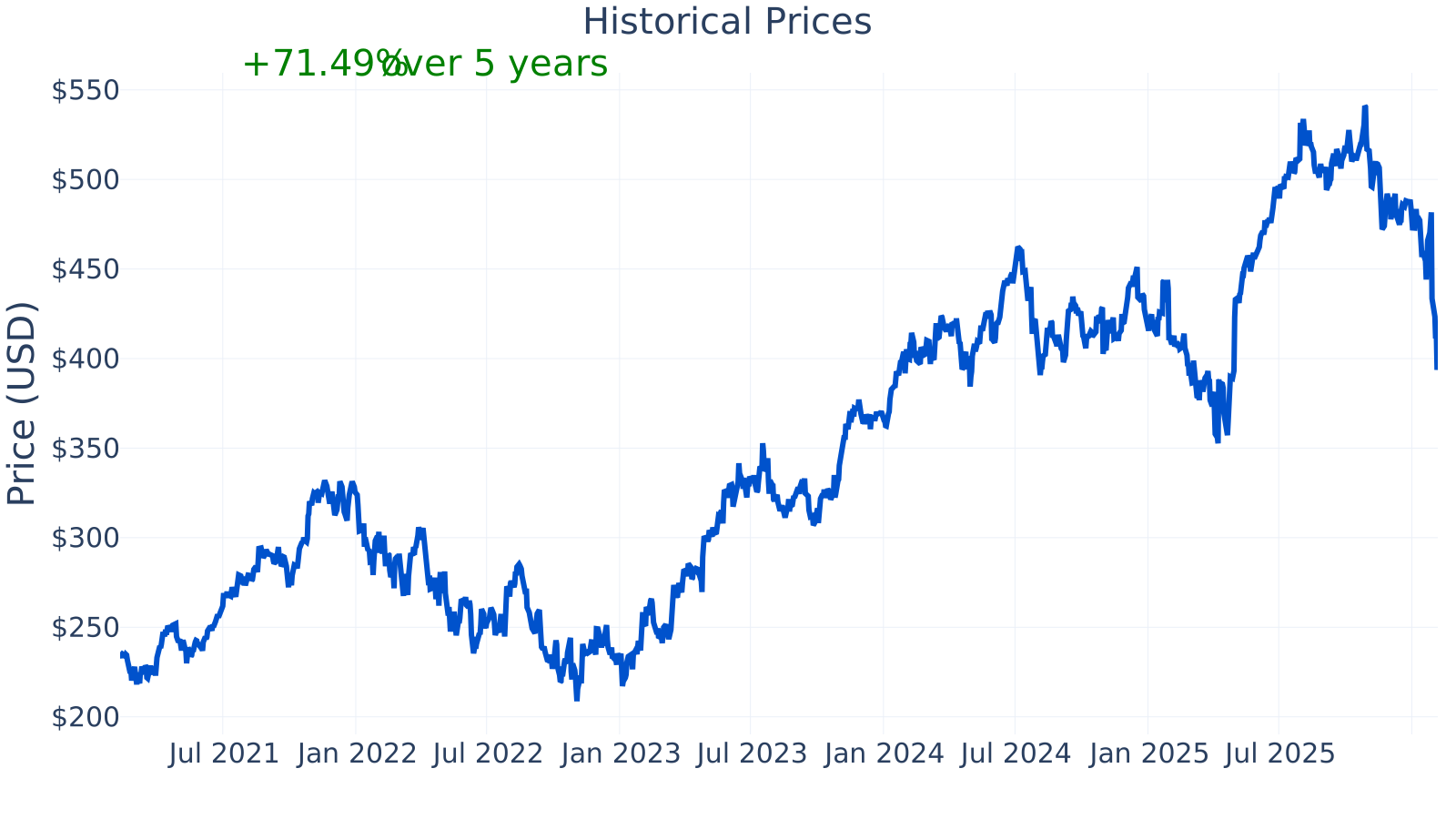
Microsoft’s market capitalization is about $3.0 trillion, reflecting its position among the world’s largest public companies. The stock’s beta of ~1.08 indicates price moves that have been roughly in line with the overall market historically (slightly more volatile than average). Profitability stands out: the latest profit margin is ~39.0%, far above the industry median (~6.9%) shown here. Recent year-over-year revenue growth is ~16.7%, slightly above the industry median (~15.2%). Balance-sheet leverage appears moderate with debt-to-equity of ~14.7% versus an industry median of ~19.8%. Trailing twelve-month free cash flow is about $77.4B, highlighting strong cash generation.
Growth (High)
Microsoft operates in areas with long-term demand drivers: cloud computing, cybersecurity, enterprise software, data platforms, and AI-enabled productivity. These markets are supported by ongoing digital transformation, continued migration of workloads from on-premises data centers to cloud providers, and rising demand for software that improves efficiency and automation.
Strategically, Microsoft is positioned around platforms that can compound over time: Azure and related cloud services for infrastructure and data, and Microsoft 365/Dynamics for business workflows. A key part of the approach is bundling capabilities (security, management, collaboration, and AI features) into existing subscriptions and enterprise agreements. This can lower friction for adoption because customers can expand usage within tools they already rely on.
The year-over-year revenue growth rate has fluctuated over the period shown—slowing into 2022–2023 and then re-accelerating—ending most recently around the mid-teens (~16.7%). This pattern is consistent with a large company exposed to both cyclical IT spending and multi-year platform shifts (like cloud adoption).
Free cash flow has been consistently large, ranging roughly from the high $50B area to above $70B over the period shown, reaching about $77.4B on a trailing basis in the latest metrics. For long-term analysis, this matters because cash can be reinvested in data centers and product development, used for acquisitions, or returned to shareholders through buybacks and dividends (as disclosed in company filings).
Risks (Medium)
This article is for informational purposes only and does not constitute financial advice. Some content is AI-generated. See Disclaimer