Stock Analysis · Meritage Corporation (MTH)
Overview
Meritage Corporation (MTH) is a U.S. homebuilder. In plain terms, it buys and develops land, builds single-family homes (and some attached homes), and sells those homes to homebuyers. Like most builders, Meritage also works with mortgage and title partners to support the closing process, but the core business is building and selling homes.
Because Meritage is primarily a homebuilder, revenue is largely tied to the number of homes it delivers (closes) and the average selling price, which are influenced by housing demand, affordability, and mortgage rates. A smaller portion of revenue can come from activities like land sales or ancillary services, but the main driver is home closings.
Main sources of revenue (typical for a homebuilder like Meritage):
- Home sales revenue (majority): revenue recognized when homes close and are delivered to buyers.
- Other revenue (smaller portion): may include land sales and other items that are not core home closings.
Across the last several years shown, total revenue rose from about $5.1B (2021) to a peak around $6.4B (2024) before declining to about $5.9B (2025). Profitability also moved with the cycle: net income was about $992M in 2022 and about $453M in 2025, reflecting a weaker margin environment versus the prior peak.
Key Figures
| Metric | Value | Industry ⓘ |
|---|---|---|
| Date | Apr 27, 2026 | |
| Context | ||
| Sector | Consumer Cyclical | |
| Industry | Residential Construction | |
| Market Cap ⓘ | $4.61B | |
| Beta ⓘ | 1.51 | |
| Fundamental | ||
| P/E Ratio ⓘ | 12.60 | 13.07 |
| Profit Margin ⓘ | 6.86% | 8.30% |
| Revenue Growth ⓘ | -17.70% | -12.85% |
| Debt to Equity ⓘ | 35.46% | 31.99% |
| PEG ⓘ | 0.54 | |
| Free Cash Flow ⓘ | $237.74M | |
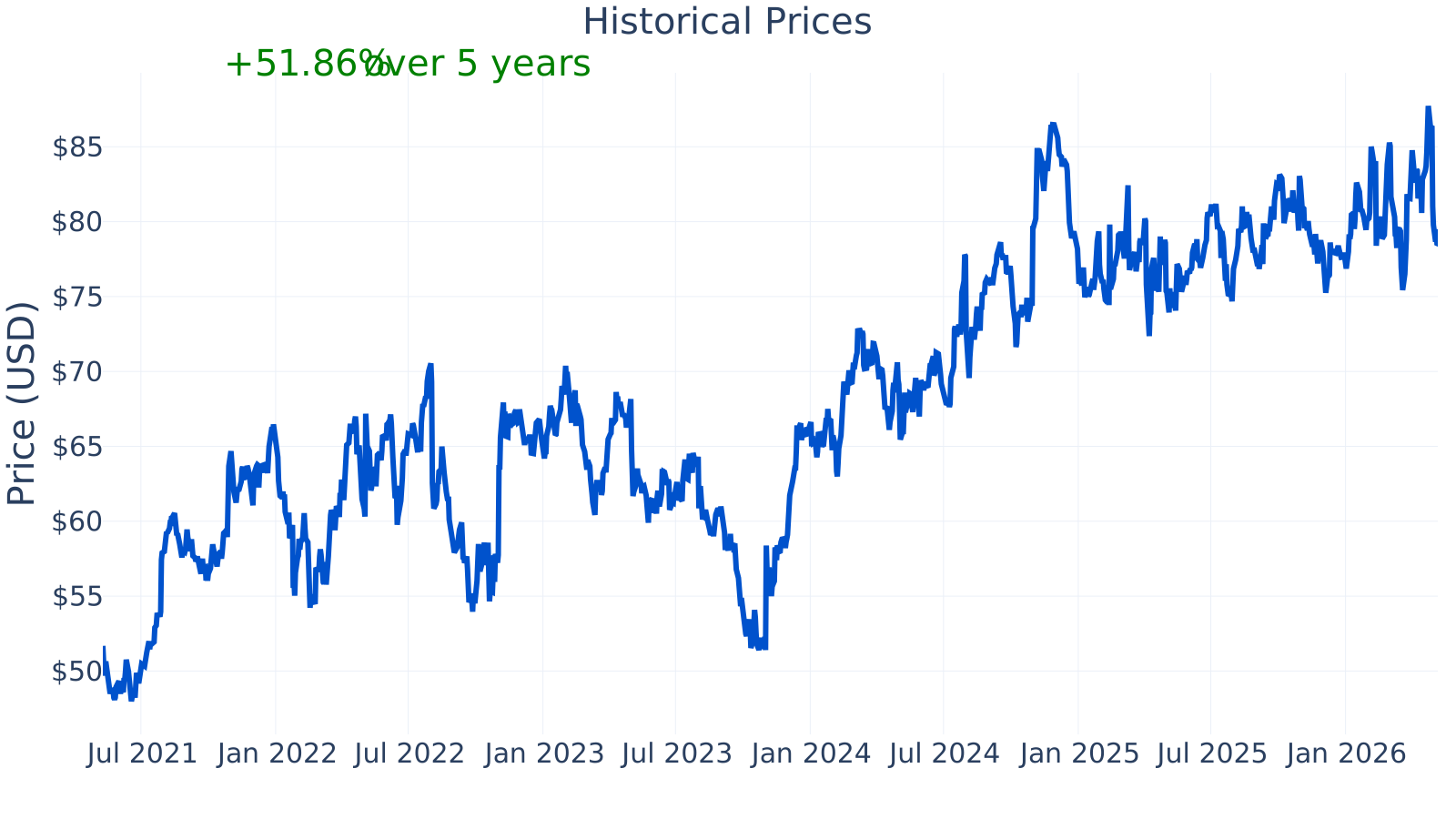
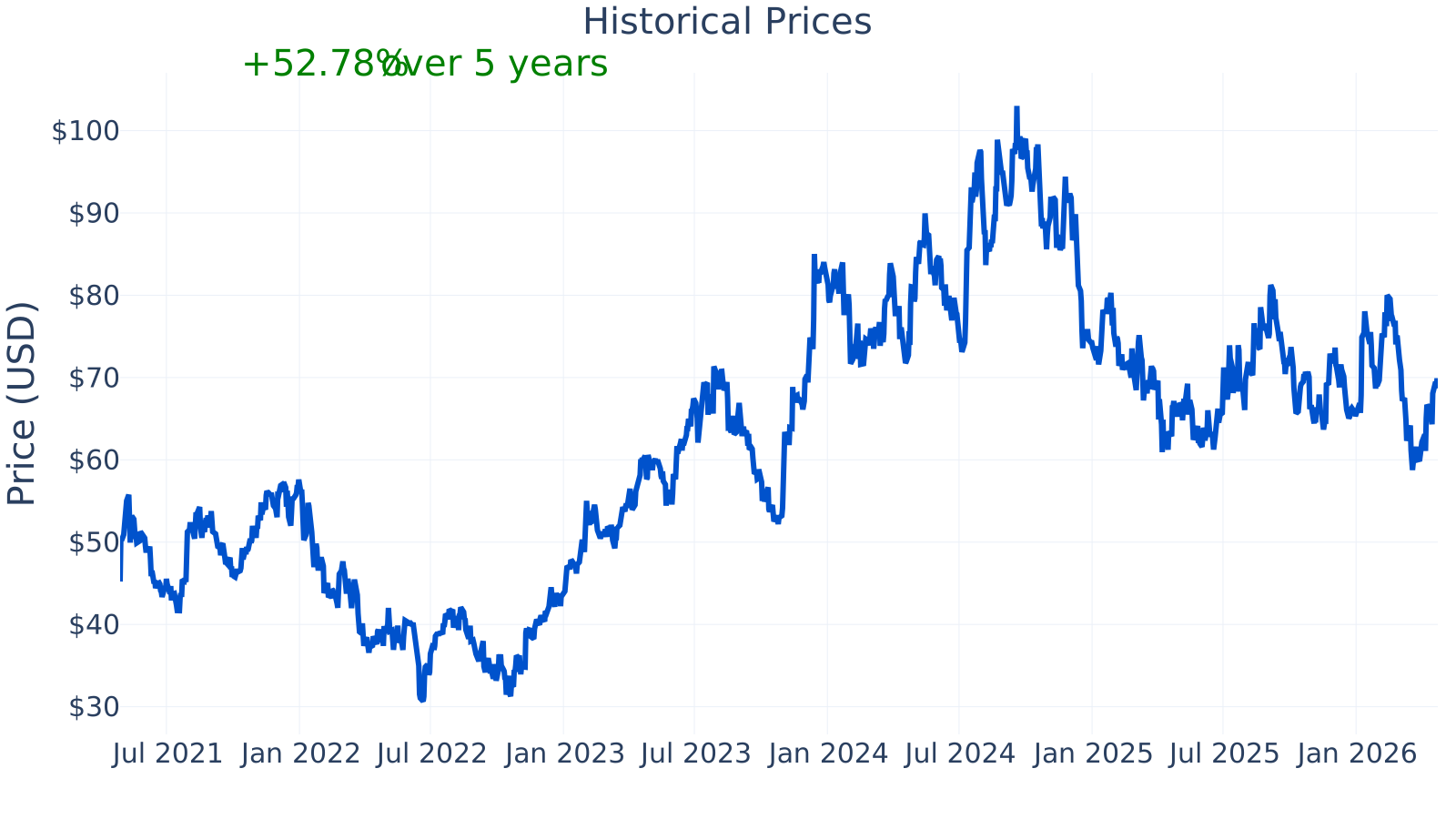
Meritage’s market capitalization is about $4.6B. The stock’s beta of ~1.51 indicates it has tended to move more than the overall market, which is common for homebuilders because results are sensitive to interest rates and housing demand. The latest P/E ratio is ~12.6, close to the industry median (~13.1). Recent profitability and growth are softer: profit margin is ~6.9% versus an industry median near 8.3%, and year-over-year revenue growth is about -17.7% (industry median about -12.9%). Leverage is moderate with debt-to-equity around 35% (industry median ~32%). Free cash flow over the last twelve months is positive at roughly $238M, and the PEG ratio (~0.54) is a reminder that valuation metrics can shift quickly when earnings expectations change in cyclical industries.
Growth (Medium)
Homebuilding is a large, long-running industry tied to population growth, household formation, employment, consumer confidence, and—crucially—mortgage rates. Over the long term, U.S. housing demand tends to grow, but year-to-year results can swing meaningfully because affordability changes quickly when interest rates move.
Meritage’s growth strategy generally centers on operating efficiently, managing land and community development, and aligning the product offering with where demand is strongest (often entry-level and move-up buyers depending on market conditions). For a homebuilder, the practical “growth engine” is a combination of (1) lot/community count, (2) construction cycle times, and (3) pricing power. Catalysts in this industry are usually macro-driven—such as lower mortgage rates or improving consumer affordability—rather than company-specific technology breakthroughs.
The chart shows how cyclical revenue can be: after strong growth in parts of 2021–2022 (including periods above +20% and even above +30%), growth cooled and turned negative across much of 2024–2026, reaching roughly -17.7% most recently. This pattern is consistent with a housing environment where demand and/or pricing is under pressure compared with prior highs.
Free cash flow also fluctuates significantly, which is common for builders because cash is often reinvested into land and inventory. The series shown includes both positive and negative periods (for example, a negative period around 2025-03-31 and a return to positive by 2026-03-31 at about $238M). For long-term analysis, this kind of swing is often interpreted alongside inventory and land investment levels rather than viewed as a steady “subscription-like” cash profile.
Risks (High)
The biggest risk is that homebuilding is highly cyclical. Demand can fall quickly when mortgage rates rise, when affordability worsens, or when buyers become more cautious. That can reduce home orders, increase incentives needed to sell homes, and pressure margins. In addition, construction input costs (labor, materials) and land costs can move in ways that compress profitability if selling prices do not keep pace.
Meritage also faces execution risks typical for builders: managing land acquisition and development timing, controlling build times, and matching production to demand. If a company builds too aggressively into weakening demand, it can face higher inventory carrying costs and price pressure. Geographic concentration can add risk if certain regions weaken more than others (a topic typically discussed in detail in the company’s annual report).
Leverage appears moderate but has been moving. Debt-to-equity declined steadily from roughly 47% (mid-2021) to about 23% (late 2023), then rose again to about 35% most recently. The recent level is slightly above the industry median (about 32%). For a homebuilder, balance sheet flexibility matters because downturns can last longer than expected and land/inventory are capital-intensive.
Profit margins have compressed meaningfully from earlier peaks. The series shows margins around the mid-teens in 2022 (roughly 16–17% at times), declining to about 6.9% most recently, which is also below the industry median (~8.3%). This is important because small changes in pricing, incentives, or build costs can have an outsized impact on earnings when margins are thinner.
Competition is intense in residential construction because many builders offer similar products and compete market-by-market on price, location, design, incentives, and financing support. Meritage competes with other publicly traded builders and numerous private/local builders. The large public peers typically include companies such as D.R. Horton, Lennar, PulteGroup, NVR, Toll Brothers, Taylor Morrison, and KB Home. In this landscape, competitive advantages tend to be operational (cost control, cycle-time management), land sourcing discipline, scale in procurement, and strong local execution—rather than a single protected product.
Valuation
Homebuilders are commonly valued using earnings-based multiples, but those earnings can be “peak” or “trough” depending on where the housing cycle sits. That means a low P/E does not automatically imply a low valuation in a downturn, and a higher P/E does not automatically imply overvaluation at the bottom of a cycle.
Meritage’s latest P/E is about 12.6, close to the industry median of roughly 13.1. The historical trend shown indicates the company often traded at lower P/E multiples earlier in the period (low single digits in parts of 2021–2022), with the multiple rising in later periods as earnings normalized. Interpreting this requires context: margins and revenue growth have weakened recently, so the current multiple reflects both today’s price and a lower (or more normalized) earnings level than during the peak margin years.
Conclusion
Meritage is a straightforward U.S. homebuilder whose results are largely driven by the housing cycle: closings volume, selling prices, incentives, and construction/land costs. The recent picture shows softer fundamentals versus earlier peak conditions—revenue is declining year over year, profit margins have compressed, and free cash flow has been volatile (though currently positive). Leverage is moderate, with debt-to-equity below the levels seen in 2021 but higher than late-2023 lows.
When viewed as a long-duration equity, the main consideration is that the business is tied to macro factors—especially mortgage rates and affordability—so performance can vary widely across multi-year periods. The valuation multiple is currently near the industry median, which places more emphasis on how the next phase of the housing cycle affects volumes and margins than on a clear valuation gap versus peers.
Sources:
- SEC EDGAR — Meritage Corporation Form 10-K (Annual Report)
- SEC EDGAR — Meritage Corporation Form 10-Q (Quarterly Report)
- Meritage Corporation Investor Relations — SEC Filings & Earnings Materials
- Wikipedia — “Meritage Homes” (company background)
This article is for informational purposes only and does not constitute financial advice. Some content is AI-generated. See Disclaimer