Stock Analysis · MercadoLibre Inc (MELI)
Overview
MercadoLibre Inc. (MELI) is a Latin American commerce and financial technology company. It operates a large online marketplace where individuals and businesses sell goods, and it supports those transactions with its own payments, credit, and logistics capabilities. In practice, the company is built around an ecosystem: people discover products on Mercado Libre, pay using Mercado Pago, and receive deliveries supported by Mercado Envios (and related fulfillment and shipping services).
In its SEC filings, MercadoLibre generally describes its revenue using two major categories:
- Commerce (Marketplace): fees and services tied to listings and sales, plus shipping and other commerce-related services.
- FinTech: payment processing and related services, plus revenues connected to credit/financial products and other fintech services.
Percentages by segment can change by quarter and year, and the company’s filings are the most reliable place to track the split over time.
From 2021 to 2024, total revenue increased substantially (about $7.1B to about $20.8B). Over the same period, net income also rose (about $83M to about $1.9B), which suggests that operating scale and efficiency improved alongside growth, even as the company continued to spend heavily on technology and product development.
Key Figures
| Metric | Value | Industry ⓘ |
|---|---|---|
| Date | Feb 23, 2026 | |
| Context | ||
| Sector | Consumer Cyclical | |
| Industry | Internet Retail | |
| Market Cap ⓘ | $101.24B | |
| Beta ⓘ | 1.45 | |
| Fundamental | ||
| P/E Ratio ⓘ | 48.78 | 32.68 |
| Profit Margin ⓘ | 7.93% | 6.46% |
| Revenue Growth ⓘ | 39.50% | 13.05% |
| Debt to Equity ⓘ | 158.85% | 32.25% |
| PEG ⓘ | 1.04 | |
| Free Cash Flow ⓘ | $7.94B | |
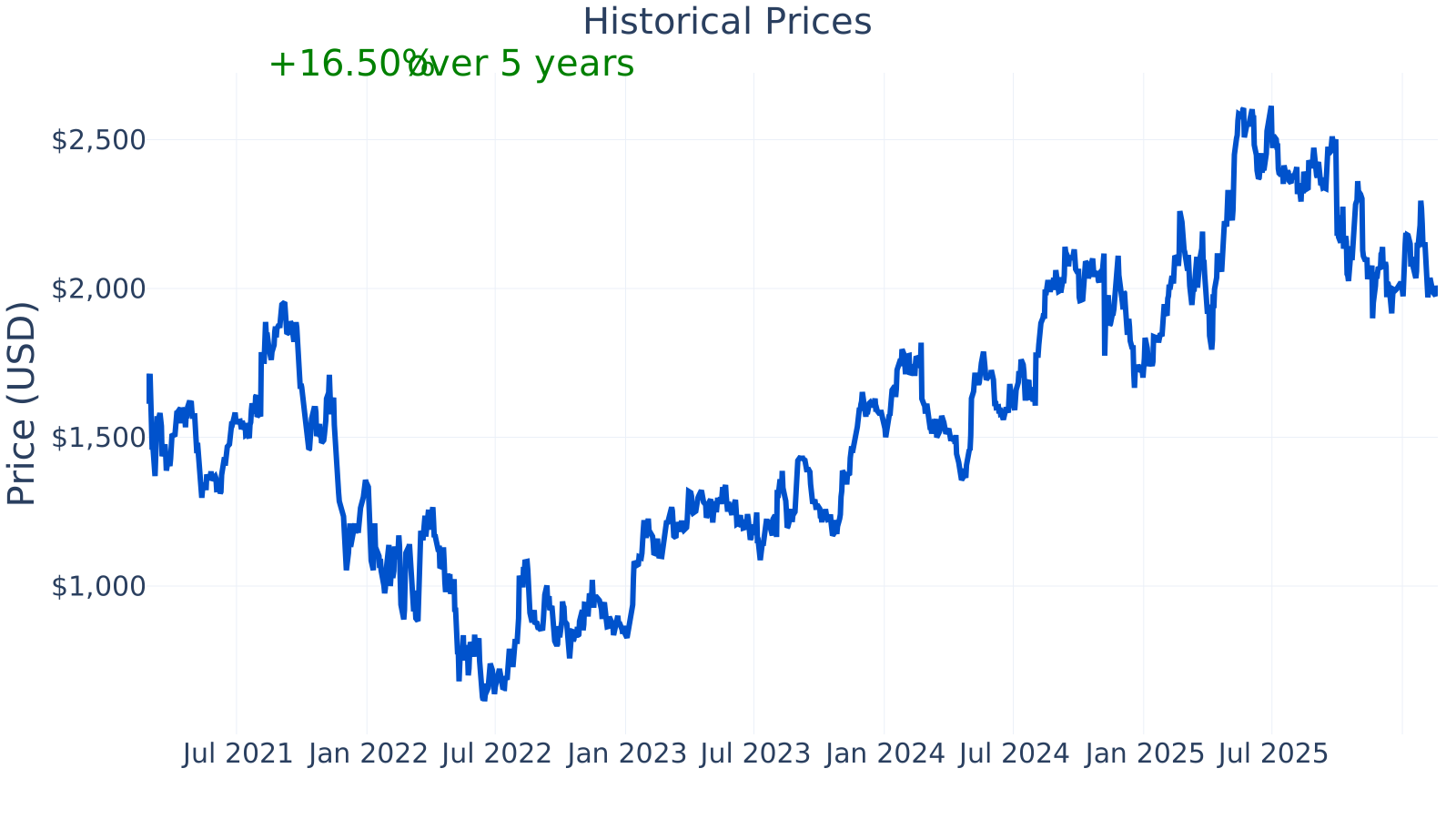
MercadoLibre’s market capitalization is about $101.2B and the stock’s beta is about 1.45, which indicates the share price has historically moved more than the overall market. The company’s P/E ratio is about 48.8 versus an industry median near 32.7, meaning the market is valuing MELI at a higher earnings multiple than many peers in its broad industry grouping. Profit margin is about 7.93% versus an industry median around 6.46%, while year-over-year revenue growth is about 39.5% versus an industry median around 13.1%. Debt-to-equity is about 159% versus an industry median around 32%, showing meaningfully higher leverage than the median peer. Free cash flow (trailing twelve months) is about $7.94B, and the PEG ratio is about 1.04 (a metric that relates valuation to growth expectations).
Growth (High)
MercadoLibre operates in industries that have long growth runways: e-commerce adoption and digital payments/financial services. In many Latin American markets, online retail penetration and cashless payments have historically been lower than in the U.S. and parts of Europe, which can create additional room for expansion over time. The company’s strategy aims to reduce friction at each step of a transaction—discovery, payment, delivery, and customer support—which can help reinforce repeat usage and attract more merchants.
Revenue growth has remained high across multiple periods, and recent year-over-year growth has been around the high-30% range. While growth rates have moderated from exceptionally high levels earlier in the timeline, the pattern still reflects a business expanding materially faster than the median company in its industry group.
Free cash flow has increased meaningfully over time (from under $1B in 2021 to multiple billions more recently). For long-term business building, a key point is that free cash flow can fund investments in logistics capacity, product development, and credit underwriting systems without relying as heavily on external financing—though the company can still choose to raise capital depending on its plans and market conditions.
Potential catalysts described in company materials often relate to ecosystem expansion: increasing penetration of payments and merchant services, improving delivery speed and reliability, and broadening credit offerings where underwriting data and risk controls support it. As more activity flows through one platform, the company can potentially improve personalization, reduce fraud, and strengthen the overall user experience.
Risks (High)
This article is for informational purposes only and does not constitute financial advice. Some content is AI-generated. See Disclaimer