Stock Analysis · Soho House & Co Inc (SHCO)
Overview
Soho House & Co Inc (SHCO) operates a membership-based hospitality business built around private members’ clubs. The brand combines spaces to eat, drink, meet, and attend events with an expanding set of hospitality offerings, including bedrooms/lodging at certain locations. The core idea is that recurring membership and in-club spending can support a network of physical venues, with the brand positioned toward a creative and professional audience.
In simple terms, revenue typically comes from (1) membership fees and (2) what members and guests spend inside the venues (food, beverage, rooms, and events). Public filings describe results across these kinds of activities, but exact percentage splits can vary over time and may not always be presented in a single, consistent breakdown.
Across recent years, total revenue increased (from about $561M in 2021 to about $1.204B in 2024), while profitability remained pressured. A major recurring cost item has been interest expense (roughly $71M–$84M per year in 2021–2024), which can matter for a hospitality company that uses debt to fund growth and real estate-related investments.
Key Figures
| Metric | Value | Industry ⓘ |
|---|---|---|
| Date | Feb 08, 2026 | |
| Context | ||
| Sector | Consumer Cyclical | |
| Industry | Lodging | |
| Market Cap ⓘ | $1.76B | |
| Beta ⓘ | 0.69 | |
| Fundamental | ||
| P/E Ratio ⓘ | N/A | 30.37 |
| Profit Margin ⓘ | -6.00% | 16.19% |
| Revenue Growth ⓘ | 11.20% | 8.50% |
| Debt to Equity ⓘ | -713.34% | 44.41% |
| PEG ⓘ | N/A | |
| Free Cash Flow ⓘ | $25.53M | |
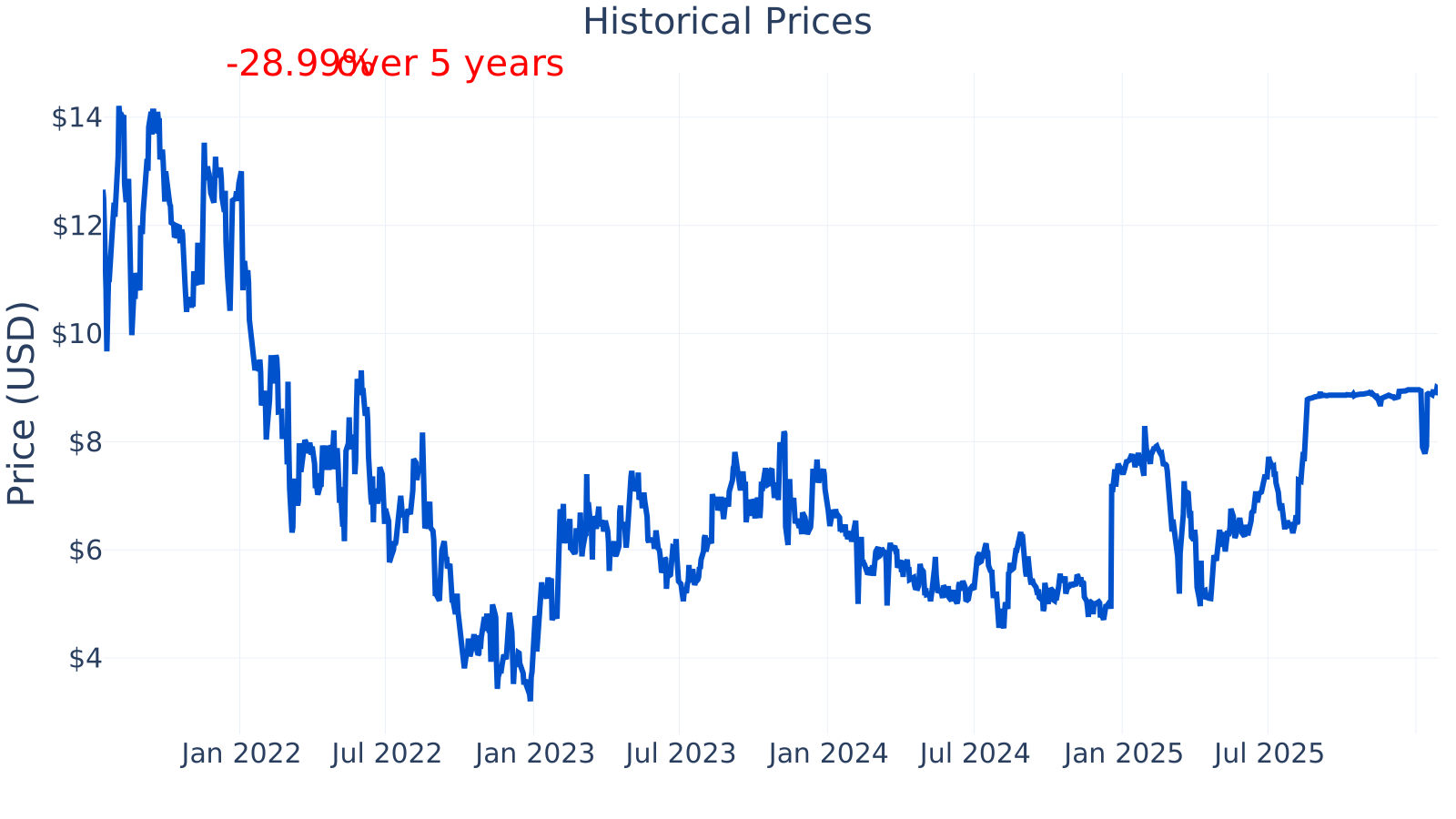
At the latest snapshot, the company’s market capitalization is about $1.76B, and the stock’s beta is about 0.69 (a measure that has historically implied less day-to-day volatility than the broad market, though it can change over time). Profit margin is about -6.0% versus an industry median around 16.2%, meaning the company has been loss-making while many lodging peers are profitable. Year-over-year revenue growth is about 11.2%, above the industry median near 8.5% in this comparison set. Debt-to-equity is shown as negative (about -713%), which commonly happens when accounting equity is negative; in that situation, the ratio becomes less intuitive and typically signals balance-sheet stress rather than “negative leverage.” Free cash flow (trailing twelve months) is about $25.5M, indicating the business recently generated cash after operating spending and capital expenditures.
Growth (Medium)
Soho House participates in the broader lodging and experiential hospitality industry. Demand in this space is typically tied to travel trends, consumer discretionary spending, and the willingness of customers to pay for premium experiences. A membership model can add a recurring element (memberships renewing over time), but it still depends heavily on utilization of physical locations and on-the-ground execution.
Revenue growth has moderated from very high rates in 2022 (well above 40% year-over-year in late 2022) to high-single-digit/low-double-digit growth more recently (about 11.2% in the latest quarter shown). This pattern can be consistent with a business moving from a rebound/expansion phase into a more normalized growth rate, though the sustainability of growth depends on new openings, member retention, and same-location spending.
Cash generation has improved meaningfully over time. Free cash flow moved from deeply negative levels in 2022 (about -$123M) toward breakeven in 2024 and turned positive by 2025 (around $33M at its peak in the series, and about $25.5M in the latest metric table). For a venue-based company, this can be an important operational milestone because expansion often requires ongoing capital spending; positive free cash flow can reduce reliance on external financing.
Potential catalysts (in a factual, non-predictive sense) typically include opening new houses/locations, improving occupancy and per-member spending, and controlling operating costs relative to revenue. Another practical catalyst is reducing financing costs over time if the company can refinance debt on better terms or reduce borrowings, though outcomes depend on credit markets and company performance.
Risks (High)
This article is for informational purposes only and does not constitute financial advice. Some content is AI-generated. See Disclaimer