Stock Analysis · MaxLinear Inc (MXL)
Overview
MaxLinear Inc. is a semiconductor company that designs chips used to move, process, and manage data signals. In everyday terms, its products help equipment “connect and communicate,” such as broadband access devices, networking hardware, and certain data-center and industrial systems. Like many chip designers, MaxLinear typically outsources manufacturing to specialized foundries and focuses its own resources on engineering, product development, and customer support.
From a business model perspective, revenue is primarily generated by selling integrated circuits (chips) and related solutions into electronics made by other companies. Because customers build MaxLinear’s chips into their own products, demand can rise or fall quickly depending on end-market conditions (for example, broadband equipment upgrades, enterprise networking cycles, or inventory corrections).
In official filings, semiconductor companies often break revenue down by end market and/or by major customers and geography. The exact mix can change meaningfully year to year, so the most reliable breakdown (with percentages) is the one reported in the latest annual report (Form 10‑K) under segment/end-market and customer concentration disclosures.
Over the last several years, the company’s top line has been volatile: total revenue peaked in 2022 and then fell sharply in 2023–2024 before partially recovering in 2025. The cost structure also shows that research and development is a major ongoing expense, which is typical for chip companies competing through product performance and new designs.
Key Figures
| Metric | Value | Industry ⓘ |
|---|---|---|
| Date | Feb 08, 2026 | |
| Context | ||
| Sector | Technology | |
| Industry | Semiconductors | |
| Market Cap ⓘ | $1.64B | |
| Beta ⓘ | 1.71 | |
| Fundamental | ||
| P/E Ratio ⓘ | N/A | 45.89 |
| Profit Margin ⓘ | -29.23% | 9.42% |
| Revenue Growth ⓘ | 48.00% | 12.95% |
| Debt to Equity ⓘ | 32.09% | 25.62% |
| PEG ⓘ | 0.39 | |
| Free Cash Flow ⓘ | $7.02M | |
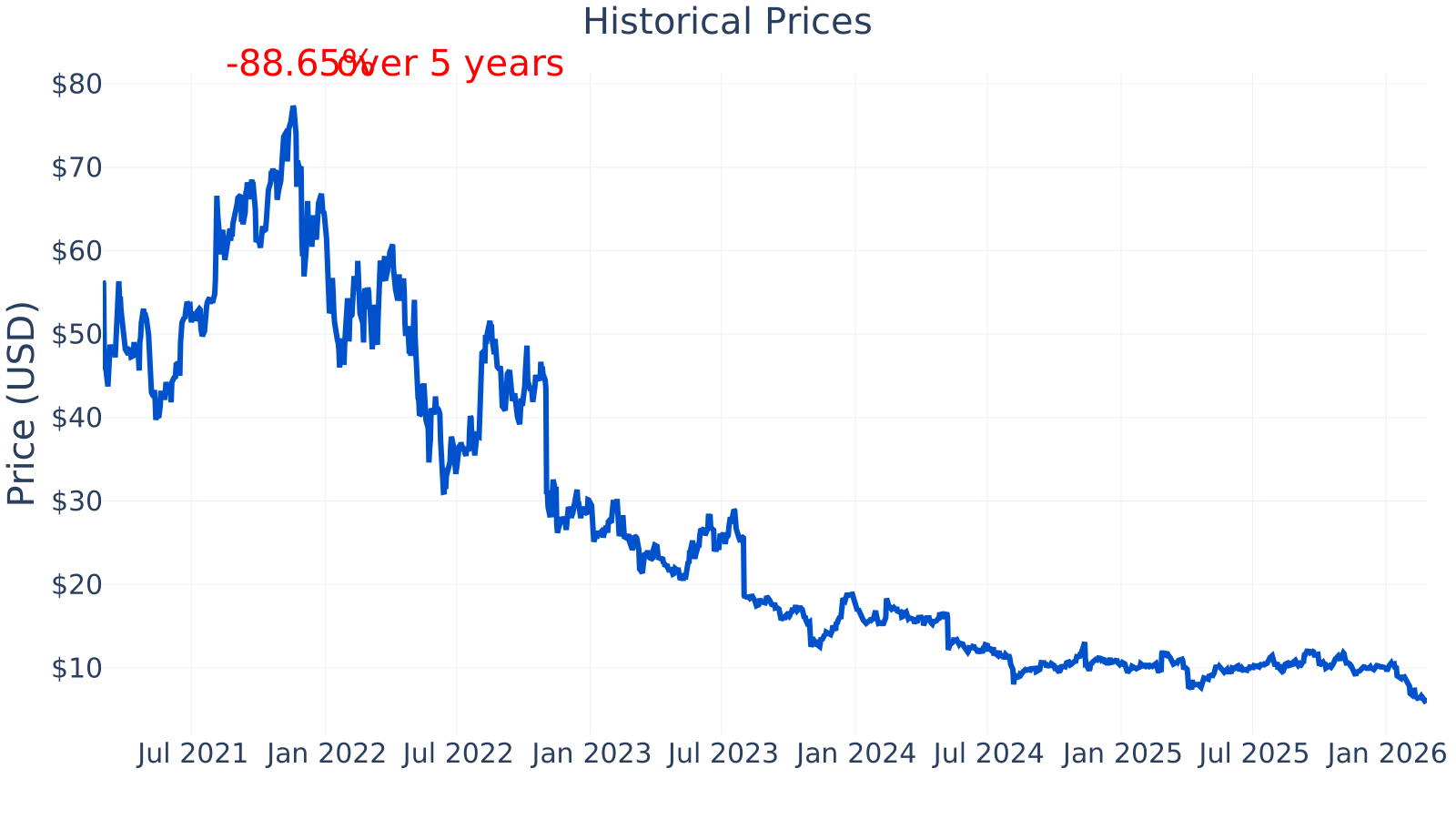
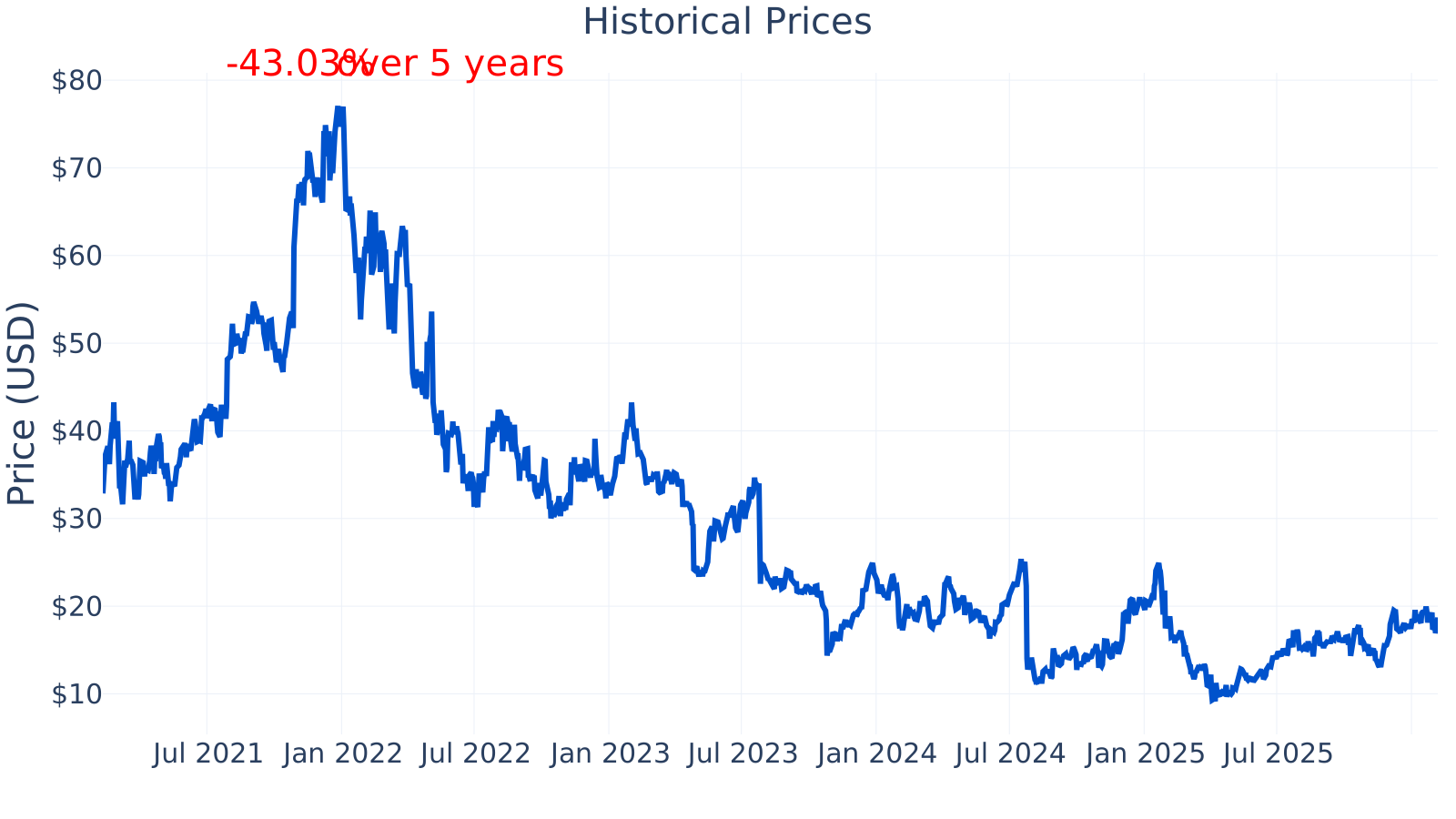
MaxLinear’s market capitalization is about $1.64B, placing it among smaller publicly traded semiconductor names. The stock’s beta of ~1.71 indicates it has historically moved more than the overall market, which often reflects both the cyclicality of semiconductors and company-specific swings.
Recent profitability is a key issue in the snapshot: the profit margin is about -29% versus an industry median near +9%. At the same time, the company shows year-over-year revenue growth of about +48% in the most recent period shown, above the industry median of roughly +13%, suggesting a rebound phase after a downturn. Free cash flow over the trailing twelve months is modestly positive at roughly $7.0M, which is a noticeable change versus the negative levels seen in parts of 2024–2025.
Growth (Medium)
MaxLinear operates in semiconductors, an industry with long-term demand drivers (more data traffic, higher network speeds, more connected devices). However, it is also a strongly cyclical industry: customers tend to over-order during upcycles and then cut orders during downcycles while they work through inventory. For long-term observers, this means revenue can swing widely even if the long-run direction of technology adoption is positive.
The recent pattern shows a typical cycle: very strong growth in 2021, moderating growth in 2022, a deep contraction through 2023–2024, and then a return to positive growth in 2025 (ending near +48% YoY). A sustained recovery usually depends on two things happening at the same time: end-market demand improving and customer inventories normalizing.
Cash generation is another lens on growth quality. Trailing free cash flow moved from strongly positive in 2021–2023 to negative in 2024–early 2025, then back to slightly positive most recently (about $7M). For a chip designer, consistently positive free cash flow can matter because it helps fund research and development and provides flexibility during downturns without needing as much external financing.
Potential catalysts that often matter for companies like MaxLinear (as described broadly in filings and typical customer dynamics) include: renewed broadband access equipment spending, design wins that ramp from “selected” to “high-volume,” and product cycles that shift the company into higher-value parts of the system. The durability of the current rebound is typically more important than any single quarter’s growth rate.
Risks (High)
This article is for informational purposes only and does not constitute financial advice. Some content is AI-generated. See Disclaimer