Stock Analysis · Mattel Inc (MAT)
Overview
Mattel, Inc. is a global toy and family entertainment company. It designs, manufactures (mostly through third-party manufacturers), and sells toys and games, and it also manages a portfolio of well-known brands. In addition to physical products, Mattel has been expanding its approach to monetizing its intellectual property (its “IP,” meaning characters and brand names) through areas such as content, publishing, and licensing.
Operationally, the business is seasonal (the holiday period is typically the largest sales quarter), and it depends heavily on relationships with large retailers and e-commerce platforms. Mattel reports results through regions (North America, International) and through product categories, and it also earns a smaller portion of revenue from licensing and other arrangements tied to its brands.
Main sources of revenue (typical categories disclosed in filings) include:
- Dolls (including brands such as Barbie)
- Infant, Toddler & Preschool (including Fisher-Price and related lines)
- Vehicles (including Hot Wheels and related products)
- Action Figures, Building Sets, Games, and Other (including various partner and legacy brands)
- Licensing and other IP-related revenue (generally smaller than toy sales)
Percentages by category vary by year and are detailed in Mattel’s annual report and segment/category disclosures.
Across the years shown, total revenue has stayed in a relatively narrow band (roughly $5.35B–$5.46B). Profitability has moved more than revenue: net income fell sharply from 2021 to 2023 before recovering in 2024, while cost of revenue and operating expenses shifted meaningfully year to year.
Key Figures
| Metric | Value | Industry ⓘ |
|---|---|---|
| Date | Feb 16, 2026 | |
| Context | ||
| Sector | Consumer Cyclical | |
| Industry | Leisure | |
| Market Cap ⓘ | $5.31B | |
| Beta ⓘ | 0.69 | |
| Fundamental | ||
| P/E Ratio ⓘ | 13.28 | 26.98 |
| Profit Margin ⓘ | 7.44% | 7.44% |
| Revenue Growth ⓘ | 7.30% | 7.00% |
| Debt to Equity ⓘ | 100.70% | 33.08% |
| PEG ⓘ | 1.91 | |
| Free Cash Flow ⓘ | $488.31M | |
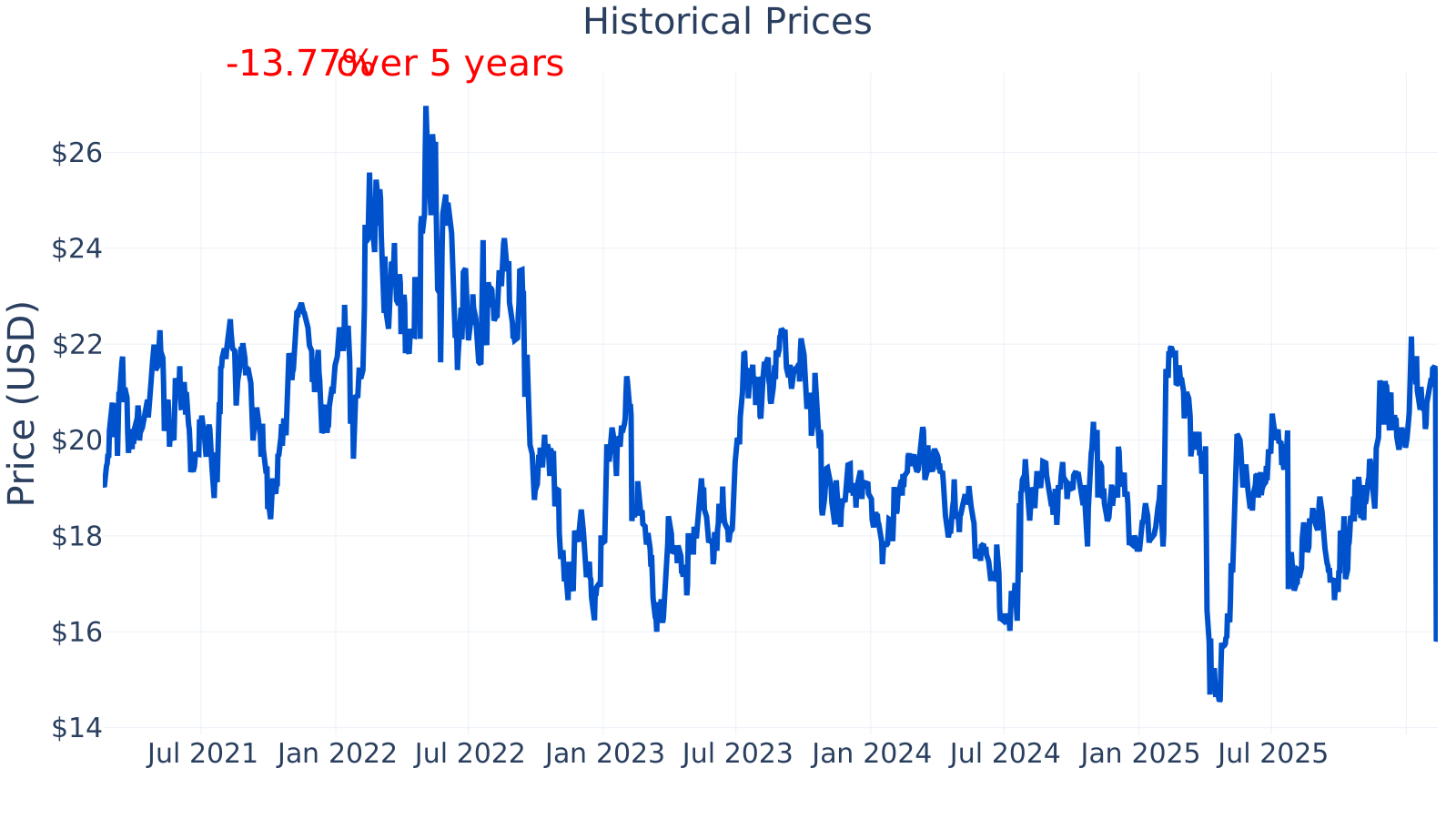
Mattel’s market capitalization is about $5.3B, and the stock’s beta (~0.69) suggests it has historically moved less than the broader market on average (though any single stock can still be volatile). The latest P/E ratio is ~13.3, below the listed industry median (~27.0). The profit margin is ~7.4%, in line with the industry median in the table. Year-over-year revenue growth is shown at ~7.3% (close to the industry median ~7.0%). A key balance-sheet flag is debt-to-equity of ~101%, which is materially higher than the industry median (~33%). Trailing twelve-month free cash flow is about $488M, indicating meaningful cash generation after operating costs and capital spending.
Growth (Medium)
The traditional toy industry is generally mature rather than structurally high-growth. Demand is influenced by demographics, consumer spending cycles, and hit-driven product trends. Within that context, Mattel’s long-term growth effort is largely about strengthening and extending brands rather than relying only on unit growth in toys. That includes refreshing core franchises, expanding into adjacent categories, and growing brand monetization through licensing and entertainment partnerships (where successful, these can be less capital-intensive than manufacturing and shipping physical products).
The year-over-year revenue pattern is uneven, with strong growth in parts of 2021 and 2022, declines across several quarters in 2022–2023, and more mixed low single-digit changes later. This kind of profile is consistent with a category that is sensitive to retailer inventory levels, consumer demand shifts, and product cycle timing rather than steady compounding every quarter.
Free cash flow has fluctuated substantially over the period shown, including a very strong spike around 2024 followed by a lower (but still positive) level in 2025. For a consumer products company, sustained free cash flow matters because it supports debt reduction, reinvestment in brands, and flexibility during weaker demand periods. A practical “catalyst” for Mattel is the ability to turn popular brands into broader entertainment and licensing revenue streams; however, results there can be project-dependent and may not be linear from year to year.
Risks (Medium-High)
This article is for informational purposes only and does not constitute financial advice. Some content is AI-generated. See Disclaimer