Stock Analysis · Match Group Inc (MTCH)
Overview
Match Group Inc. is a consumer internet company focused on online dating. It operates a portfolio of dating products that help people discover and connect with others, with well-known brands that have historically included Tinder, Hinge, Match, Meetic, OkCupid, Plenty of Fish, and others. Across these apps, Match Group monetizes primarily through paid subscriptions and “à la carte” features (for example, upgrades that improve visibility or add functionality), with some additional advertising and other revenue depending on the product and geography.
From a business-model point of view, online dating tends to be a “repeat use” category: many users leave after finding a relationship and later rejoin. This dynamic makes brand strength, product iteration, and efficient marketing important, because companies need to continually replenish their user base and convert a portion of users into payers.
Main revenue sources (high-level categories commonly used in company reporting):
- Direct revenue (paid subscriptions and in-app purchases such as premium features and boosts)
- Indirect revenue (advertising and other revenue streams)
Over time, the company has grown revenue while keeping a sizable gap between revenue and cost of revenue, leaving room to fund product development, marketing, and corporate costs.
Across the years shown, total revenue increases from about $3.0B (2021) to about $3.5B (2025). Gross profit rises as well (about $2.14B to $2.54B), indicating that the core economics of delivering the service (after cost of revenue) remained solid. Operating income expands notably versus 2021–2022, while research and development and selling/general/administrative spending also trend upward, reflecting ongoing investment to improve the apps and compete for users.
Key Figures
| Metric | Value | Industry ⓘ |
|---|---|---|
| Date | Feb 07, 2026 | |
| Context | ||
| Sector | Communication Services | |
| Industry | Internet Content & Information | |
| Market Cap ⓘ | $7.61B | |
| Beta ⓘ | 1.31 | |
| Fundamental | ||
| P/E Ratio ⓘ | 12.96 | 14.12 |
| Profit Margin ⓘ | 17.59% | 10.23% |
| Revenue Growth ⓘ | 2.10% | 7.10% |
| Debt to Equity ⓘ | -1567.11% | 10.16% |
| PEG ⓘ | 0.32 | |
| Free Cash Flow ⓘ | $1.02B | |
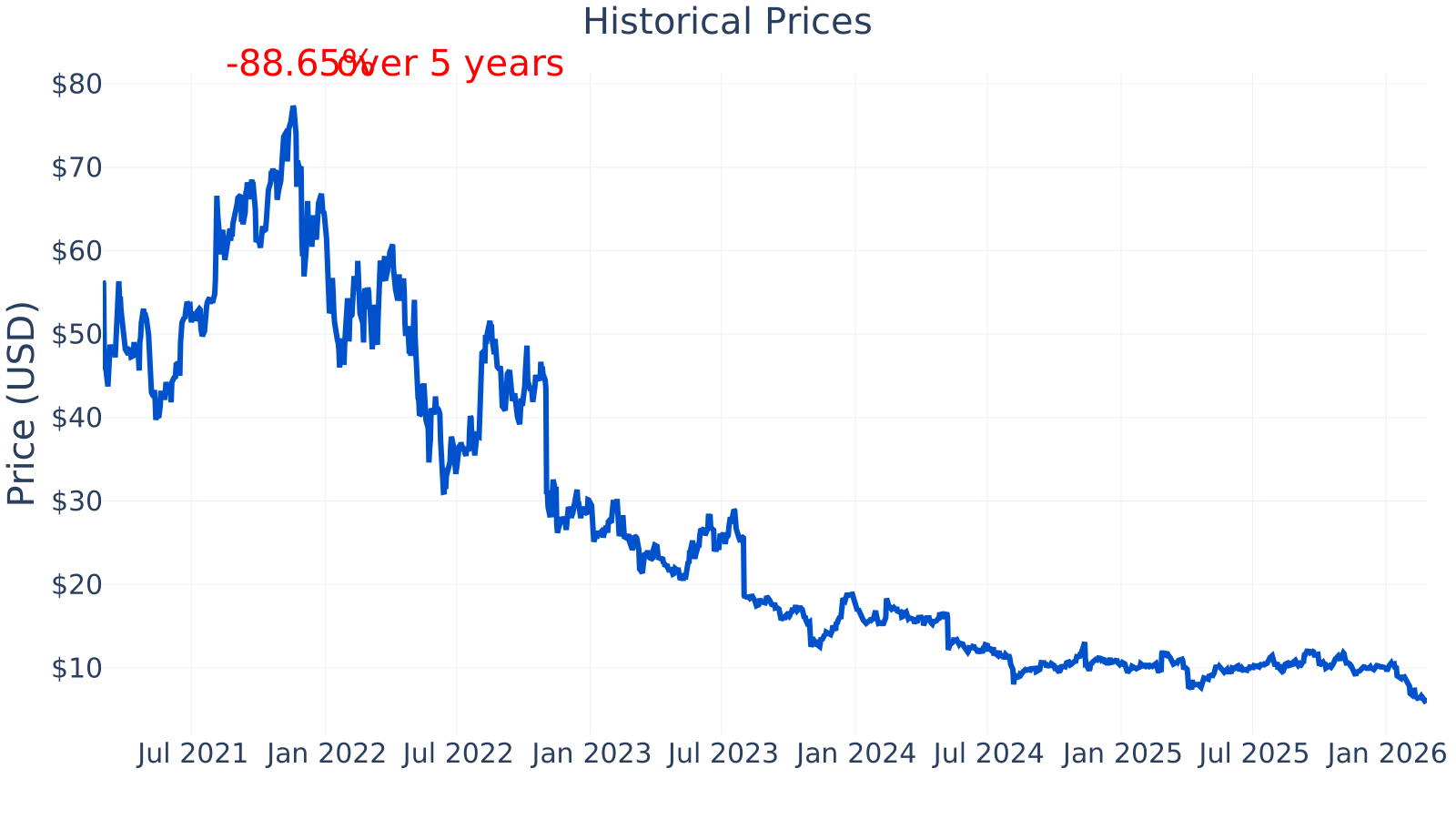
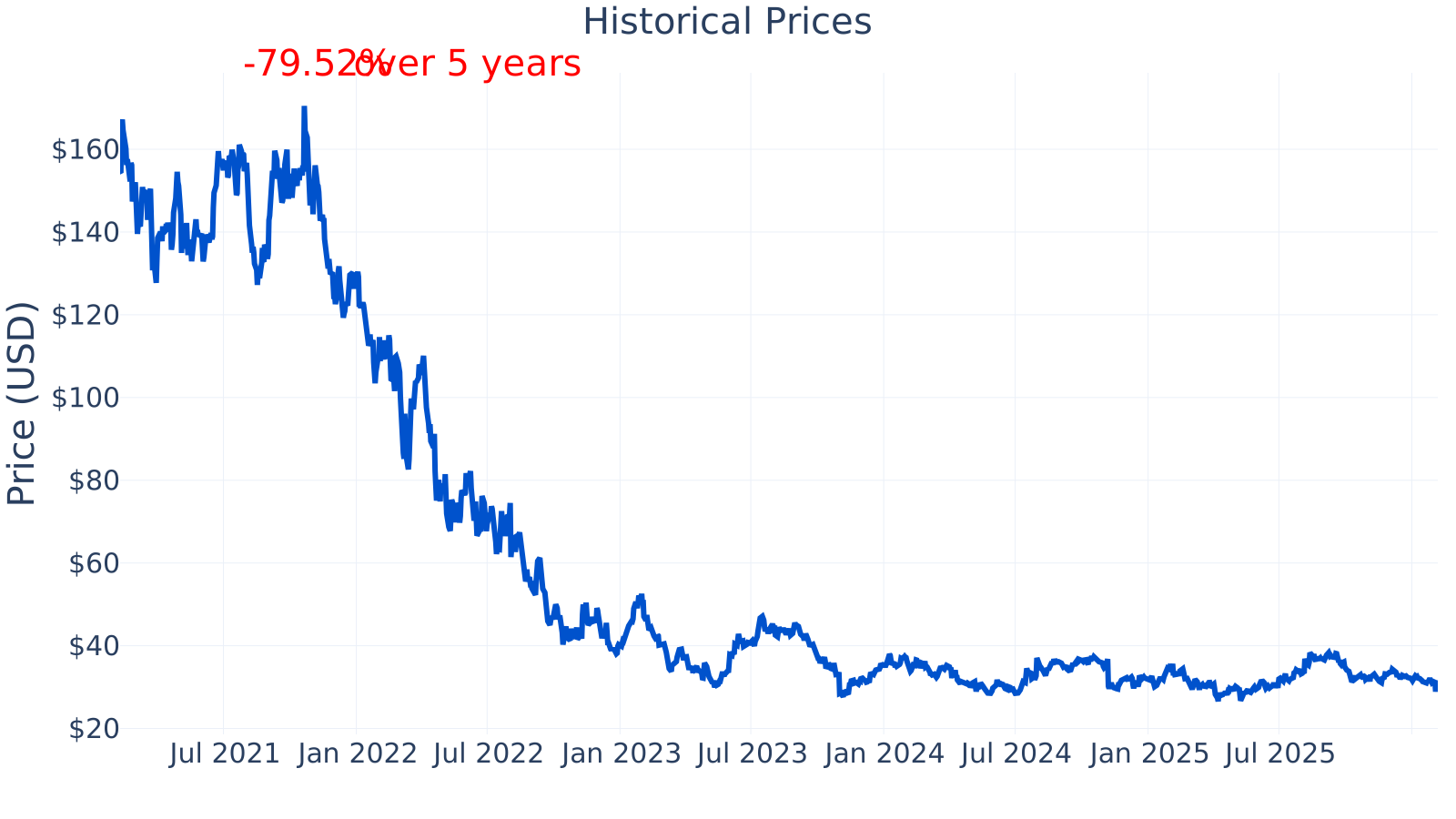
Match Group’s market capitalization is about $7.6B, and the stock’s beta (~1.32) indicates it has historically moved more than the overall market (higher volatility). The P/E ratio (~13.0) is below the listed industry median (~14.1) in its peer set. Profitability stands out: the company’s profit margin (~17.6%) is higher than the industry median (~10.2%). Recent year-over-year revenue growth (~2.1%) is meaningfully below the industry median (~7.1%), suggesting slower top-line momentum than many peers. Free cash flow over the last twelve months is about $1.02B, which is a key support for funding operations, debt service, and potential capital returns.
Growth (Medium)
Online dating is part of the broader shift toward digital social discovery and mobile-first consumer services. The category can grow through (1) more users adopting app-based dating, (2) higher conversion of free users to paid tiers, (3) higher average revenue per payer via better premium features, and (4) geographic expansion and product segmentation (different apps for different audiences).
Match Group’s strategy has typically centered on running multiple brands aimed at different demographics and intentions (from casual to relationship-focused), while continuously testing new features and pricing. In theory, a portfolio approach can reduce reliance on a single app and allows the company to focus marketing spend on whichever brands are performing best.
The revenue growth pattern shown indicates a shift from very strong growth in 2021 (roughly in the 20%–27% range) to a much slower and sometimes slightly negative trajectory in 2022–2025, with the most recent reading around 2.1%. For long-term business momentum, this places more weight on execution: product improvements, better user outcomes (match quality and safety), and effective marketing efficiency become critical when the overall growth rate is modest.
Free cash flow remains substantial, though it has fluctuated: about $780M (2021), $955M (2022), a lower point near $362M (2023), then a rebound near $996M (2024), and about $793M (2025) for the period shown. This matters because, in mature consumer internet businesses, long-term results often depend not only on revenue growth but also on the ability to consistently convert revenue into cash after operating costs and capital spending.
Potential long-term catalysts (directional, not guarantees) generally include new premium product tiers, improved trust-and-safety features that strengthen brand reputation, better matching outcomes that support retention and word-of-mouth, and international growth where online dating adoption is still developing.
Risks (High)
This article is for informational purposes only and does not constitute financial advice. Some content is AI-generated. See Disclaimer