Stock Analysis · MasterBrand Inc (MBC)
Overview
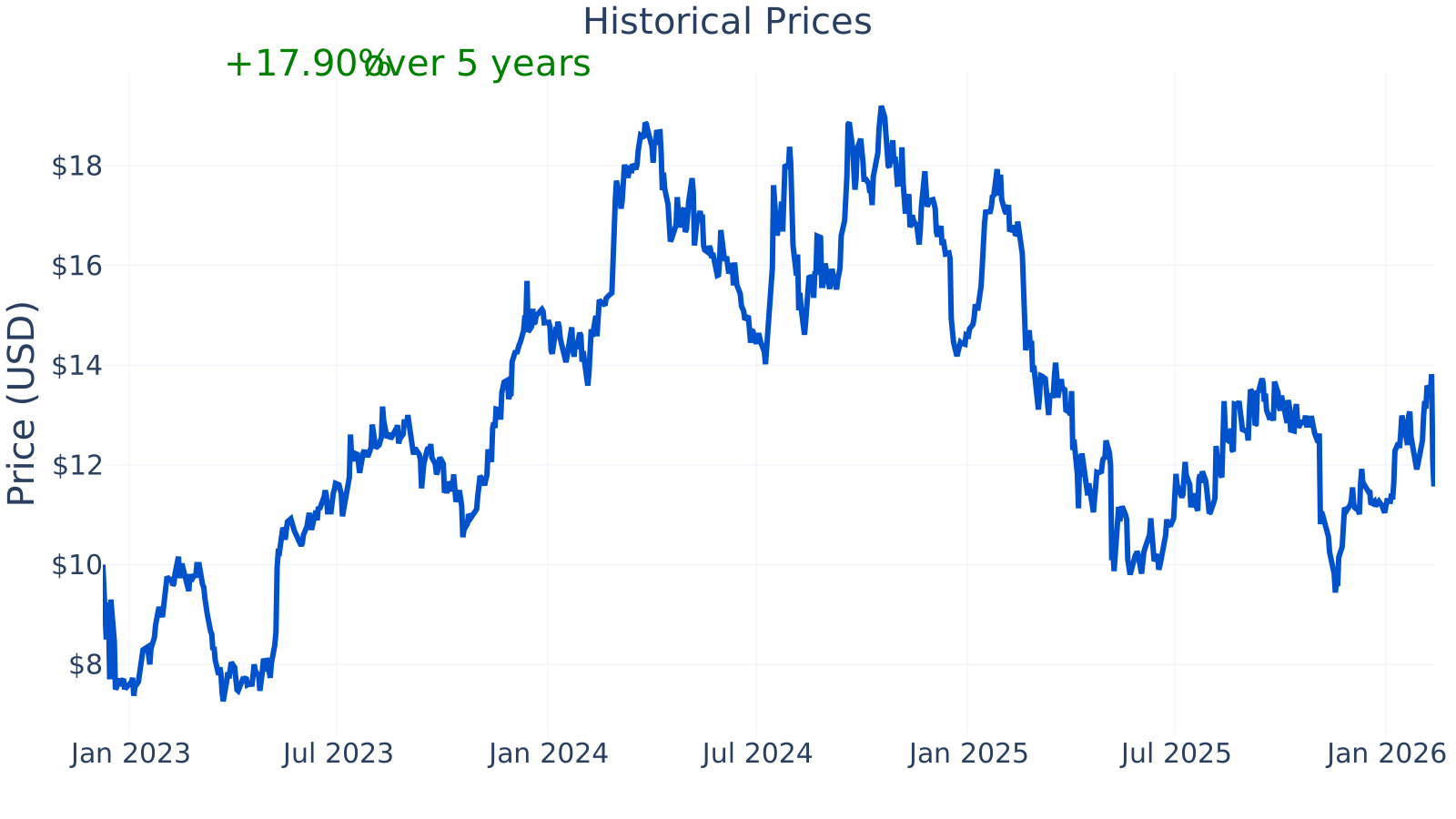
MasterBrand Inc. (MBC) designs, manufactures, and sells residential kitchen and bath cabinets and related products. In practice, that means the company participates in homebuilding and home renovation activity: when new homes are built or existing homes are remodeled, cabinets are often a meaningful part of the project budget.
MasterBrand sells through multiple channels, including new construction (often tied to homebuilders) and repair-and-remodel demand (often tied to homeowners and professional installers). Its products are typically differentiated by design style, finish options, price point, delivery/service reliability, and relationships with dealers, builders, and distributors.
In its filings, MasterBrand primarily reports results as a single operating segment, so revenue is not broken out in a simple, consistent public table by product line or channel with percentages. As a result, the most reliable high-level view is that the company’s revenue is predominantly driven by residential cabinet sales, with demand influenced by housing starts, existing home turnover, and remodeling activity.
Over the years shown, total revenue moved from about $2.86B (2021) to $3.28B (2022), then declined to roughly $2.73B (2023) and stayed near $2.70–$2.73B (2024–2025). Operating income also fluctuated meaningfully (about $238M in 2021, $213M in 2022, $304M in 2023, then down to about $242M in 2024 and roughly $134M in 2025). This pattern highlights how sensitive profitability can be to volume, product mix, costs, and operating expenses in a housing-linked business.
Key Figures
| Metric | Value | Industry ⓘ |
|---|---|---|
| Date | Feb 16, 2026 | |
| Context | ||
| Sector | Consumer Cyclical | |
| Industry | Furnishings, Fixtures & Appliances | |
| Market Cap ⓘ | $1.49B | |
| Beta ⓘ | 1.46 | |
| Fundamental | ||
| P/E Ratio ⓘ | 56.14 | 20.06 |
| Profit Margin ⓘ | 0.98% | 4.29% |
| Revenue Growth ⓘ | -3.50% | 0.30% |
| Debt to Equity ⓘ | 87.31% | 87.31% |
| PEG ⓘ | N/A | |
| Free Cash Flow ⓘ | $117.50M | |
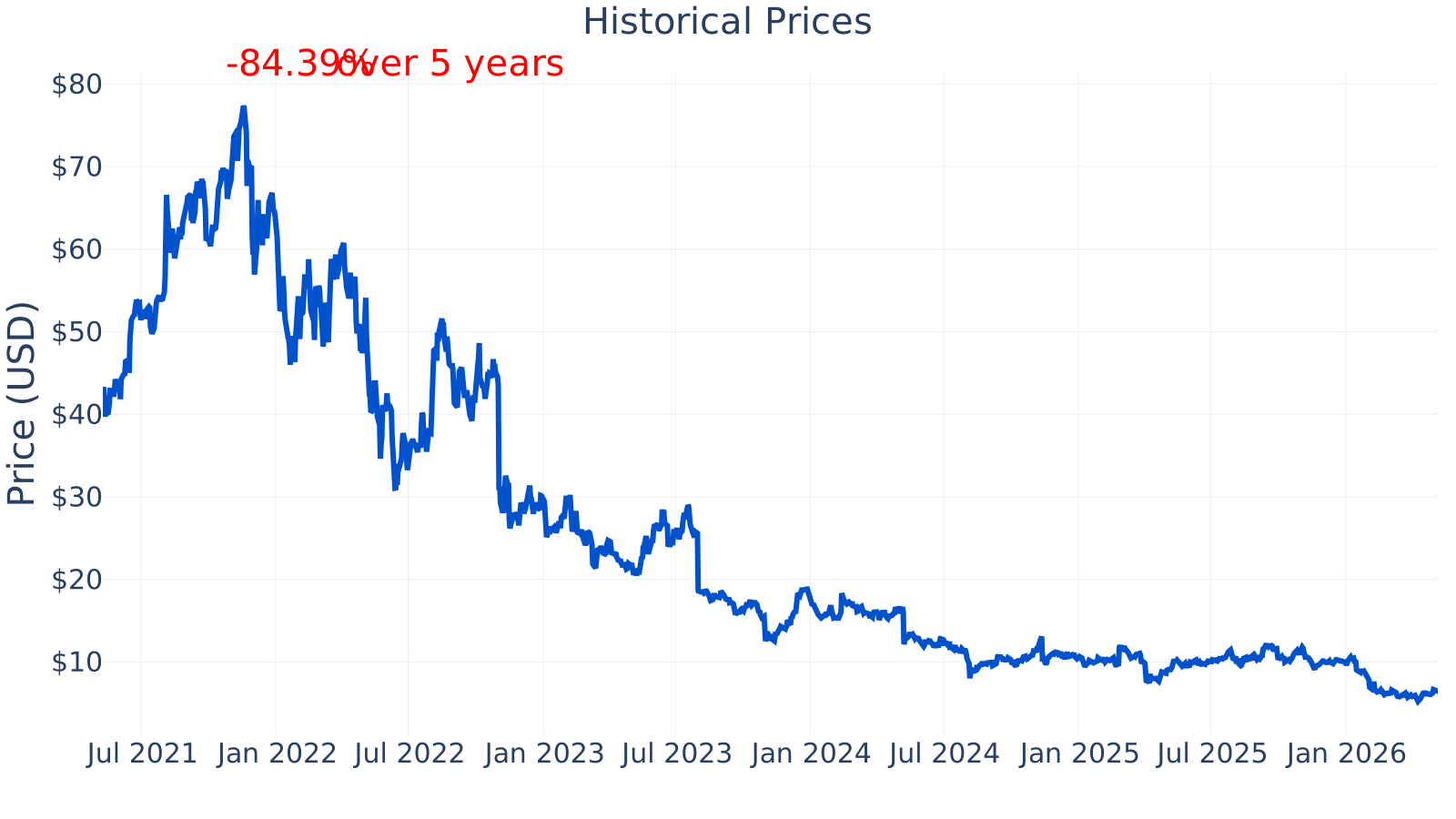
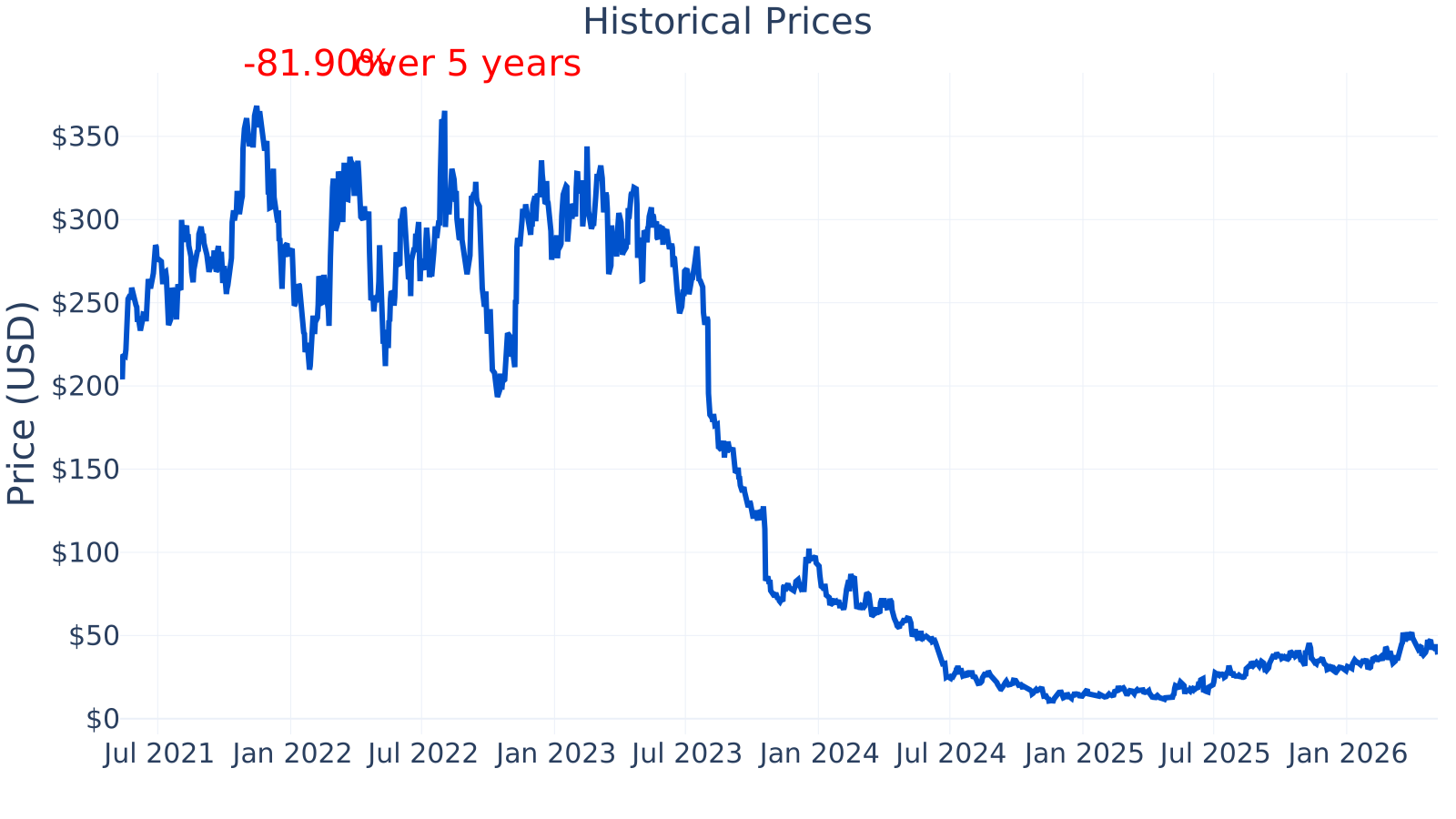
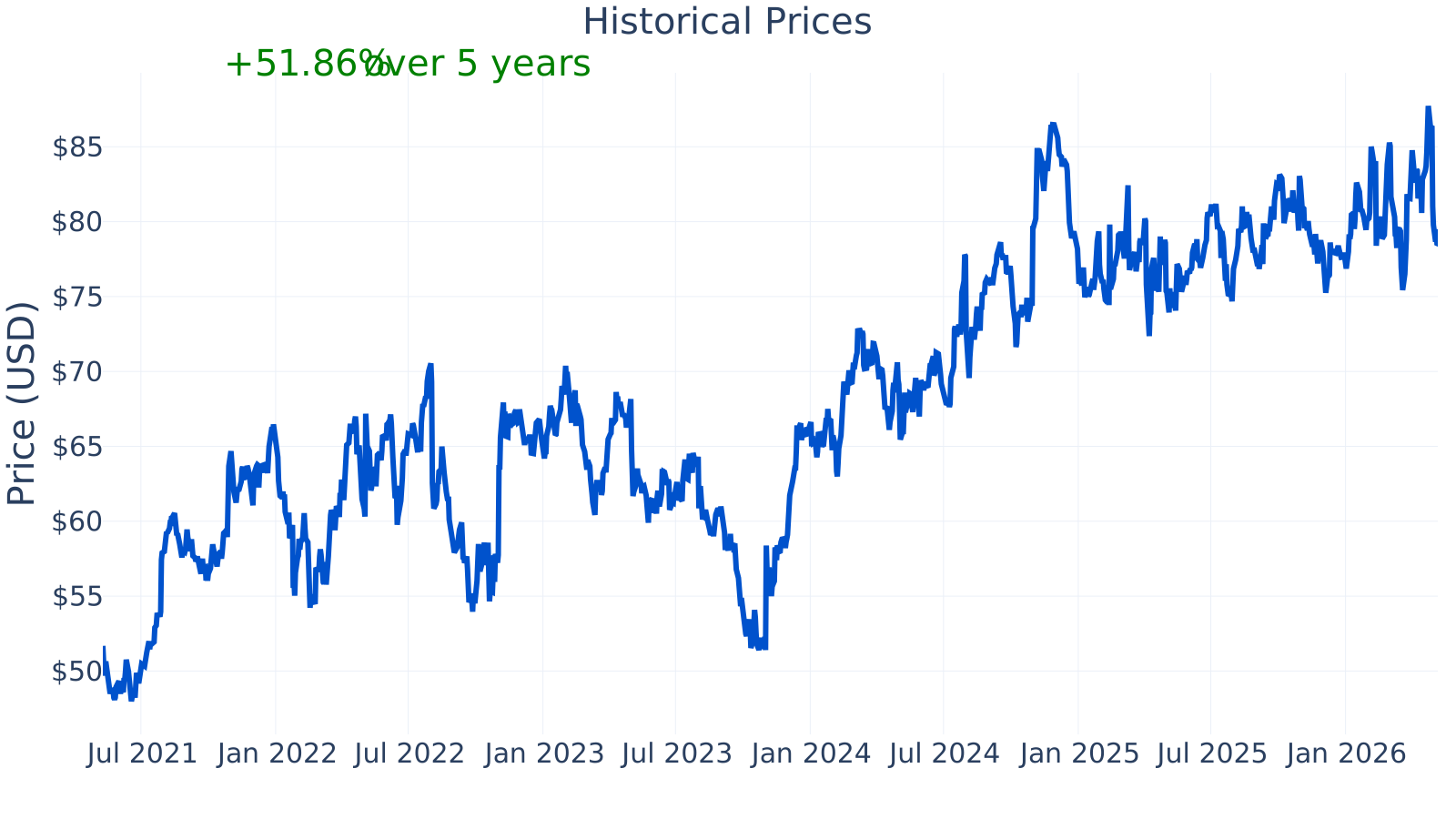
MasterBrand’s equity market value is about $1.49B, and the stock’s beta (~1.46) suggests the share price has tended to move more than the broader market. The current P/E ratio (~56.1) is well above the industry median (~20.1), while the latest profit margin (~1.0%) sits far below the industry median (~4.3%). Recent year-over-year revenue growth is about -3.5% versus an industry median near +0.3%. Debt-to-equity is about 87%, roughly in line with the industry median shown. Trailing twelve-month free cash flow is about $117.5M, indicating the business has continued to generate cash despite weaker accounting earnings in the most recent period.
Growth (Medium)
The cabinet industry is closely tied to housing and remodeling. Over long periods, demand can expand with household formation, housing stock turnover, and renovation cycles, but shorter periods can be choppy due to interest rates, affordability, consumer confidence, and contractor capacity. That makes the industry structurally important to the economy, but not consistently “smooth” from year to year.
Recent revenue growth has been uneven. After large declines in 2023 (roughly -14% to -21% year-over-year in several quarters), growth turned positive in parts of 2024 and 2025 (peaking around +8% in mid-2025), but ended 2025 modestly negative again (around -3% to -4%). This kind of pattern is consistent with a business exposed to cyclical end markets and shifting customer order rates.
Cash generation has also moderated from earlier levels: trailing free cash flow declined from about $300.8M (as of 2024-03-31) to about $158.2M (as of 2025-03-31) and then to about $117.5M most recently shown. For long-term business momentum, sustained free cash flow matters because it can support debt repayment, reinvestment in operations, and resilience during downturns.
Potential catalysts for improved growth and results typically come from (1) a more favorable housing/remodel backdrop, (2) operational execution such as manufacturing efficiency and cost control, and (3) product and channel mix improvements (for example, stronger demand in higher-margin lines or better utilization of production capacity). Because cabinet purchases are often discretionary within a remodel, the timing and strength of any rebound can be sensitive to interest rates and homeowner sentiment.
Risks (High)
Leverage is meaningful: debt-to-equity is about 87% at the latest point shown. The chart also shows leverage moving down into the mid-60% range at one point, then rising again toward the high-80% range. In a cyclical business, higher leverage can increase sensitivity to downturns, because interest expense and required repayments are less flexible than many operating costs.
Profitability has compressed sharply versus earlier periods. Net profit margin was around 4%–7% across much of 2023 into mid-2024, but trended down through 2025 and reached roughly 1% by the end of 2025. When margins compress this far, small changes in pricing, volumes, or costs can have an outsized impact on net income.
Competitive pressure is a central risk. Cabinets are a large and competitive category, with customers comparing price, lead times, warranty/service, style options, and brand reputation. Competition can come from other large cabinet manufacturers, regional producers, importers, and private-label offerings distributed through big-box retailers and dealers. In that environment, maintaining share often depends on reliable delivery performance, manufacturing scale, and relationships with builders and dealers—advantages that can be real but can also be challenged if rivals invest aggressively or if demand weakens.
MasterBrand’s competitive advantages are typically associated with scale in manufacturing and distribution, brand portfolio and product breadth, and channel relationships. However, the recent decline in margin suggests that advantages may not fully protect profitability during tougher parts of the cycle, or that the company faced cost/mix/volume headwinds that outweighed its operational strengths.
Other important risks include raw material and logistics cost volatility, labor availability, demand shifts between value and premium products, and customer concentration or channel mix changes (for example, if a major builder or dealer reduces orders). Like many manufacturers, execution risk also matters: operational disruptions, quality issues, or delays in aligning capacity to demand can pressure results.
Valuation
The valuation picture is mixed and heavily influenced by the “E” in P/E (earnings). The current P/E ratio is about 56.1, substantially above the industry median near 20.1. The historical chart shows MasterBrand’s P/E was much lower earlier in the period (often in the ~7–16 range) and then increased sharply to the most recent level. A sharp rise in P/E can happen either because the stock price rose, because earnings fell, or both.
Given that net profit margin fell to roughly 1% most recently shown, earnings appear to have been under pressure. In that situation, the P/E ratio can look “high” even if the business is not being valued like a high-growth company—simply because profits are temporarily depressed. For long-term context, valuation interpretation depends on whether profitability is expected (over time) to normalize closer to prior levels, remain structurally lower, or fluctuate with the cycle.
Another lens is cash generation: trailing free cash flow is still positive (about $117.5M), which can provide a valuation backstop in some periods. Still, the downward trend in free cash flow versus earlier levels suggests less room for error if demand weakens further or if costs rise.
Conclusion
MasterBrand is a housing- and remodeling-linked manufacturer focused on residential cabinets. Over the period shown, revenue has been relatively flat after a post-2022 decline, while profitability has weakened materially, with net margins trending down to about 1% most recently. The company continues to generate positive free cash flow, but at a lower level than earlier in the period, and it carries a notable level of leverage (debt-to-equity near 87%).
From a long-term, fundamentals-first perspective, the key questions for the business profile are whether margins and cash generation can stabilize and recover through a mix of improved demand, operating efficiency, and disciplined pricing, and how the company manages leverage across housing cycles. The valuation signals are also tied closely to earnings pressure: the current P/E is elevated versus the industry median, which can reflect depressed earnings and/or market expectations about recovery. Overall, the facts point to a company with meaningful cyclical exposure and currently pressured profitability, where long-term outcomes depend heavily on operational execution and the housing/remodel environment.
Sources:
- SEC EDGAR — MasterBrand Inc. filings (Form 10-K, Form 10-Q)
- MasterBrand Inc. — Investor Relations materials and press releases (company-hosted)
- Wikipedia — “MasterBrand” (basic company background)
This article is for informational purposes only and does not constitute financial advice. Some content is AI-generated. See Disclaimer