Stock Analysis · Marvell Technology Group Ltd (MRVL)
Overview
Marvell Technology Group Ltd is a semiconductor company that designs chips used to move, store, and process data. In simple terms, its products help the “plumbing” of modern computing: data centers, cloud infrastructure, AI-related computing systems, carrier and enterprise networks, and storage systems. Marvell focuses on complex chips and custom solutions that customers integrate into servers, networking equipment, and other high-performance electronics.
Its revenue mainly comes from selling semiconductor products, with demand tied to large, multi-year technology buildouts (for example: cloud data centers and high-speed networking upgrades). In its SEC filings, Marvell presents the business through end markets rather than a long list of individual products. A typical breakdown includes areas such as:
- Data center and cloud infrastructure (networking, interconnect, and custom silicon used by hyperscalers)
- Enterprise and carrier networking (chips used in telecom and networking equipment)
- Consumer and other (a smaller portion, depending on the cycle)
- Storage (controllers and connectivity solutions used in storage systems)
Percentages by end market can shift meaningfully from year to year as different parts of the semiconductor cycle rise or cool, so the most reliable place to confirm current mix is Marvell’s latest annual report (Form 10‑K) and quarterly report (Form 10‑Q), where management discusses which segments are currently driving results.
Over the last few fiscal years shown, revenue moved from about $4.46B (FY2022) up to about $5.77B (FY2025). At the same time, research and development remained a very large expense (around $1.4B–$2.0B per year in the period shown), which reflects how chip companies must continuously invest to stay competitive. Net income was negative in several of these years, highlighting that accounting profitability can be volatile even when the business is growing.
Key Figures
| Metric | Value | Industry ⓘ |
|---|---|---|
| Date | Feb 07, 2026 | |
| Context | ||
| Sector | Technology | |
| Industry | Semiconductors | |
| Market Cap ⓘ | $69.21B | |
| Beta ⓘ | 1.98 | |
| Fundamental | ||
| P/E Ratio ⓘ | 28.27 | 45.89 |
| Profit Margin ⓘ | 31.75% | 9.42% |
| Revenue Growth ⓘ | 36.80% | 13.10% |
| Debt to Equity ⓘ | 35.80% | 25.62% |
| PEG ⓘ | 1.52 | |
| Free Cash Flow ⓘ | $1.58B | |
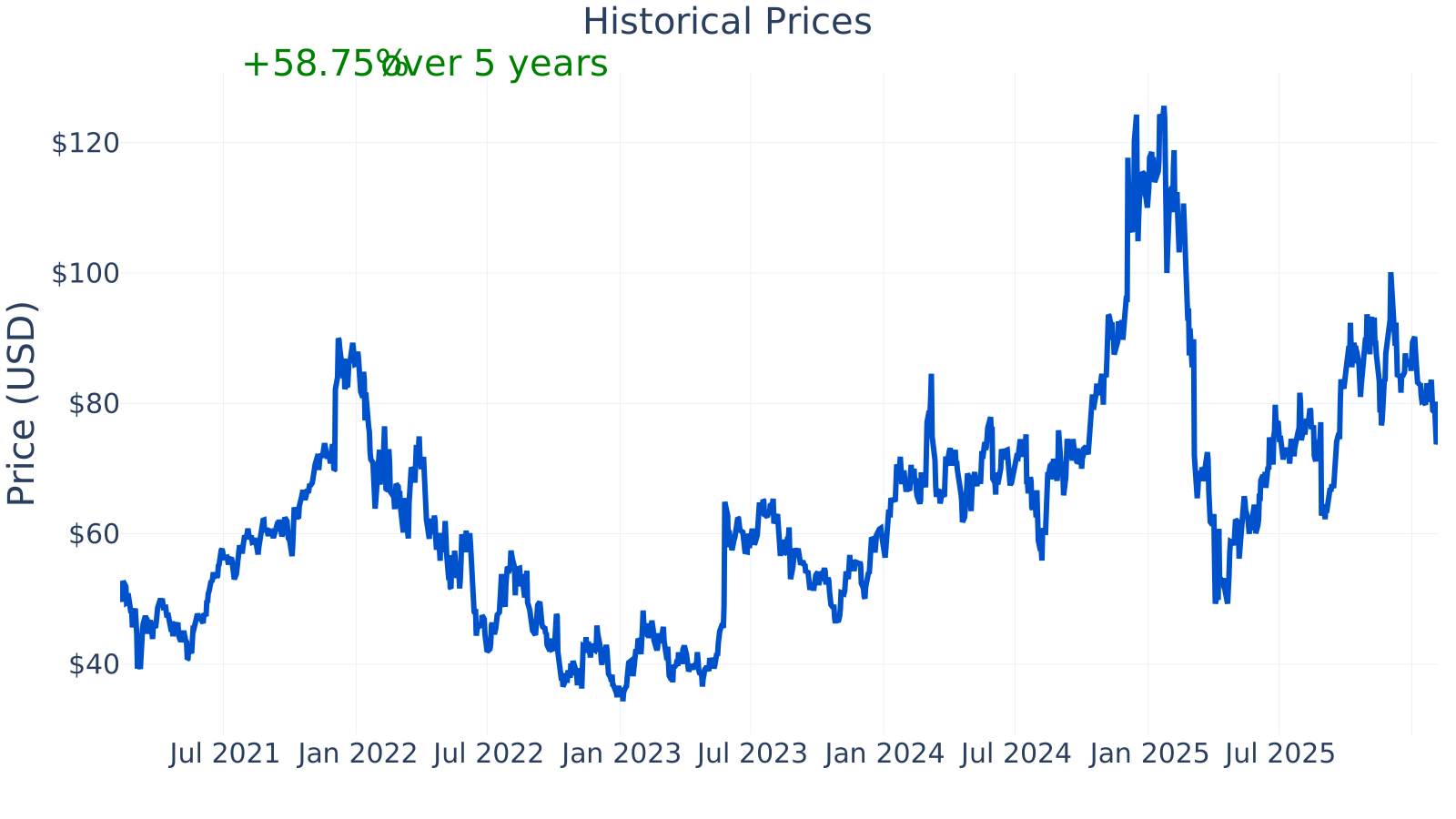
Marvell’s market capitalization is about $69.2B, placing it among large, widely followed semiconductor companies. The stock’s beta of ~1.98 indicates it has historically moved much more than the overall market (higher volatility).
On valuation, the latest P/E ratio is ~28.3, below the semiconductor industry median (~45.9) in the provided comparison set. Profitability and growth metrics stand out: profit margin ~31.8% versus an industry median ~9.4%, and year-over-year revenue growth ~36.8% versus an industry median ~13.1%. Leverage is moderately higher than the industry median with debt-to-equity ~35.8% (industry median ~25.6%). Free cash flow over the trailing twelve months is about $1.58B, indicating meaningful cash generation even though accounting earnings can vary.
Growth (High)
Marvell operates in parts of semiconductors that are closely tied to long-term increases in data traffic and computing intensity. Data centers and cloud infrastructure continue to require faster connectivity (for example, higher-speed interconnects) and increasingly specialized chips. These multi-year infrastructure buildouts can create extended demand cycles for suppliers that are positioned in networking, interconnect, and custom silicon.
The chart shows revenue growth has been cyclical, including periods of contraction, followed by a strong rebound more recently. The latest year-over-year revenue growth is about 36.8%, which is notably above the industry median shown (~13.1%). This pattern is consistent with a semiconductor business that can experience downcycles, then recover when customers restart spending.
Free cash flow has generally increased over time in the period shown (from roughly $0.63B to roughly $1.39B, with the latest trailing twelve months around $1.58B). For long-term business durability, this matters because free cash flow is the cash left after operating needs and capital spending, which can support reinvestment, debt management, or other corporate priorities.
Strategically, Marvell’s focus on higher-performance data infrastructure and custom solutions can be a logical fit for a future where cloud providers and equipment makers want differentiated designs and efficient power usage. A potential catalyst framework (without predicting outcomes) is that major customer programs in cloud and networking often ramp in steps: design win → qualification → volume production, which can change revenue growth rates when ramps occur.
Risks (High)
This article is for informational purposes only and does not constitute financial advice. Some content is AI-generated. See Disclaimer


