Stock Analysis · Marriott International Inc (MAR)
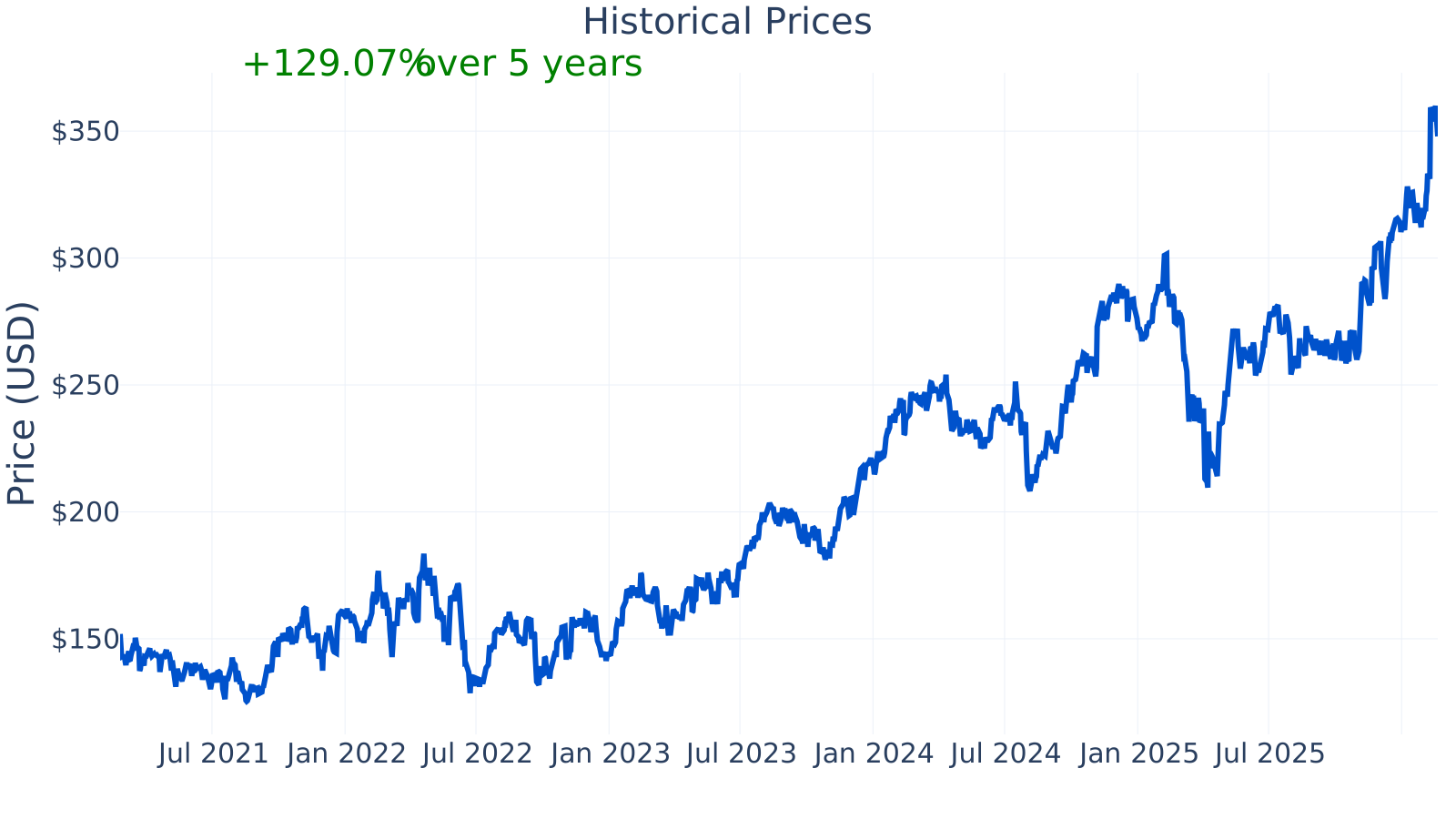
Overview
Marriott International is a global hospitality company best known for operating and franchising hotels under many brands (for example, Marriott, Sheraton, Westin, Ritz-Carlton, Courtyard, and others). In simple terms, Marriott’s business is to run hotel brands and systems at scale: it helps hotel owners attract guests through brand recognition, a large loyalty program, and reservation/technology platforms, while also managing some hotels directly.
Marriott reports results mainly through two segments: U.S. & Canada and International. Across both, the company’s revenue typically comes from a mix of fees and hotel operations. The largest revenue streams are generally:
- Rooms and related hotel revenue from properties Marriott operates or leases (this includes the room night itself plus some on-property services depending on the hotel)
- Management fees (earned for operating hotels owned by others)
- Franchise fees (earned when independently owned hotels use Marriott brands and systems)
- Incentive management fees (performance-based fees tied to hotel profitability)
- Co-brand credit card and loyalty-related revenue (tied to the Marriott Bonvoy ecosystem)
Because Marriott’s mix of managed, franchised, and owned/leased hotels can shift over time, the exact percentage split by revenue line can vary year to year. Many long-term discussions focus on the fee-driven parts of the model (management and franchise fees), because they tend to be less capital-intensive than owning real estate.
Scale and recent profitability: Looking at recent full-year totals, revenue increased from about $13.9B (2021) to $26.2B (2025), while net income moved from about $1.1B (2021) to about $2.6B (2025). Over the same period, interest expense rose (roughly $420M in 2021 to about $809M in 2025), which matters when thinking about financial flexibility.
The income picture shows a large cost base tied to hotel operations, alongside meaningful operating income. From 2021 to 2025, total revenue rose substantially, while interest expense also trended higher, which can reduce how much of operating profit ultimately reaches net income.
Key Figures
| Metric | Value | Industry ⓘ |
|---|---|---|
| Date | Feb 23, 2026 | |
| Context | ||
| Sector | Consumer Cyclical | |
| Industry | Lodging | |
| Market Cap ⓘ | $92.20B | |
| Beta ⓘ | 1.10 | |
| Fundamental | ||
| P/E Ratio ⓘ | 36.62 | 30.60 |
| Profit Margin ⓘ | 9.88% | 14.61% |
| Revenue Growth ⓘ | 4.20% | 7.00% |
| Debt to Equity ⓘ | -453.01% | 44.41% |
| PEG ⓘ | 1.37 | |
| Free Cash Flow ⓘ | $2.90B | |
Marriott’s equity market value is about $92.2B, and the stock’s beta (~1.10) suggests it has historically moved slightly more than the overall market. The P/E ratio (~36.6) is above the lodging industry median (~30.6). Recent profit margin (~9.9%) is below the industry median (~14.6%), and year-over-year revenue growth (~4.2%) is also below the industry median (~7.0%). Trailing twelve-month free cash flow is about $2.9B. The debt-to-equity figure is negative, which commonly happens when total shareholders’ equity is negative; in that case, this ratio becomes less intuitive and should be interpreted alongside the balance sheet details in filings.
Growth (medium)
Hotel demand is closely linked to travel and business activity, so the lodging industry tends to grow over time with global travel, but it can be cyclical. Marriott is positioned in that long-term travel trend because it has a large global footprint across price points (from select-service to luxury) and a broad set of brands that can match different trip purposes.
A key part of Marriott’s strategy is its asset-light approach (more franchising and management contracts, less ownership of hotel real estate). This can support growth because expanding the “system” (the total number of branded rooms) does not necessarily require Marriott to fund hotel construction. Another structural growth lever is the loyalty ecosystem (Marriott Bonvoy), which can support repeat stays and helps Marriott negotiate distribution and partnerships.
Revenue growth was exceptionally high during the post-pandemic rebound period and then normalized. More recently, growth appears to have settled into mid-single digits (for example, around 4–6% in the latest points shown), which is more consistent with a mature global operator than a fast-growing early-stage company.
Free cash flow increased strongly from 2021 into 2024 (from roughly $1.0B to about $2.6B), then eased in the most recent period shown (about $1.8B). For long-term shareholders, the direction of free cash flow matters because it is the pool of cash used for reinvestment in the business, debt-related needs, and shareholder returns.
Risks (medium)
This article is for informational purposes only and does not constitute financial advice. Some content is AI-generated. See Disclaimer


