Stock Analysis · Marriot Vacations Worldwide (VAC)
Overview
Marriott Vacations Worldwide (VAC) is a vacation ownership company. In simple terms, it sells vacation ownership interests (often described as “timeshare” products), finances some of those purchases, and then runs the resorts and member programs that owners use for their stays. The company operates globally and is closely associated with well-known brands in vacation ownership, while Marriott International is a separate company.
Its business model typically combines (1) selling vacation ownership products, (2) earning interest income when customers finance their purchases through the company, and (3) collecting recurring fees to manage resorts and provide membership-related services. This structure tends to create a mix of “one-time” transaction revenue (new sales) and more recurring revenue (management and services).
Main revenue sources generally fall into these buckets (largest to smallest can vary by year):
- Vacation ownership product sales (new sales of vacation ownership interests)
- Financing revenue (interest income and related items from consumer loans tied to purchases)
- Resort management and services (recurring fees paid by owners/associations for operating and maintaining resorts, plus program fees)
- Rental and other (renting inventory, ancillary services, and other items)
From a high level, the company’s performance is influenced by travel demand, consumers’ willingness to commit to long-term vacation products, and the health of its financing portfolio.
Across recent years, total revenue increased from about $3.89B (2021) to about $4.97B (2024). Over the same period, interest expense remained meaningful (roughly $118M–$164M per year), which highlights how financing costs can materially affect bottom-line results in this business.
Key Figures
| Metric | Value | Industry ⓘ |
|---|---|---|
| Date | Feb 08, 2026 | |
| Context | ||
| Sector | Consumer Cyclical | |
| Industry | Resorts & Casinos | |
| Market Cap ⓘ | $1.92B | |
| Beta ⓘ | 1.29 | |
| Fundamental | ||
| P/E Ratio ⓘ | 12.16 | 22.67 |
| Profit Margin ⓘ | 5.15% | 6.12% |
| Revenue Growth ⓘ | -2.40% | 4.30% |
| Debt to Equity ⓘ | 232.82% | 525.78% |
| PEG ⓘ | 1.48 | |
| Free Cash Flow ⓘ | $63.00M | |
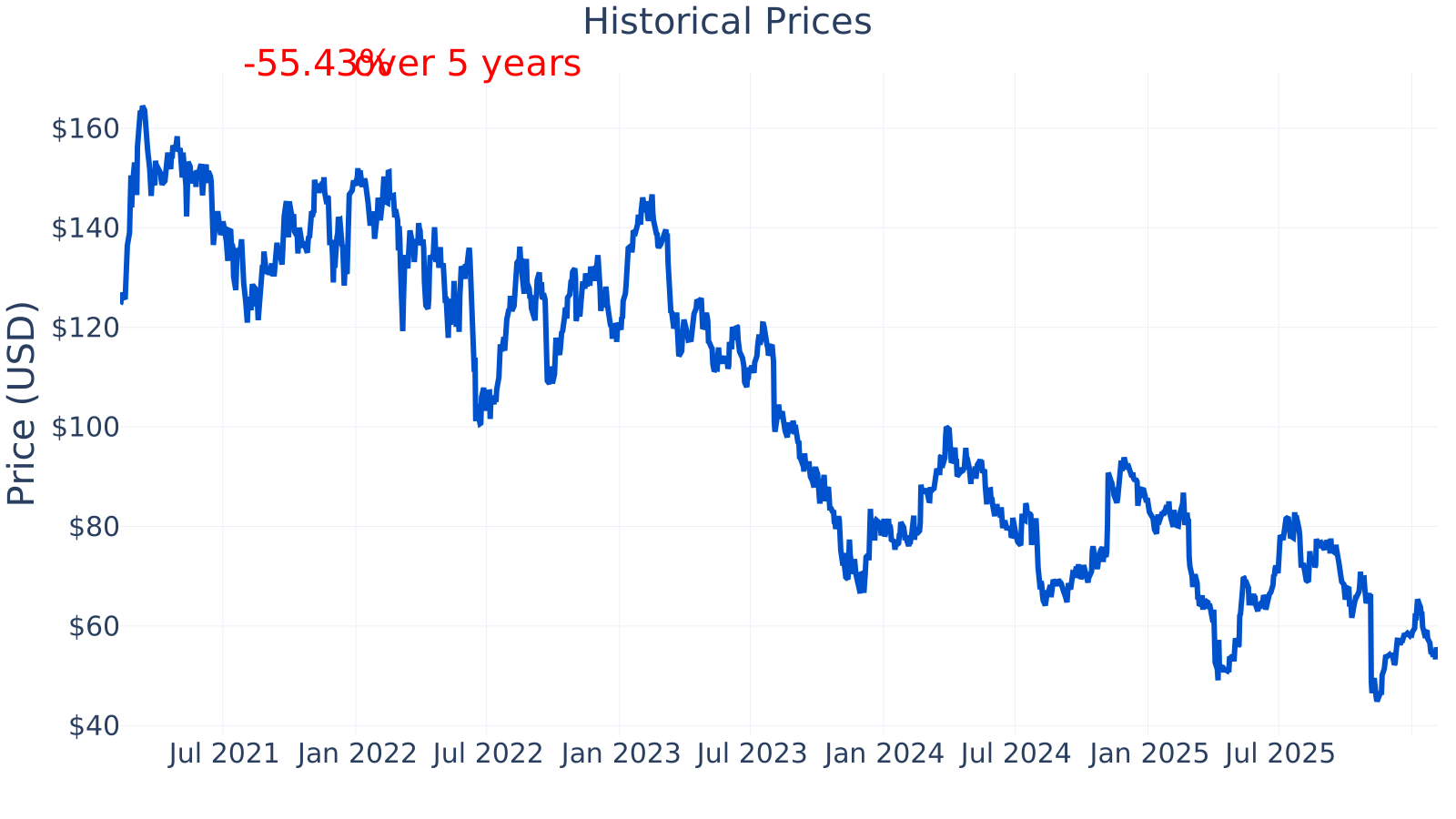
VAC’s market capitalization is about $1.92B, placing it in the small-to-mid cap range. The stock’s beta of ~1.29 indicates it has tended to move more than the overall market (higher volatility than a broad index). The latest P/E ratio is ~12.16 versus an industry median around 22.67, while the latest profit margin is ~5.15% compared with an industry median near 6.12%.
Growth indicators are mixed: the latest year-over-year revenue growth is about -2.4% versus an industry median of roughly +4.3%. Leverage is notable: debt-to-equity is ~233%, although it is below the industry median shown (~526%). Free cash flow over the trailing twelve months is about $63M, and the listed PEG ratio is ~1.48 (a valuation ratio that relates price to expected earnings growth).
Growth (Medium)
VAC operates within the broader leisure travel ecosystem, which tends to benefit when travel demand is strong and consumers prioritize experiences. That said, vacation ownership is not a simple “always up and to the right” industry: it is more cyclical than many subscription-style businesses because it depends on consumers committing significant dollars to long-duration vacation products.
A core part of the company’s growth logic is combining new sales with ongoing, recurring fee streams from resort and program management. In theory, a larger owner base can support more stable service revenue over time, while financing can add another earnings stream (and also adds credit risk). The company’s scale and established platforms can help it source customers and operate resorts efficiently, but results can still swing with the travel cycle and the cost of borrowing.
Recent year-over-year revenue growth has been uneven. After very strong growth in parts of 2024 (for example, mid-2024 quarters showed double-digit year-over-year gains), the most recent quarter shown dips sharply (about -37.8% year-over-year). This kind of volatility can happen when comparing against strong prior periods and when sales volumes, pricing, or deal mix shift.
Free cash flow has trended down over the periods shown: from about $483M (TTM ending 2022-03-31) to about $155M (TTM ending 2025-03-31). Lower free cash flow can reduce flexibility for debt reduction, repurchases, or reinvestment, so it is an important area to track in future filings.
Risks (High)
This article is for informational purposes only and does not constitute financial advice. Some content is AI-generated. See Disclaimer