Stock Analysis · Marqeta Inc (MQ)
Overview
Marqeta, Inc. (MQ) is a card-issuing platform that helps companies create and run payment cards and related spending programs through software. Instead of a business building its own “card issuing” setup with banks and payment networks from scratch, Marqeta provides tools (often described as an API-based platform) that can support use cases like on-demand delivery driver payouts, expense cards for employees, marketplace seller disbursements, and consumer fintech cards.
Marqeta’s business model is closely tied to how much money flows through the programs it supports. In general, when customers’ cardholders spend more, Marqeta can earn more—subject to pricing terms and the economics of each program.
Revenue is typically driven by a small number of core streams commonly disclosed by card-issuing platforms:
- Interchange and processing-related revenue (linked to card purchase volume and transaction activity)
- Platform and program fees (fees charged to customers for using the platform and program management)
- Other revenue (smaller items that can include ancillary services, depending on customer arrangements)
Because detailed percentages can vary by period and customer mix, the most reliable breakdown and definitions are in Marqeta’s Form 10-K and Form 10-Q.
Across the years shown, revenue has been volatile, and operating expenses have historically been a major factor in profitability. The more recent period shows a meaningful shift toward much lower operating expenses than earlier years, which helped narrow losses and briefly reach positive net income in 2024 before returning to a small loss in 2025.
Key Figures
| Metric | Value | Industry ⓘ |
|---|---|---|
| Date | Mar 09, 2026 | |
| Context | ||
| Sector | Technology | |
| Industry | Software - Infrastructure | |
| Market Cap ⓘ | $1.77B | |
| Beta ⓘ | 1.48 | |
| Fundamental | ||
| P/E Ratio ⓘ | N/A | 27.58 |
| Profit Margin ⓘ | -2.23% | 6.83% |
| Revenue Growth ⓘ | 26.70% | 16.30% |
| Debt to Equity ⓘ | 2.86% | 24.92% |
| PEG ⓘ | 1.50 | |
| Free Cash Flow ⓘ | $119.66M | |
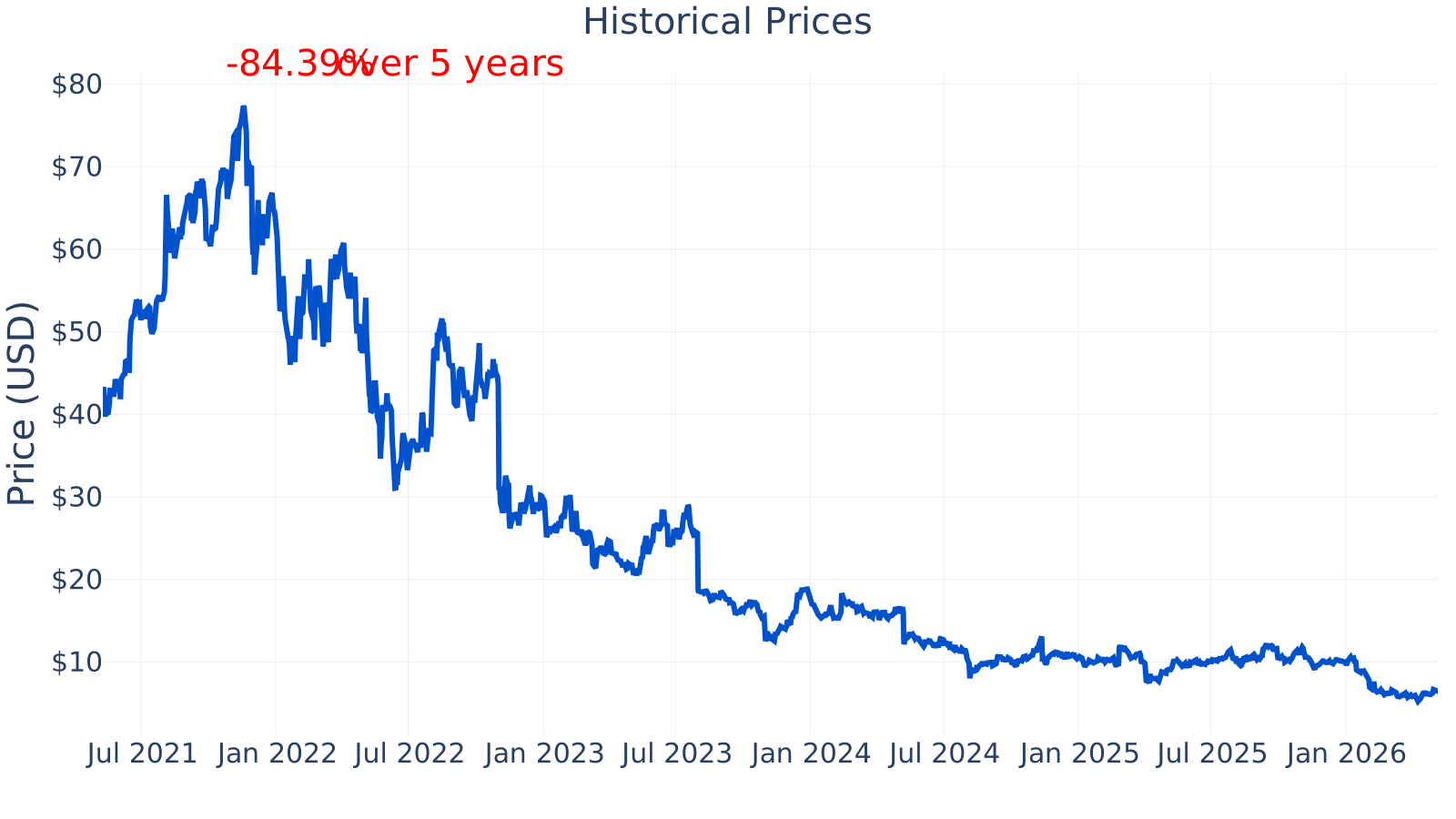
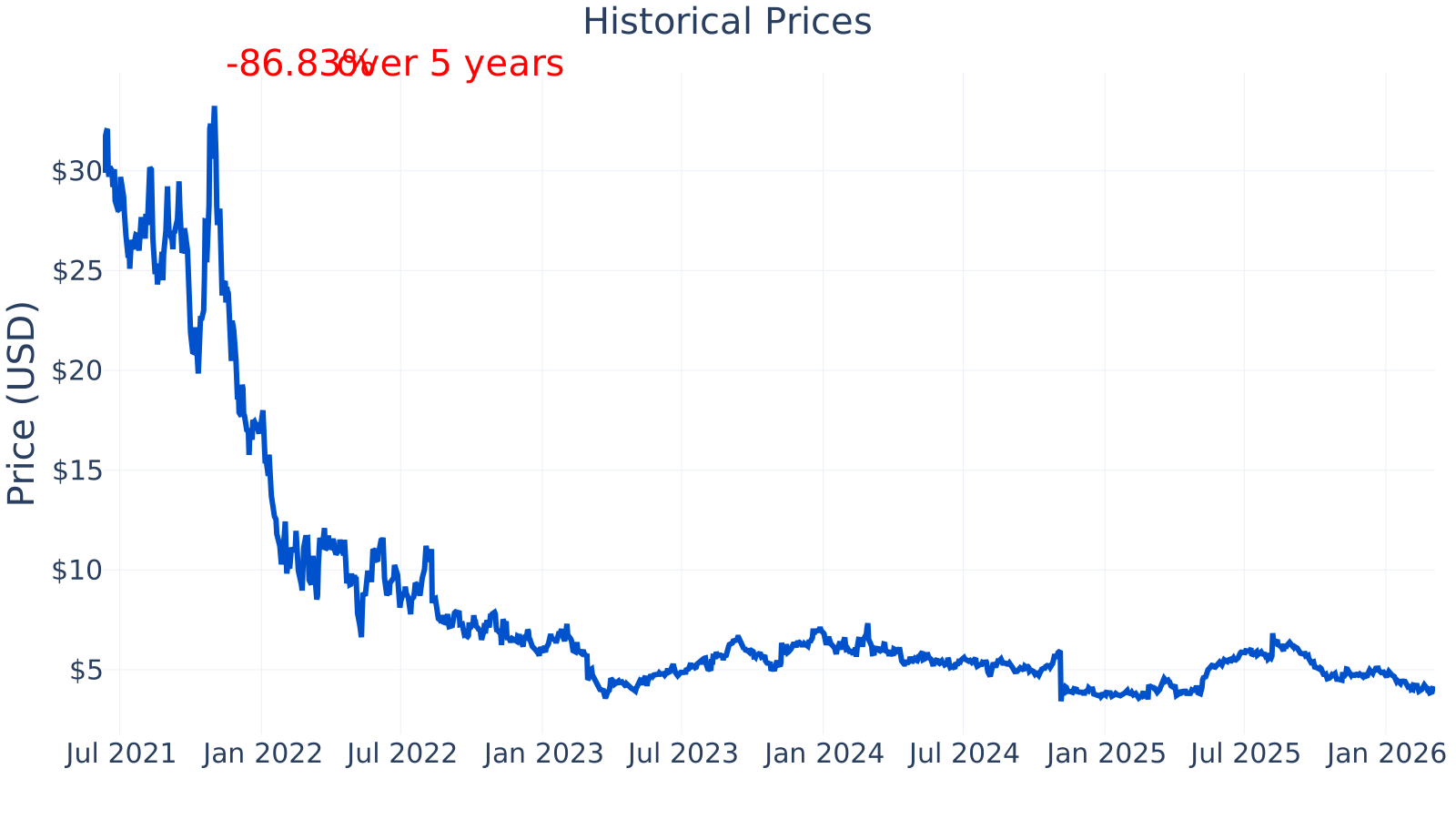
Marqeta’s market capitalization is about $1.77B, and the stock’s beta of ~1.48 indicates it has tended to move more than the broader market. The company shows YoY revenue growth of ~26.7%, above the industry median (~16.3%), while its profit margin is about -2.2% versus an industry median of ~6.8%. Financial leverage is relatively low with debt-to-equity around 2.9% (industry median ~24.9%). Over the trailing twelve months, free cash flow is about $119.7M, suggesting cash generation even though accounting profits remain slightly negative in the latest margin figure.
Growth (Medium)
Marqeta operates within the broader shift toward digital payments, embedded finance, and software-driven card programs. Many businesses want to add payments or card capabilities inside their own apps (for example, to manage spending, route funds, or offer faster payouts), which supports long-term demand for platforms that can launch and manage these programs with less custom infrastructure.
Strategically, Marqeta’s approach focuses on being a flexible infrastructure layer that can support different program types and evolve with customers as they scale. In practice, the long-term growth narrative often depends on (1) onboarding and expanding large customers, (2) increasing payment volume on existing programs, and (3) diversifying customer concentration so results are less dependent on a small number of relationships.
The year-over-year revenue growth pattern shows a sharp slowdown and contraction in parts of 2023–2024, followed by a return to positive growth in late 2024 and through 2025, ending around 26.7%. That rebound suggests renewed expansion after a difficult period, although the earlier volatility highlights that growth has not been steady.
Free cash flow has improved over time and is positive in the most recent trailing period (about $119.7M). Positive free cash flow can matter for long-term resilience because it may reduce reliance on external financing, especially during weaker revenue periods.
Risks (High)
A central risk is that Marqeta’s results can be sensitive to customer concentration and program-level economics. If a major customer reduces volume, renegotiates pricing, changes program structure, or moves to a different provider, revenue and margins can be affected. Another key risk is that payment programs can be exposed to fraud, disputes, compliance obligations, and operational incidents, which can lead to higher costs or reputational damage.
Competition is also significant. Marqeta participates in a crowded ecosystem that includes other modern card-issuing processors and infrastructure providers, as well as more established processors and bank partners that can offer integrated solutions. Competitive pressure can show up as pricing concessions, higher incentives to win or retain customers, or reduced share of interchange economics.
From a business quality perspective, Marqeta’s potential competitive advantages typically relate to developer-friendly infrastructure, speed to launch, and the ability to support complex or high-scale programs. Whether those strengths translate into durable leadership depends on retaining large customers, expanding into new use cases, and maintaining reliability and compliance at scale.
Debt-to-equity remains very low (about 2.9% most recently), well below the industry median (about 24.5%). Low leverage can reduce financial risk, but it does not remove operating risks such as volume declines, pricing pressure, or rising compliance costs.
Profitability has been uneven. After deeply negative margins earlier in the timeline, margins improved significantly and turned positive for several quarters in 2024, then moved back to slightly negative (about -2.2%) most recently. Compared with an industry median near 6.7%, this suggests Marqeta is still working toward consistently profitable operations.
Valuation
Valuation is harder to interpret when earnings are inconsistent. The P/E ratio can be unavailable or not meaningful in periods with losses, and it can fluctuate sharply when earnings move near zero.
The P/E series shown is sporadic, with some periods not displaying a meaningful value and other points showing very high ratios (for example, above 80x or over 200x at times), while the industry median is shown around the high-20s to low-30s. This kind of pattern typically reflects small or unstable earnings rather than a steady profit base. In that context, valuation discussions often lean more on revenue trends, cash flow generation, customer concentration, and the path to sustainable margins rather than a single earnings multiple.
Conclusion
Marqeta provides software infrastructure that enables companies to launch and manage card programs, a capability aligned with long-term trends in digital payments and embedded finance. Financially, the picture is mixed: revenue growth has re-accelerated recently and free cash flow is positive, while profit margins remain slightly negative and have been volatile over time.
The main long-term uncertainties are competitive intensity, dependence on large customer programs, and whether the business can produce consistently positive margins across market cycles. At the same time, low balance-sheet leverage reduces one category of risk, and improving cash generation can support operational flexibility. Overall, Marqeta’s long-term profile is shaped by its ability to sustain growth while converting that growth into stable profitability and reducing reliance on a small set of major customers.
Sources:
- SEC EDGAR — Marqeta, Inc. Form 10-K (Annual Report)
- SEC EDGAR — Marqeta, Inc. Form 10-Q (Quarterly Report)
- Marqeta Investor Relations — Press Releases and Shareholder Materials
- Wikipedia — “Marqeta” (company overview/background)
This article is for informational purposes only and does not constitute financial advice. Some content is AI-generated. See Disclaimer