Stock Analysis · Marqeta Inc (MQ)
Overview
Marqeta, Inc. (MQ) provides a modern card-issuing platform that helps businesses create and manage payment cards (virtual or physical) and related payment features through software tools and APIs. In simple terms, it is infrastructure that enables companies to launch card-based products quickly and then control how those cards work (for example: spending limits, where cards can be used, real-time authorization rules, and instant issuance).
Marqeta’s platform is typically used by fintech apps, online marketplaces, and businesses that want embedded payment capabilities without building the full issuing stack themselves. The company works with issuing banks and card networks and earns revenue based largely on payment activity processed through its platform and, in some cases, platform-related services.
In its filings, Marqeta describes revenue primarily in terms of fees tied to payment volume and services provided to customers. A simplified view of common revenue drivers includes:
- Transaction-based revenue (primarily driven by payment volume processed on the platform)
- Platform and program-related services (fees for services and capabilities supporting customer programs)
Percentages by revenue line can vary by period and customer mix; for exact breakdowns, the company’s annual report revenue note is the most reliable reference.
The company’s recent income statement flow shows meaningful changes over time: total revenue peaked earlier in the period shown and later declined, while operating expenses (especially selling, general, and administrative costs) fell substantially. That reduction in operating costs is a major reason results improved into 2024, when net income turned positive in the year shown.
Key Figures
| Metric | Value | Industry ⓘ |
|---|---|---|
| Date | Feb 08, 2026 | |
| Context | ||
| Sector | Technology | |
| Industry | Software - Infrastructure | |
| Market Cap ⓘ | $1.90B | |
| Beta ⓘ | 1.48 | |
| Fundamental | ||
| P/E Ratio ⓘ | N/A | 25.67 |
| Profit Margin ⓘ | -6.74% | 6.91% |
| Revenue Growth ⓘ | 27.60% | 15.20% |
| Debt to Equity ⓘ | 0.94% | 19.82% |
| PEG ⓘ | 1.59 | |
| Free Cash Flow ⓘ | $106.34M | |
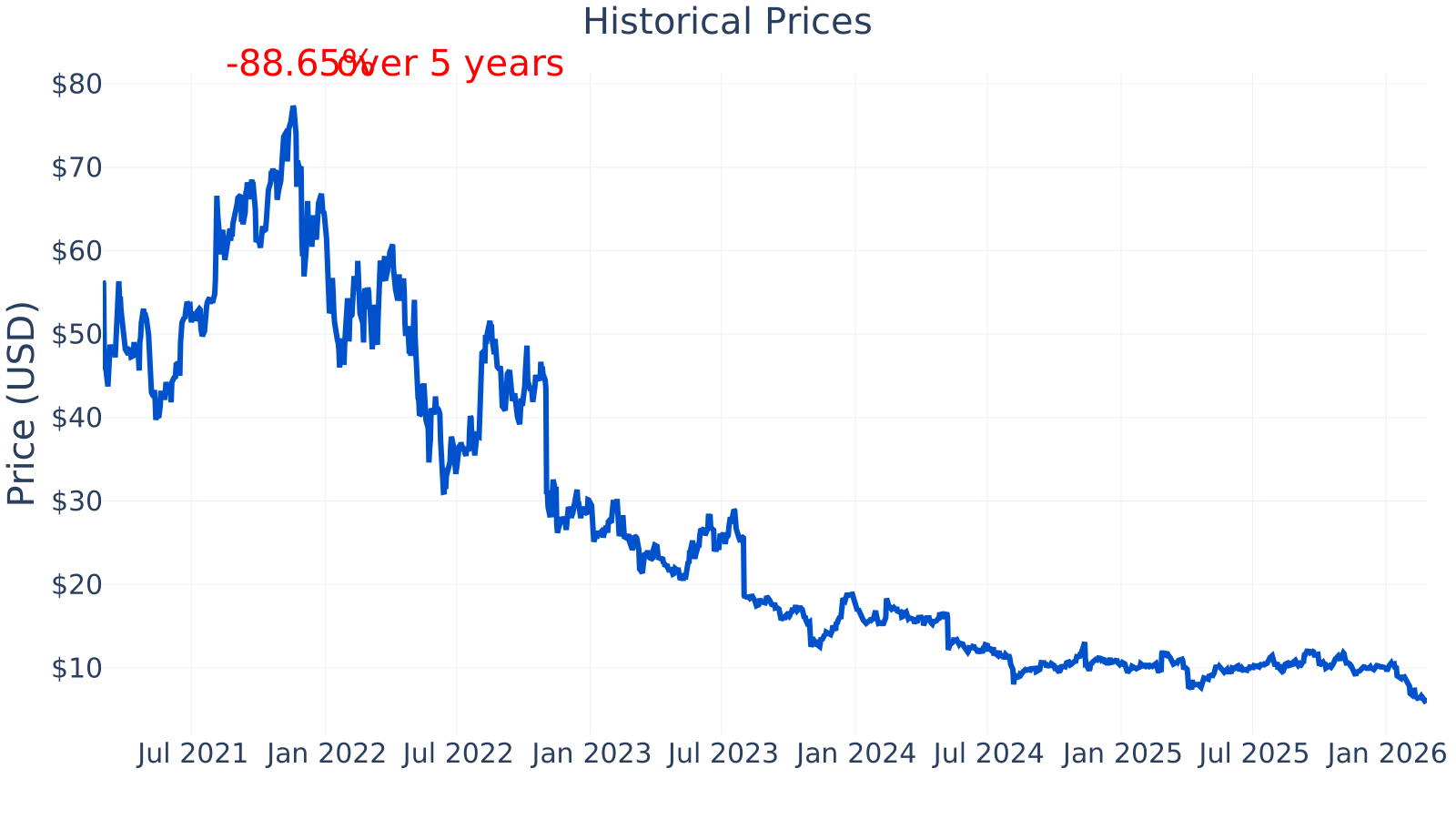
Marqeta’s market capitalization is about $1.90B, and the stock’s beta of 1.48 suggests it has tended to move more than the broader market. The company’s profit margin is -6.74% versus an industry median of about 6.91%, indicating it has recently been less profitable than many peers in its classification. At the same time, revenue growth year over year is 27.6%, above the industry median of about 15.2%. Balance-sheet leverage appears low: debt-to-equity is ~0.94% versus an industry median near 19.8%. Trailing twelve-month free cash flow is about $106.3M, which can be an important support for financial flexibility.
Growth (Medium)
Marqeta operates in a part of the payments ecosystem that has benefited from the long-term shift toward digital commerce and embedded finance—where non-banks integrate financial products (including cards) directly into their apps. This broader direction is structural, but the pace of growth for any single provider can vary significantly depending on customer concentration, competitive pricing, and overall consumer spending trends.
Strategy-wise, Marqeta’s approach centers on being a flexible “building block” for card programs: customers can design card features and controls, then scale processing as their own user base expands. In theory, that model can grow alongside customers’ transaction volumes, but it also means results can be sensitive to a small number of large programs.
The year-over-year revenue growth pattern has been volatile: very high growth earlier in the timeline, a period of contraction (negative year-over-year growth), and then a return to positive growth, reaching 27.6% in the most recent point shown. That shape is consistent with a business that can be influenced by large customer program changes and comparisons to prior periods.
Free cash flow improved over time in the period shown, moving from negative in 2022 to positive in subsequent periods, with the latest trailing twelve-month figure at about $106.3M. For a company still working to make profitability more consistent, positive free cash flow can reduce reliance on outside funding and provide more room to invest or absorb downturns.
Risks (High)
This article is for informational purposes only and does not constitute financial advice. Some content is AI-generated. See Disclaimer