Stock Analysis · Manhattan Associates Inc (MANH)
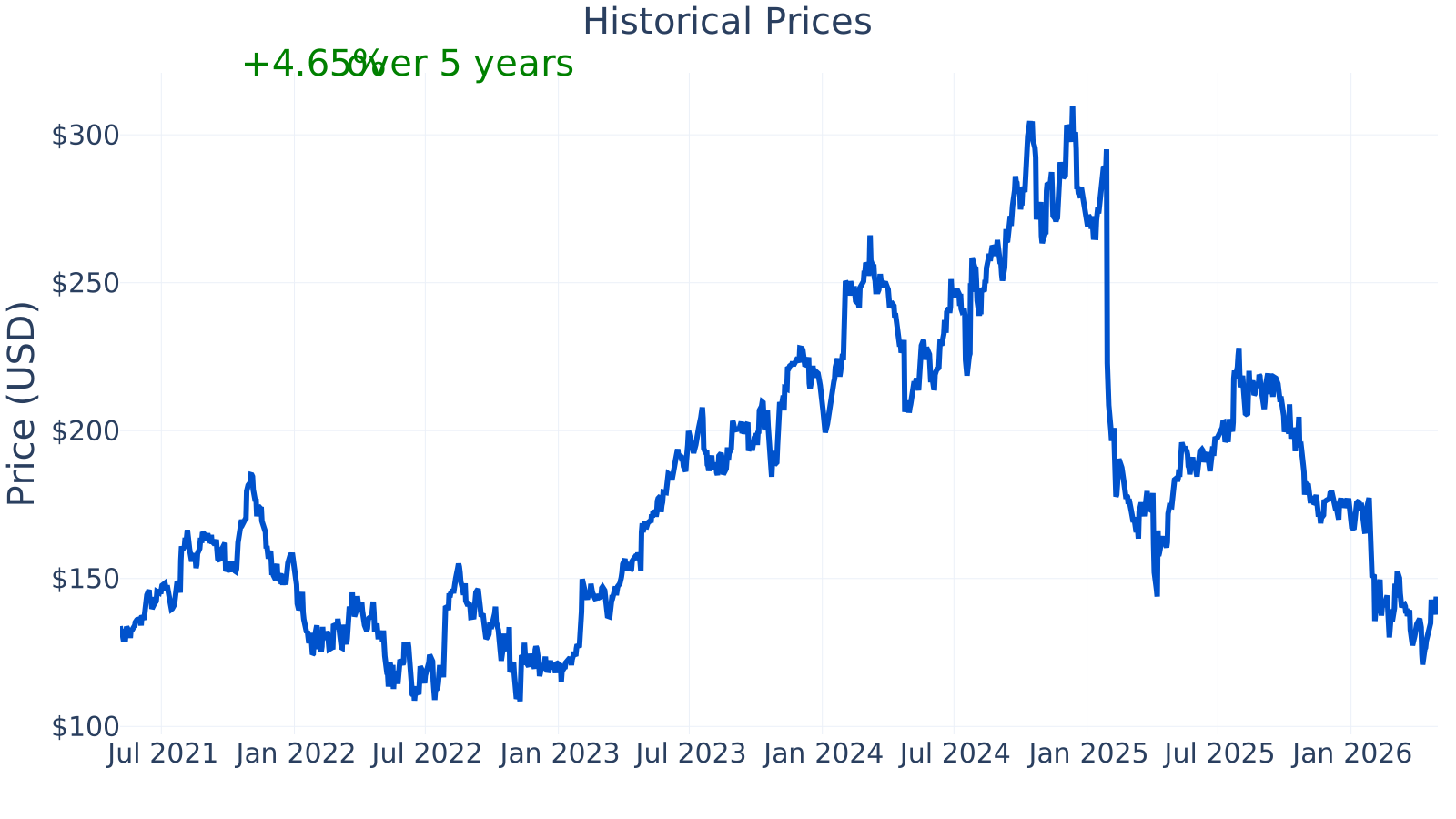
Overview
Manhattan Associates Inc (MANH) is a software company focused on helping businesses run and optimize supply chain and commerce operations. In practical terms, its products support activities like managing inventory across locations, running distribution centers and warehouses, orchestrating orders across stores and e-commerce channels, and improving transportation and logistics planning. These tools are typically used by large retailers, consumer goods companies, manufacturers, and logistics providers that need reliable systems to fulfill orders accurately and efficiently.
The company’s revenue is mainly generated by selling and supporting its software. Based on how Manhattan Associates describes its business in SEC filings, revenue generally comes from two broad buckets:
- Software-related revenue (primarily subscriptions/cloud and software licenses, plus related maintenance/support)
- Services (implementation, consulting, and other professional services that help customers deploy and optimize the software)
In many software businesses, software-related revenue tends to be higher-margin than services, while services can help drive adoption and long-term customer relationships. (Exact percentages can vary by year and are detailed in the company’s SEC filings.)
Over recent years, total revenue increased from about $664M (2021) to about $1.081B (2025). During the same period, operating income rose from about $134M (2021) to about $286M (2025). Research and development spending also increased (about $98M in 2021 to about $145M in 2025), which can be a sign the company continues to invest in product capabilities while expanding profitability.
Key Figures
| Metric | Value | Industry ⓘ |
|---|---|---|
| Date | May 04, 2026 | |
| Context | ||
| Sector | Technology | |
| Industry | Software - Application | |
| Market Cap ⓘ | $8.29B | |
| Beta ⓘ | 1.05 | |
| Fundamental | ||
| P/E Ratio ⓘ | 39.25 | 26.40 |
| Profit Margin ⓘ | 19.68% | 7.95% |
| Revenue Growth ⓘ | 7.40% | 15.60% |
| Debt to Equity ⓘ | 27.14% | 27.14% |
| PEG ⓘ | 1.72 | |
| Free Cash Flow ⓘ | $379.59M | |
At the latest snapshot, Manhattan Associates has a market capitalization of about $8.29B and a beta of ~1.05, suggesting its share price has historically moved roughly in line with the overall market. The company’s P/E ratio is ~39.3 versus an industry median of ~26.4, while its profit margin is ~19.7% versus an industry median of ~8.0%. Year-over-year revenue growth is shown at ~7.4% versus an industry median of ~15.6%. Debt-to-equity is ~27%, in line with the industry median in this snapshot. Trailing twelve-month free cash flow is about $379.6M, and the PEG ratio is shown at ~1.72.
Growth (Medium)
Manhattan Associates operates in supply chain and enterprise operations software, an area supported by long-term needs such as e-commerce fulfillment, faster delivery expectations, supply chain resilience, labor efficiency in warehouses, and better coordination between online and physical retail. Even when end-market demand is uneven, many organizations continue investing in software modernization because distribution and order accuracy directly affect customer experience and operating costs.
The company’s strategy—selling mission-critical supply chain applications and supporting customers with implementation services—can create long customer relationships because these systems are deeply embedded in day-to-day operations. Over time, this type of software can benefit from recurring revenue dynamics (for example, subscription/cloud and ongoing support) and incremental expansion as customers add more modules or roll out to additional sites and regions.
The year-over-year revenue growth trend shows a noticeable slowdown from higher growth rates earlier in the period (often in the mid-teens to 20%+ range) toward mid-single digits, then a more recent move back toward roughly 7%. This pattern can reflect a mix of factors such as tougher comparisons after strong years, customers pacing large project rollouts, and the natural growth curve as revenue scale increases.
Free cash flow has increased steadily over the period shown, rising from about $172M (TTM ending 2022-03-31) to about $380M (TTM ending 2026-03-31). For long-term business durability, consistent free cash flow matters because it provides flexibility to fund product development, weather downturns, and potentially return capital to shareholders (subject to management decisions disclosed in filings).
Risks (Medium)
A key business risk is that enterprise software deals and large implementations can be sensitive to customer IT budgets and broader economic conditions. Customers may delay major system replacements or multi-site rollouts, which can affect near-term growth. In addition, implementations are complex: project delays, cost overruns, or difficulties integrating with a customer’s existing systems can pressure services margins and potentially impact customer satisfaction.
Competition is another meaningful factor. Manhattan Associates operates in markets where customers often evaluate multiple established vendors. Competitors can include large enterprise software providers and supply chain specialists (for example, SAP and Oracle in broader enterprise applications, and other supply chain software vendors). Competitive pressure can show up through pricing, sales cycles, or the need for sustained investment to keep features and performance ahead of alternatives.
From a competitive-advantage perspective, Manhattan Associates’ positioning is typically associated with specialized supply chain capabilities and software that becomes “sticky” once deployed, because warehouses and order systems are operationally critical. That said, “leadership” is not absolute in this market: vendor selection often depends on each customer’s existing technology stack, complexity, and global footprint, so share can vary by segment and geography.
Debt-to-equity has generally been low earlier in the period (often under 10%) and moved higher more recently, reaching roughly 27% in the latest point shown. This level is also close to the industry median in the chart, suggesting leverage is not unusually high relative to peers, but the upward shift is still worth monitoring because higher leverage can reduce flexibility during slower demand periods.
Profit margin has remained consistently strong (roughly mid-to-high teens and around 19–21% in recent quarters), and it has been well above the industry median throughout the period shown. A sustained margin gap versus peers can indicate differentiated products, disciplined cost control, or favorable revenue mix, but it can also attract competition if rivals target the same customer budgets.
Valuation
The P/E ratio shown in the valuation history has trended down substantially from very high levels earlier in the period (often above 70–100) to about 41.5 at the latest point. Even after that decline, it remains above the industry median (about 31.8 at the latest point on the chart). In simple terms, this indicates the stock has been valued at a premium compared with many peers, which can be consistent with stronger profitability and cash generation, but it also means expectations for future performance may already be partly reflected in the price.
Another way to contextualize valuation is to compare profitability and growth. The company’s margins are notably higher than the industry median, while its most recent year-over-year revenue growth (about 7%) is below the industry median shown in the table. This combination—high profitability with more moderate growth—often leads market participants to debate how much of a premium is justified over time, especially if growth does not re-accelerate.
Conclusion
Manhattan Associates is a specialized enterprise software company focused on supply chain and order/warehouse operations, with revenue that has grown meaningfully over the last several years and profitability that has remained strong relative to industry benchmarks. Free cash flow has increased steadily, which can be an important indicator of operational strength for a software business.
The main trade-offs visible in the facts reviewed are (1) strong and consistent profit margins versus (2) a more recent moderation in revenue growth, alongside (3) a valuation that has come down from prior extremes but still sits above industry medians. Key areas that can shape long-term outcomes include competitive dynamics in enterprise software, the pace of customer implementation cycles, and whether growth trends stabilize or improve while margins remain durable.
Sources:
- U.S. Securities and Exchange Commission (SEC) EDGAR — Manhattan Associates Inc filings (Form 10-K, Form 10-Q)
- Manhattan Associates — Investor Relations materials (public filings and releases)
- Wikipedia — “Manhattan Associates” (company overview/background)
This article is for informational purposes only and does not constitute financial advice. Some content is AI-generated. See Disclaimer


